Solo trips to Bali are rapidly becoming a bucket-list must for many women travelers. On the NomadHer app, ‘Bali’ remains one of the most-searched destinations, with more women than ever choosing to explore it on their own.
But even with Bali’s relaxed, beachy vibe, preparation is important. Here’s a practical guide covering dress rules, cultural etiquette, safety insights, and helpful tips every solo woman should know before visiting.

What to Wear in Bali
Although Bali is part of Indonesia, its culture is distinct about 80% of the island is Hindu, whereas Indonesia overall is a Muslim-majority country. Because of this, it’s best to avoid very revealing clothing in public spaces. Your outfit isn’t just ‘fashion’; when you’re traveling solo, it’s also part of staying respectful and keeping yourself safe. Here are three key points to remember:
- Skip very short or tight clothing
Even outside temples, highly revealing outfits can attract attention or be misread. When you’re alone, minimizing unwanted attention helps you stay in control of situations. - Cover up over swimwear away from the beach
Pack a beach dress, shirt, or light cover-up to wear over your swimsuit when walking to nearby cafés or restaurants. It prevents awkward encounters and is considered polite. - Wear comfortable shoes
Road conditions can be uneven. Choose sneakers or sturdy sandals over heels so you can move safely and confidently.
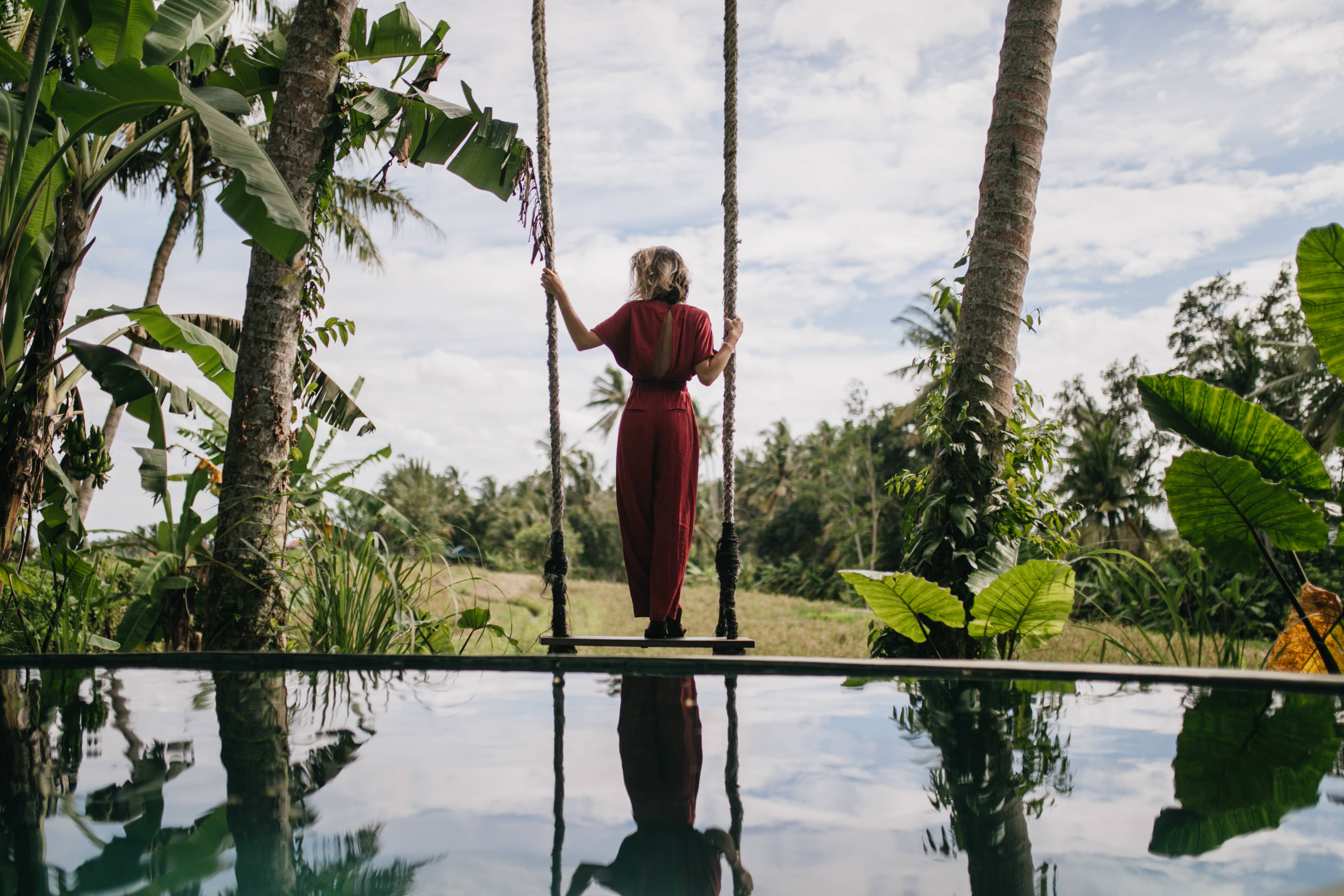
Sarong Etiquette: Temple Visits in Bali
When visiting temples, a sarong (and usually a sash) is mandatory. Long skirts or pants are perfect alternatives, and if you don’t have one, most temples offer sarong rentals at the entrance.
Representative temples where sarongs are required:
- Tirta Empul Temple : If you join the purification ritual (Melukat), you’ll need a separate bathing sarong. Many locals participate; visitors may join respectfully.
- Besakih (Mother Temple) : Bali’s most important temple complex; dress rules are strictly observed.
- Uluwatu Temple : Clifftop temple famous for sunset views and Kecak dance; sarong is required at entry.

Cultural “Do’s & Don’ts” to Know
- Remove shoes before entering temple interiors
Shoes are considered to bring dirt into a sacred space. Enter barefoot or with socks if required. - Do not touch children’s heads
In Hindu culture, the head is the most sacred part of the body. Even if you find a child adorable, avoid patting their head. A smile or a gentle “namaste” gesture is respectful. - Avoid giving or receiving with the left hand
In Indonesian custom, the left hand is considered impure. Offer and receive money, gifts, or food with your right hand or both hands. - Ask permission before photographing people
Do not photograph people engaged in prayer, ceremonies, or meditation without consent. In temples, be mindful not to block pathways or intrude on rituals.
- Watch your step: don’t step on the canang sari (offerings)
You’ll see small palm-leaf baskets with flowers, rice, sweets, or coins placed on doorsteps, sidewalks, even scooters. These daily offerings are sacred, do not step on or kick them.