NomadHer is happy to share a new series featuring NomadHers and their own travel stories through personal blog posts. All posts have been edited for grammar and clarity while making sure to retain the true voices and stories of our writers. We’d like to extend a special thank you to all of our writers and to our community!
⠀
Surrounded by volcanoes and shimmering blue waters, Lake Atitlán is one of Guatemala's most striking destinations. But beyond the picture-perfect views, the communities around the lake offer travelers an opportunity to connect with Guatemala in a much more meaningful way. Through weaving initiatives, you can learn about the centuries-old traditions behind colorful textiles, practice Spanish with local women, and gain insight into everyday life beyond the tourist trail. Equally as importantly, choosing women-led cooperatives gives your tourism money a chance to support local women, families, and communities directly. Traveling thoughtfully is not only about seeing a new place, but about considering who benefits from our presence there.
⠀
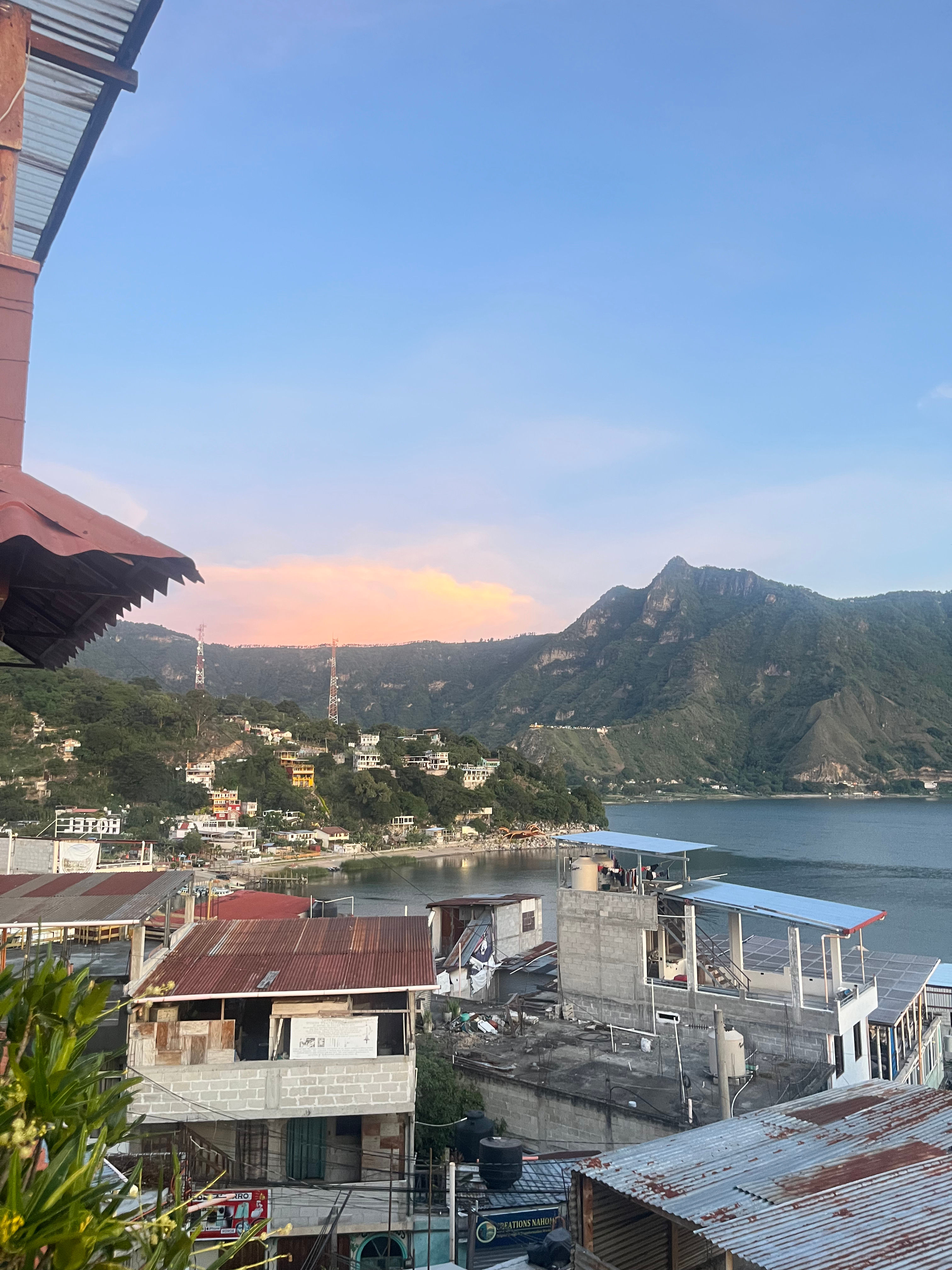
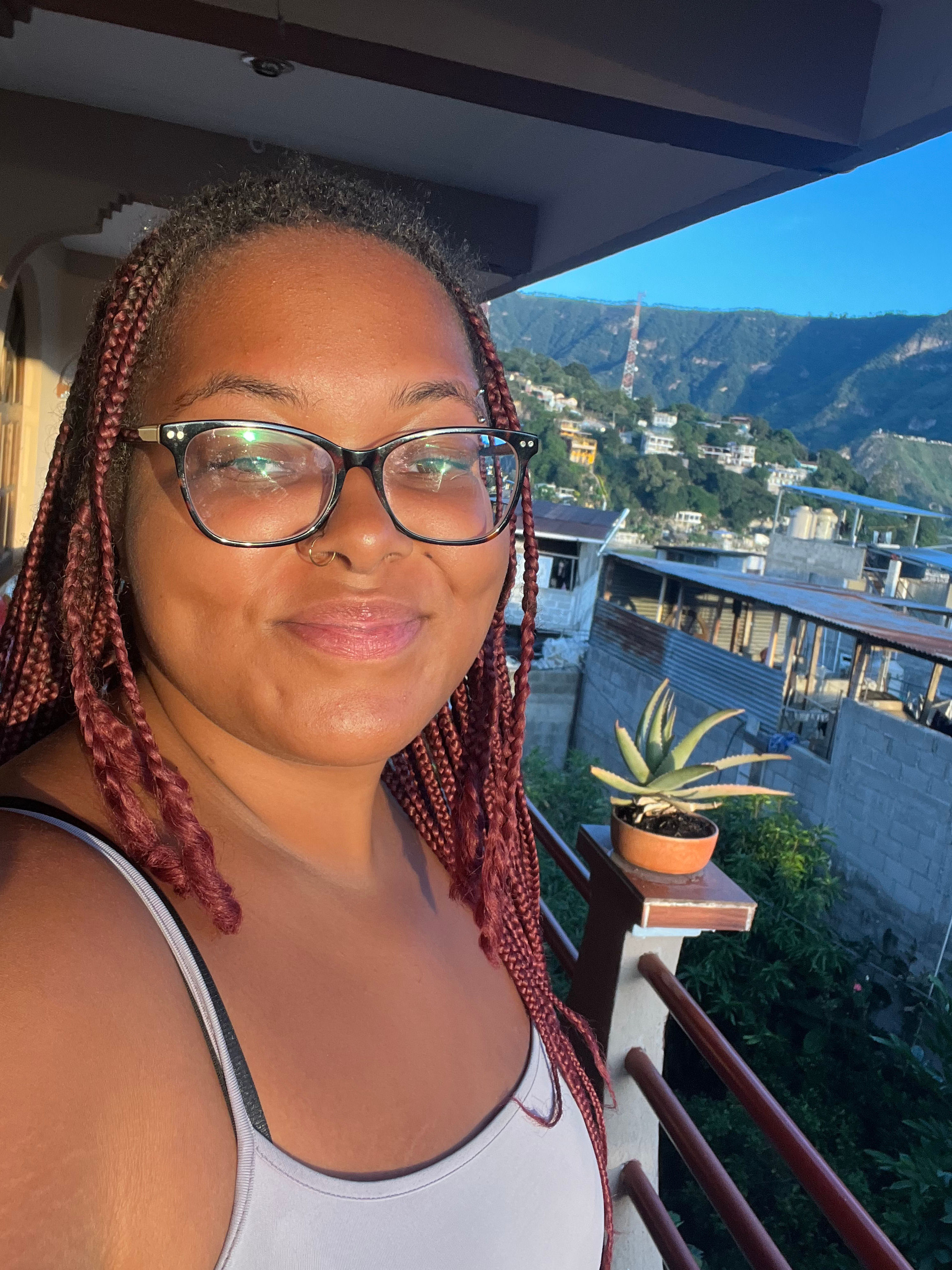
There are roughly 11 villages surrounding Lake Atitlán, each with its own unique history and culture. When I first arrived in San Pedro de La Laguna, I had quite the culture shock. Deciding to check out the local market, I headed up in a tuktuk – a small carriage attached to a bike – to the center of the town where fresh fruits and vegetables were being sold by vendors up and down the street. I chose my food carefully, ensuring there were no spoiled or rotten parts which I had been prone to grabbing in the past.
⠀
While paying, I overheard another vendor and woman speaking. They were adorned in a traditional outfit I had seen in Antigua, Guatemala, just a few days before, although the patterns were slightly different. One thing to note however, was that they weren't speaking Spanish.
⠀
⠀
Part of me thought maybe it was a dialect – sometimes languages sound different depending on the region – but that was not the case. After sorting through my tomatoes and paying, I walked up to the woman and asked if they were speaking Spanish. They indeed were not. They were actually speaking a language called Tz'utujil pronounced SUE-Too-Heel.
⠀
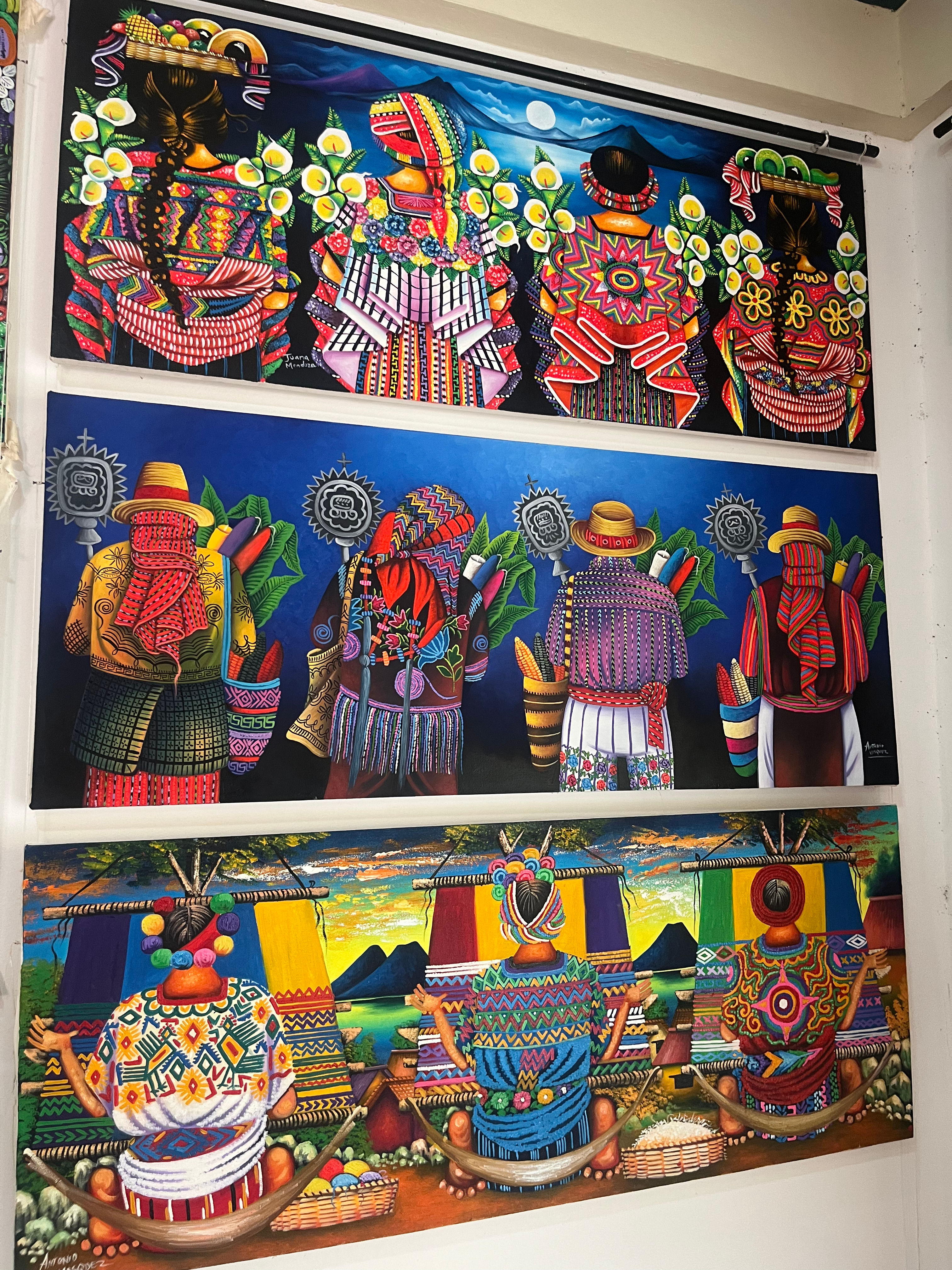
Mayan languages have been spoken for thousands of years and it still exists today. It's easy to walk through San Pedro de La Laguna and see advertisements for Mayan ceremonies, spiritual readings, and buy or learn how to weave traditional clothing.
⠀
My main purpose for going to Lake Atitlan was attending a Spanish language school. My teachers all wore the traditional clothing of San Pedro when working and were completely open to sharing their culture. I was beyond curious to learn about their way of life and the passion they had to continue preserving their culture and heritage.
⠀
⠀
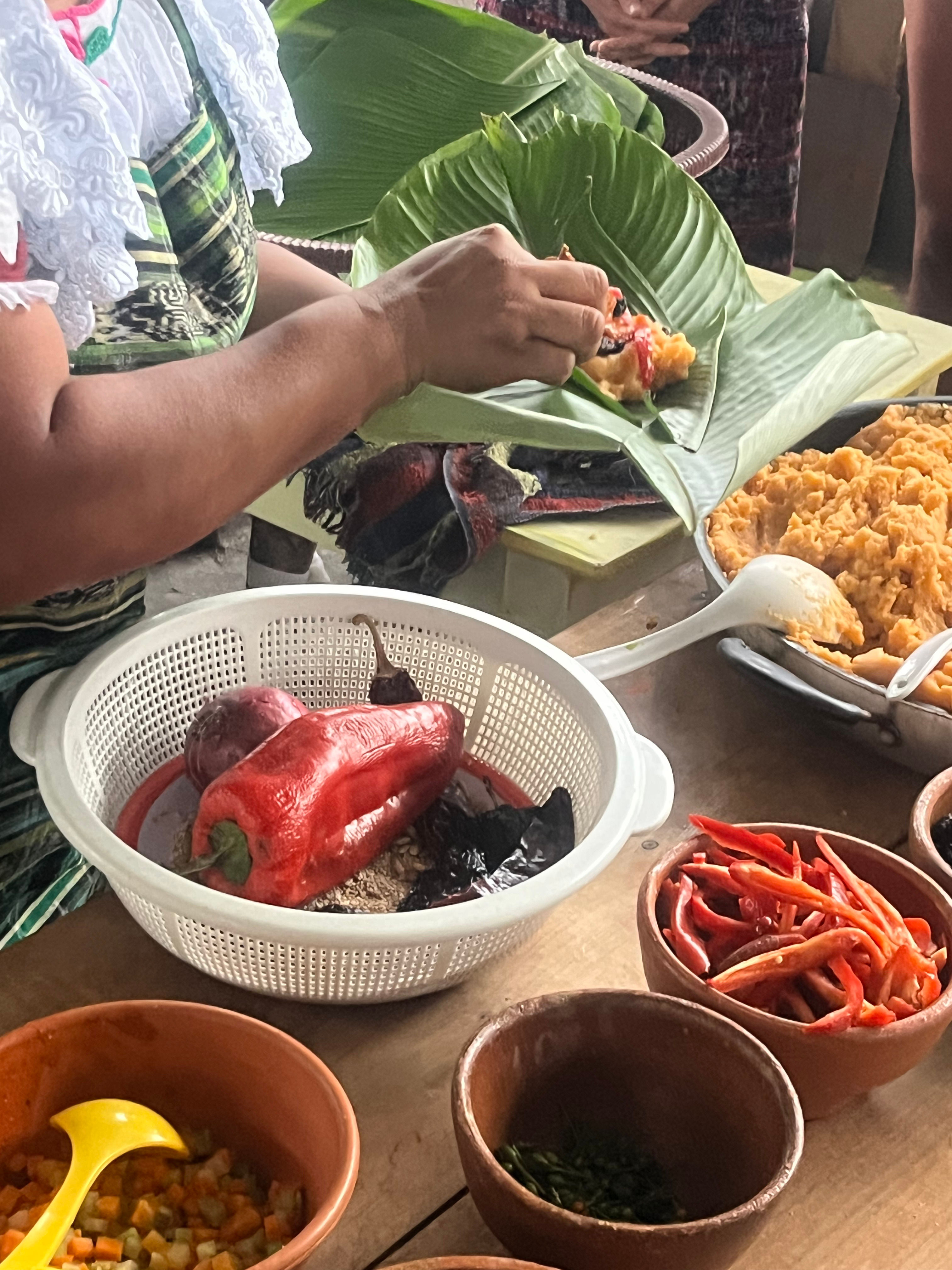
My teacher Lesbia had a huge love for weaving. She would show me the designs she was working on and tell me about how she buys designs from other local tejedoras around the Lake. She would also weave live on TikTok. For her, it's a way to connect with her culture and provide a livelihood for her two daughters. After listening to Lesbia's passion, I decided to take a lancha, or public boat transportation to San Juan de la Laguna. While there are roads where you can use a car to get around the villages, lanchas are far more practical and cost only about $3. In either case, San Juan was another town known for its beautiful postcard-worthy sites. It's also known for having a lot of weaving cooperatives for women.
⠀
⠀
Guatemala remains deeply rooted in traditional gender roles, making economic independence especially meaningful for many women. While some women have access to education and professional opportunities, others face greater barriers. Women-led cooperatives can provide another path toward earning an income, developing a skill, preserving cultural traditions, and supporting their families.
⠀
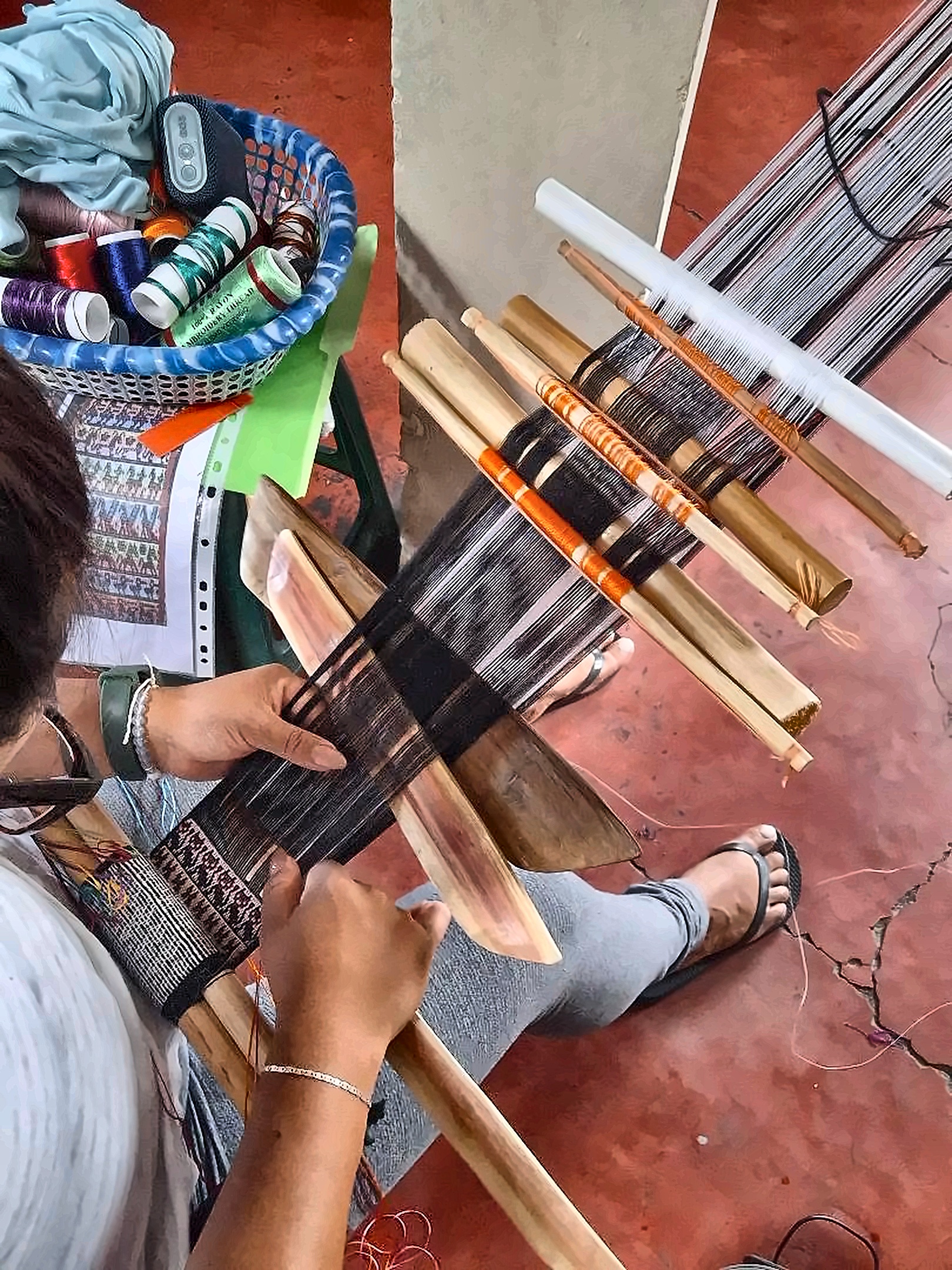
Walking through San Juan La Laguna, I had the chance to visit one of the local women's weaving cooperatives. Since I was visiting during the height of the low season, there was not a lot of activity happening. However, I was still able to walk through the cooperative and watch a few women at work. Outside, cotton plants flourished alongside many of the natural plants used to create the dyes that bring the textiles to life. The women showed me the looms they worked on and invited me into their small shop, where their handwoven scarves, shirts, and skirts were available to purchase with prices ranging from $50 for simple designs to $150+ for more intricate looms.
⠀

⠀
My language school also organized a weaving demonstration, giving us a closer look at the incredible intricacy and detail that goes into every piece. Watching the process firsthand made me realize how much we sacrifice when we choose fast fashion and quantity over quality. There is something irreplaceable about an object made slowly and carefully by hand, carrying not only the skill of its maker, but the stories of community and sisterhood.
⠀
There have been many tourists interested in learning this craft, so much so to the point where there are a variety of workshops and volunteering opportunities. There's a 3-hour workshop to make a small coin pouch whereas others extend past one or more days for larger projects. It's even possible to work with a cooperative for a few weeks if someone is looking to make an even bigger impact. While I didn't make anything myself, I did try dyeing some of the yarn and was so impressed by how vibrant the colors were through natural ingredients. Who knew crushed flowers and fruits could make such a gorgeous pigment!
⠀

⠀
Preserving the culture, uplifting other women, and being able to take a piece of their knowledge back home for you to share is what makes this an unforgettable experience.
⠀
As NomadHers, we often travel with the mindset of connecting with other women and making memories that last a lifetime. Supporting women-led initiatives allows us to be more intentional about where our tourism dollars go, while learning from the women who call Guatemala home. I absolutely loved walking the streets of San Pedro and San Juan de La Laguna and seeing all the colors exploding from the traditional attire. From the language to the music, to my incredible Spanish teacher, to the mesmerizing Mayan traditions that still live on, Guatemala allowed me to dive into its rich history and support the people who preserve it.
## Women's Weaving Cooperatives in San Juan de la Laguna
Here's a list of women's weaving cooperatives based in San Juan de la Laguna, Guatemala to check out if you are interested!
- 🧶 Casa Flor Ixcaco
- 🧶 Lema' Weaving Association (Asociación de Mujeres Lema')
- 🧶 Trama Textiles
⠀