NomadHer is happy to share a new series featuring NomadHers and their own travel stories through personal blog posts. All posts have been edited for grammar and clarity while making sure to retain the true voices and stories of our writers. We’d like to extend a special thank you to all of our writers and to our community!
Can a place that once overwhelmed you become one of your favorite places? Five years ago, Saigon’s endless sea of motorbikes made me question if I’d ever feel comfortable in Vietnam. Would I be able to enjoy my coffee, that delicious Vietnamese coffee I had heard so much about? Well, let’s sit in a café to write about my journey and give Vietnam a second chance.
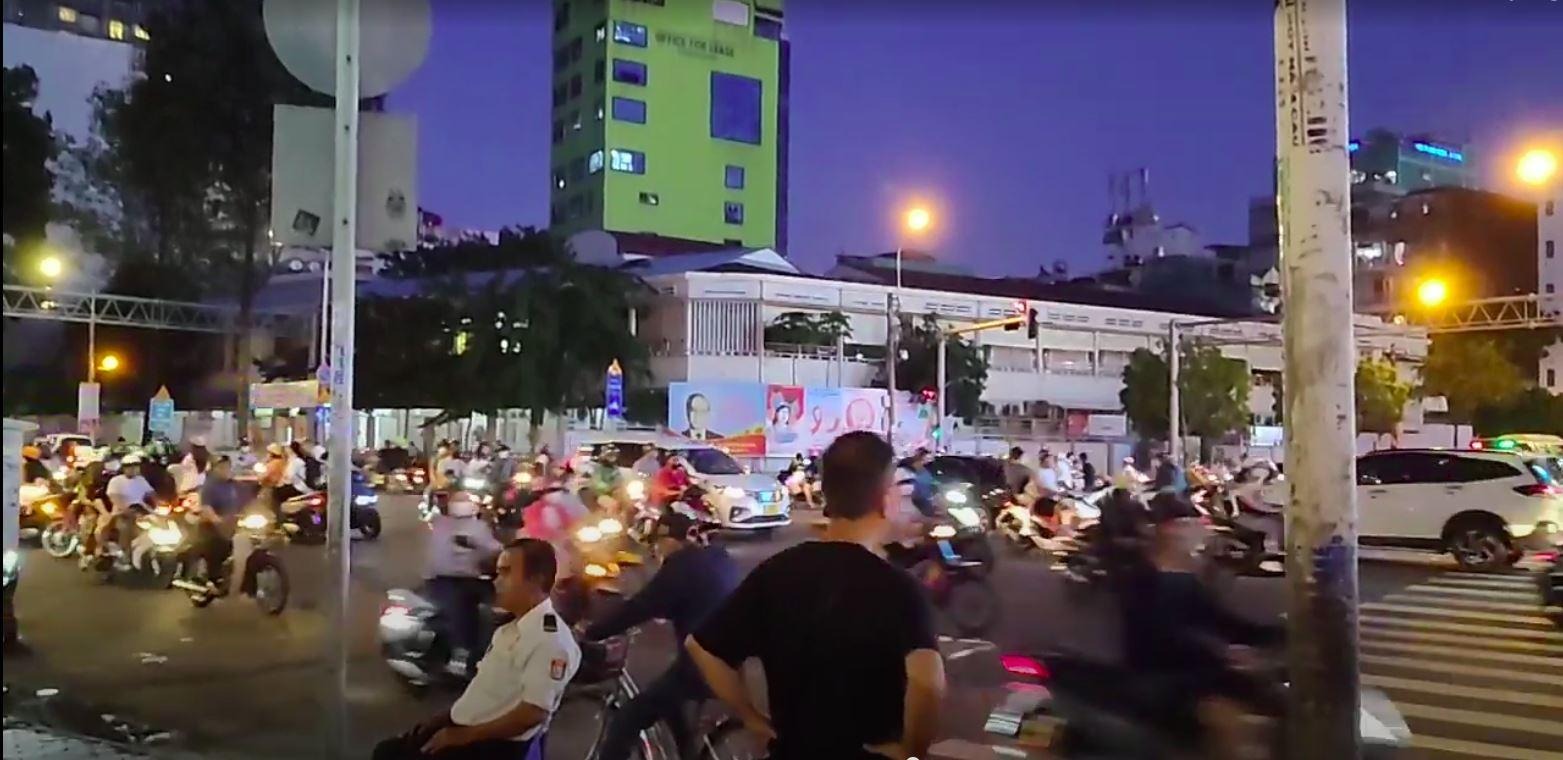
The streets of Vietnam are full of motorcycles.
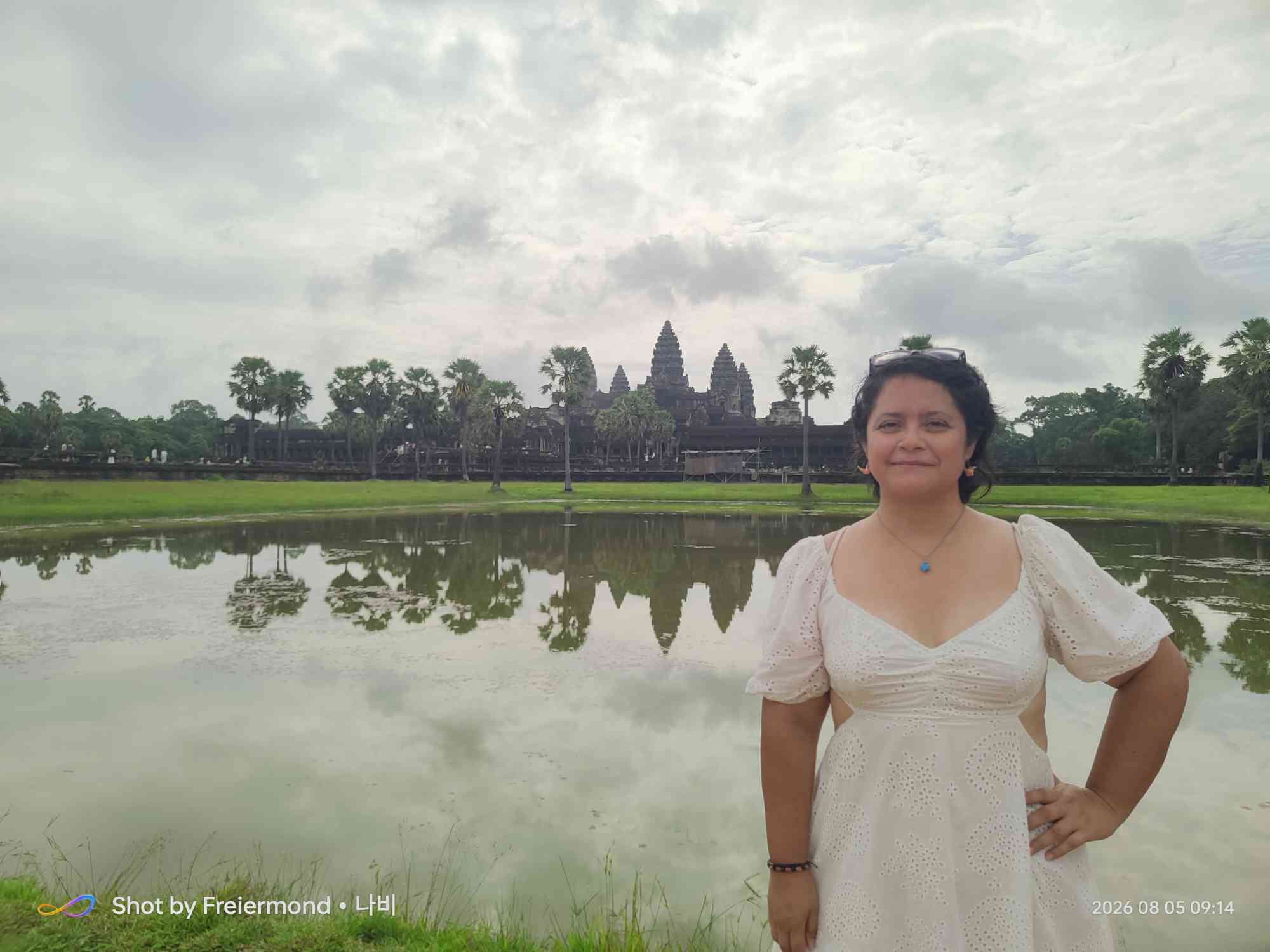
After saying goodbye to my new friends in Siem Reap, Cambodia, I embarked on what would be the next chapter in my book: Hanoi. As soon as I arrived at the airport, I had a feeling this time would be different. On the plane, I sat next to a friendly Spanish couple. We shared a few short conversations, and I felt they were very nice people. After getting off the plane, they invited me to ride with them to the city because they had booked a private taxi. Normally, I always look for public transportation or shuttle buses because it’s fun and cheaper, but it was already late at night and, honestly, I wanted to keep chatting with them. Not being sure where their hotel was, I changed my plan and hopped in with them. Lucky for me, their hotel was just two blocks away from mine. What are the chances!
Things were looking pretty good, my new temporary home was an apartment located very close to the Temple of Literature, right next to a charming temple with vibrant red-and-white accents, complete with a private balcony where I could enjoy an orchestra of traffic and people living their day-to-day lives. I discovered a week after I arrived, a new café opened on the first floor of the building. I couldn’t ask for more.
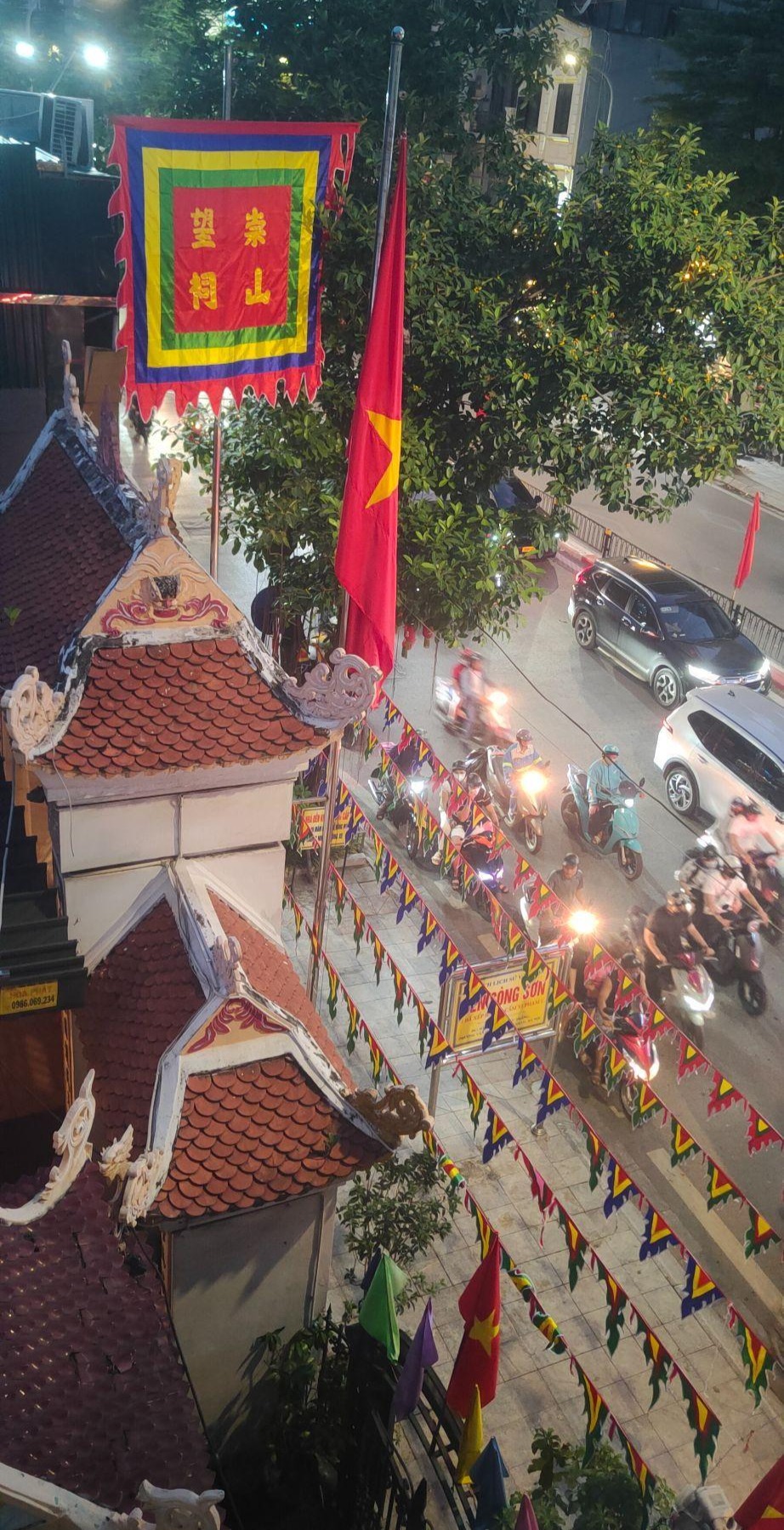
View from my window outside the street.
I would recommend this area because it’s well connected to the main attractions in Hanoi, like the Ho Chi Minh Mausoleum. Although, being such a central area, it is also quite chaotic. As soon as I stepped outside my apartment, I remembered how stressed I used to get with all those motorcycles. I felt very unsafe just trying to cross the street since it was my first time surrounded by so many of them, but it did not feel as stressful as before.
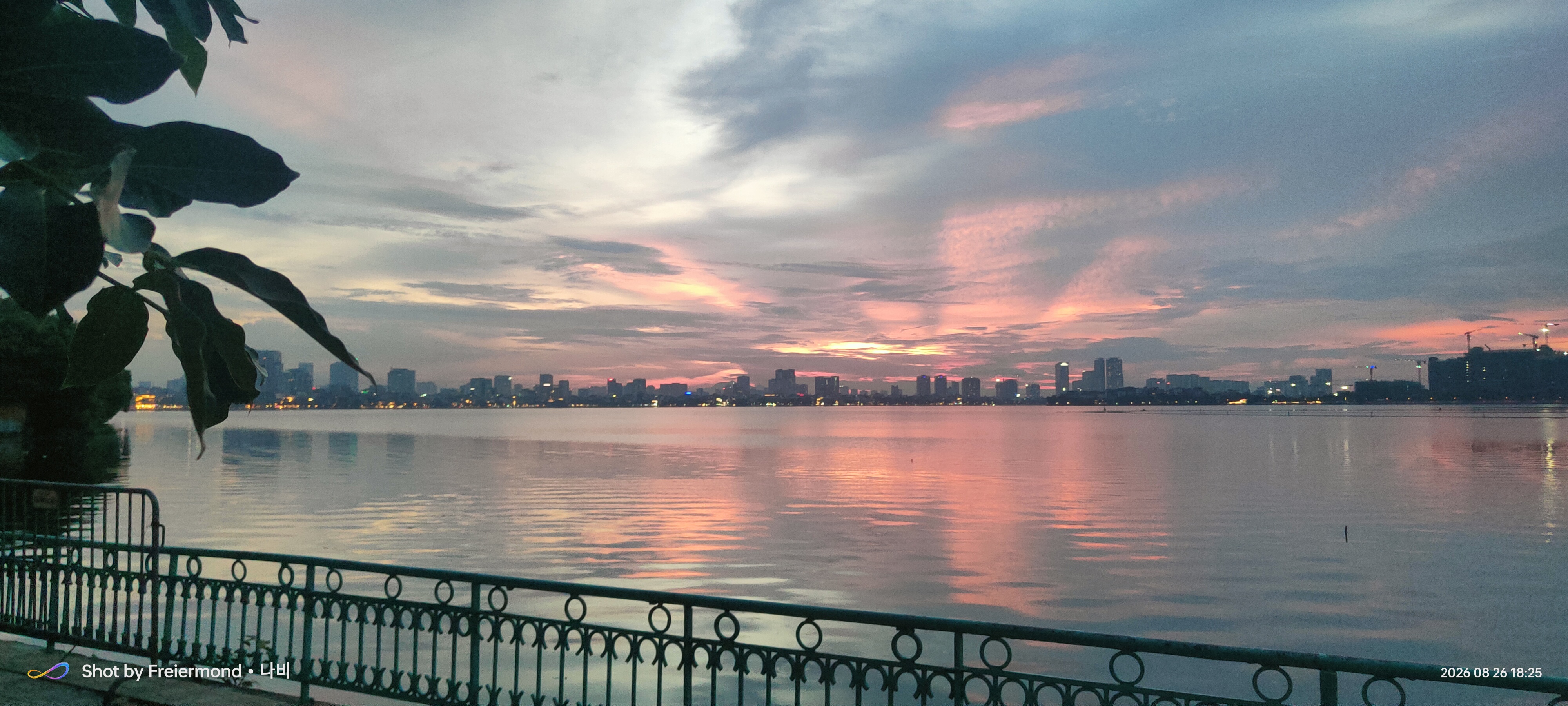
So, I started my journey to find a good place to have a delicious egg coffee, one of the most iconic coffee drinks in Vietnam. Walking those streets, I realized Hanoi has a completely different energy than Ho Chi Minh City—chaotic, yes, but traditional and classic. It’s the kind of vibe where you instantly feel connected because the city matches exactly what you like. In my case, the coffee culture and friendly people. Have you ever felt that way about a city?
In Cambodia, I saw solo travel through the eyes of local women. But here in Hanoi, a new question hit me: How do local men view us? What goes through a barista’s mind when a woman sits alone with her laptop— and do they worry about the women in their lives traveling the world alone? I also wanted to explore another topic not strictly related to women traveling alone, since it affects travelers in general: gentrification. I thought this would be a good opportunity to ask them how travelers impact their local way of life and how we can help avoid creating discomfort.
To find out, I stopped by a few local spots. Everyone was so friendly and open to foreigners, however, the language barrier between us was tough. While translation tools exist, a conversation limited by online translators isn't quite the same, it can feel clunky, making locals feel slightly overwhelmed and less confident in expressing their opinions clearly. Fortunately, that wasn't the case with Nam and Thang. We managed to have wonderful conversations, and they agreed to share their insights about women traveling alone.
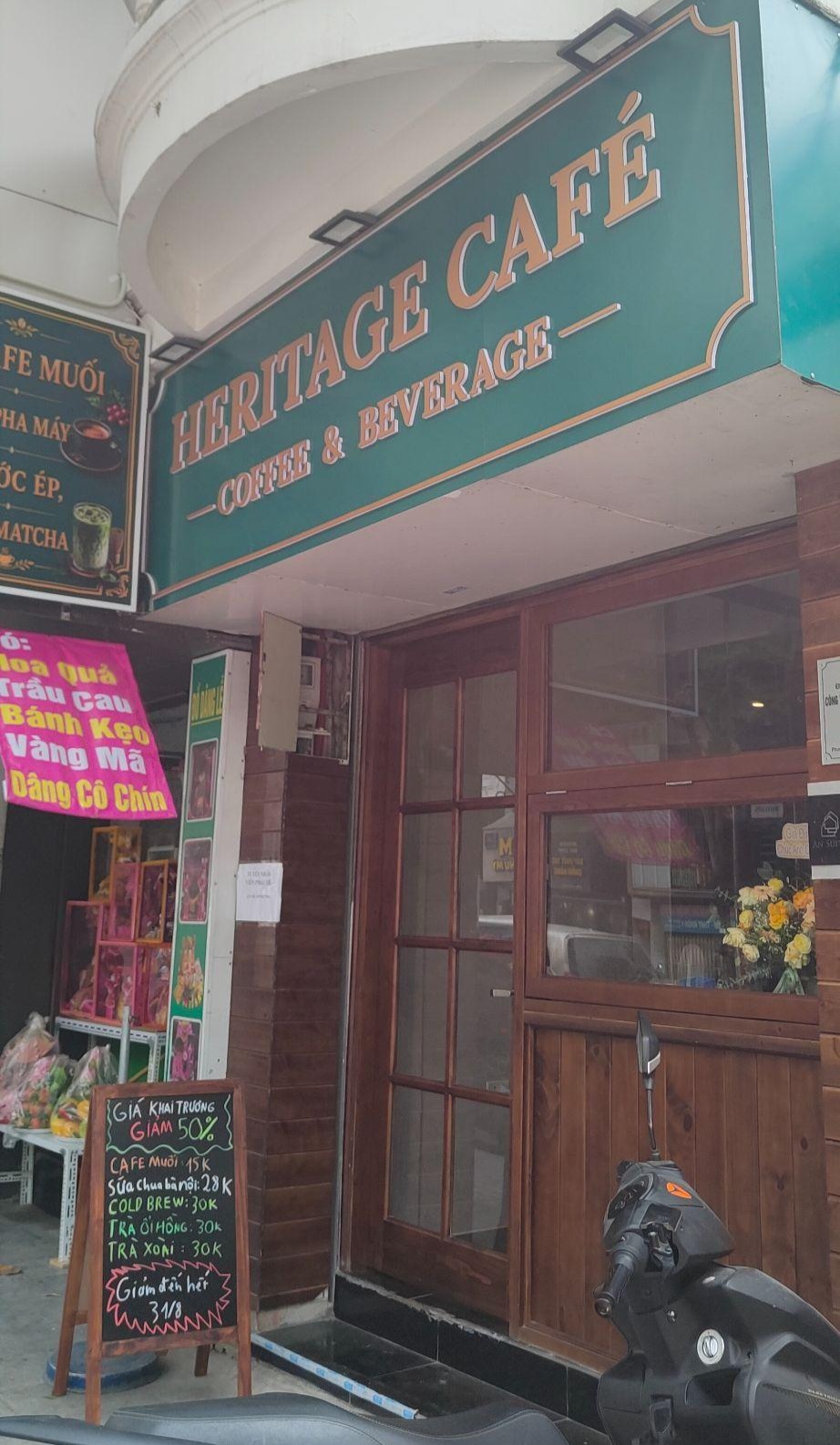
Heritage Café, view from outside.
Nam, Heritage Café
Nam is 27 years old and studied accounting, but from a young age, he felt coffee was his passion. In addition to English, his native languages are Tày and Vietnamese.
To find one of my favorite spots to drink coffee, I didn’t need to go far. I just needed to go downstairs. This was the cafe that opened around the same time I arrived in Hanoi and it was there that I met my new barista friend, Nam.
He is an experienced barista with over 10 years in the craft, and he truly makes one of the best egg coffees I tasted in Hanoi. If you’ve never tried Vietnamese egg coffee before, I know what you’re thinking—egg yolk in coffee?! I’ll admit, it sounds a little strange at first, and you might expect it to taste or smell weird. But trust me, it’s delicious. Nam’s version had a secret twist in the whipped egg yolk that goes on top of that espresso shot, but it's a secret only Nam can reveal. 😛
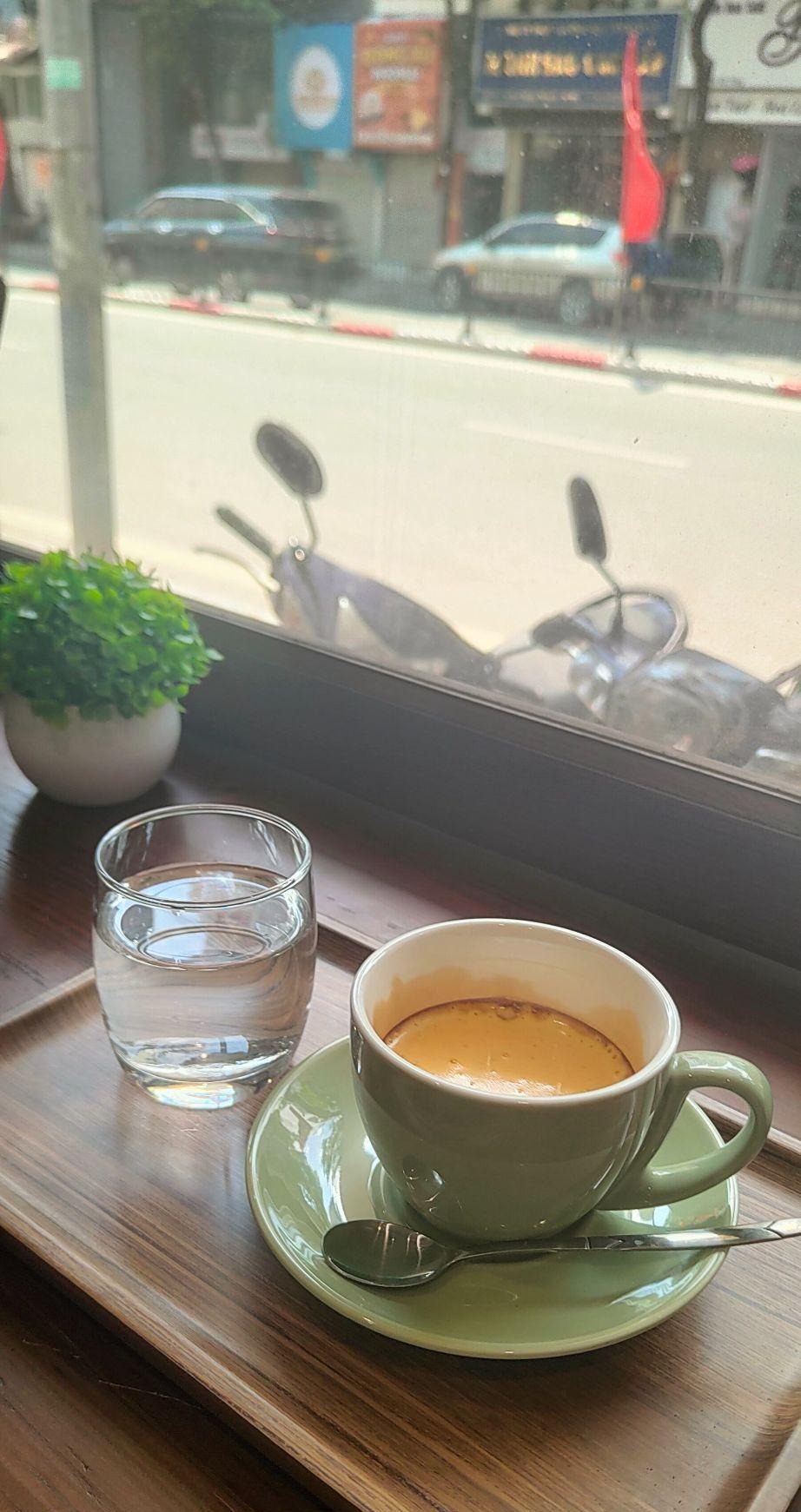
Egg Coffee in Heritage Café, prepared by Nam.
As I was enjoying my egg coffee, our conversation started to flow. He shared his experiences traveling alone. His last solo trip was to Ho Chi Minh City, but he said he prefers traveling with his girlfriend, as he did when they visited Bangkok, Thailand. In my opinion, Bangkok is a very popular destination among Asians as well. I can’t blame them, it’s an exciting place, full of temples and activities.
I love those moments when, as a female traveler, you can sit at a coffee counter and enjoy a genuine chat with a local without feeling uncomfortable. And that’s exactly how I felt with Nam. Hearing him talk about traveling with his girlfriend led me to the question I had been wanting to ask: as a Vietnamese man, how did he view women traveling on their own? So, I asked before my coffee got cold.
His answer was quite simple: women can—and should—do as they please. In his eyes, there are no social or religious limitations holding women back from traveling. If a woman wants to explore the world alone and can afford it, why not? While some people might assume a female traveler is constantly at risk or acting against societal expectations, that wasn't how Nam saw it, nor was it the reality for any of the women close to him.
Curious, I asked more about how he would feel if his girlfriend decided to adventure on a solo journey. He said he would be worried, but not for the reasons I expected. His first thought wasn't that his girlfriend would be harassed or robbed, he was actually concerned she might get lost or get into an accident. This surprised me a bit. In many countries, many of us are constantly on guard—afraid of empty streets, pickpocketing, harassment, or worse. Hearing his primary concerns made me feel a different reality. How many of you feel the same way?
Suddenly, I looked around and thought: I could actually stay here longer than a month. Even late at night, the area felt quite safe—no tense atmosphere or extreme security measures in stores. But whenever I find a place like this, I always consider the other side: Do long-term foreign visitors paying high rates end up displacing locals? While Nam wasn’t very familiar with the concept of gentrification, he caught on right away as our conversation continued.
Nam talked about how in some parts of the city, like in the Old Quarter, it feels a bit more crowded. It wasn’t like that when he first came to Hanoi 10 years ago as a student. He remembers riding his bike around so peacefully, now he feels like those quiet local spots have shrunk and the authentic vibe is fading as big international chains started to pop up. However, Vietnamese food hasn’t really changed its authentic flavors, it has been adapted a bit for the tourist spiciness level — I think this would be somehow true, to me as a Mexican, nothing was spicy at all. One particular example that came to his mind would be bún đậu, a very local dish with rice noodles, fried tofu and vegetables served on a large round bamboo platter lined with banana leaves. Normally it includes a fermented shrimp paste called Mắm Tôm, but this is replaced occasionally with a Vietnamese dipping sauce, because the smell is quite strong if you are not used to it. Although it could also be replaced due to allergies.
Regarding rental prices, as more tourists come to Vietnam, housing demand goes up and pushes prices higher. Tourists might spend 500,000 VND ($19.47 USD) a day, while locals can usually only afford around 100,000 VND ($3.89 USD), though furnished apartments are usually more expensive. A few apartment prices weighed around the average local rents against what I was paying. We both realized that staying long-term doesn't necessarily mean paying exorbitant prices compared to locals, based only on furnished apartments. Of course, this wasn't an exhaustive study by any means—just a quick, casual comparison while I was finishing my coffee.
Ultimately, Nam thinks the rising cost of living creates financial pressure on the downside, but on the bright side, it brings a vibrant energy and lets him experience cultural exchange right here in his own city.
Thắng, Still Colors Café
Thắng is 27 years old, just like Nam. His name means "Victory" in Vietnamese. He works as a barista at Still Colors Café, a small and cozy coffee shop hidden in the streets of the French Quarter. It's the kind of place that invites you inside simply by the delicious aroma of coffee coming out the street.
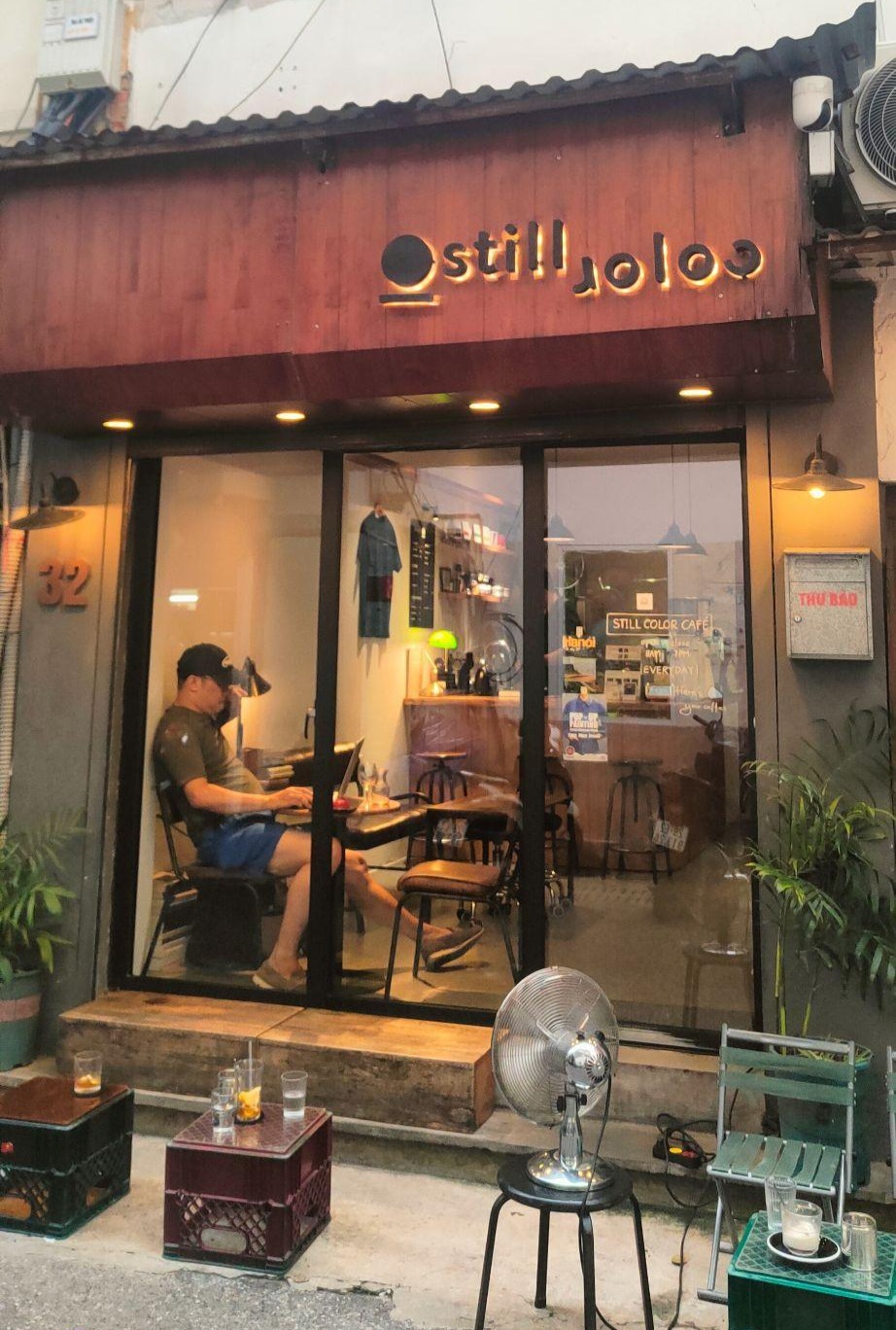
Still Colors Café, view from outside.
I sat very close to the espresso machines, looking for an excuse to start chatting with him. Once the crowd thinned out, he was less busy with clients, so we started having a very nice conversation. When Thắng told me he walked away from engineering to brew coffee after facing severe burnout, I felt that in my soul. As an engineer myself, I couldn't help but wonder—how many of us use travel or a change in our career to heal from that exact pressure?
Now he has 8 years of experience as a barista. I could see how much he enjoys his work as he orchestrated a coffee symphony behind the counter. While we were talking—he stayed busy and never wasted a second—he was preparing a cold brew, so the rich aroma joined our conversation like a third friend.
Between slow sips of coffee, I watched Thắng pour water rhythmically through the coffee grounds for his next cold brew batch, and our conversation started to flow. We brought up solo travel, and he admitted it wasn't really his thing; he prefers building memories to look back on years later with his friends. Exploring alone isn't for everyone, and there is also something very special about sharing adventures with the people you love. That thought brought me back to my main question: how do local men view women exploring the world on their own?
To answer that, Thắng brought up his older sister. He mentioned he would be really worried if she traveled alone and that he would want to stay in constant touch. His concerns would vary depending on the destination, especially if she were traveling abroad, which I find to be a very reasonable reaction. I got the impression he is a very caring younger brother. ♥
The way he cares for his sister reminded me of times I’ve experienced street harassment. The most vivid memory was while visiting La Paz, Bolivia. I met three friendly German girls during a “free walking tour”, and afterwards, we decided to get coffee together. As we walked toward the café, a man who didn't even appear drunk or intoxicated started shouting at one of the girls: “¡Cásate conmigo mamita! ¡Yo te puedo hacer cositas ricas!” (English: "Marry me, sweetie! I can make you feel good!"). It was an extremely uncomfortable moment. We asked him to stop, but he continued shouting..
In these situations it is best to just walk away instead of starting a fight, which I know is quite hard, because those people deserve to be taught how to behave. The problem is we never know how they will react or if they carry something to hurt us with. So I told the German girl to just ignore and continue walking.Has something similar ever happened to you?
Sitting here in Hanoi, that anxiety felt quite distant. Thắng reassured me that Hanoi is quite safe, though he feels differently about Ho Chi Minh City. Interestingly, his perspective is similar to Nam's. It's something worth keeping in mind when planning a trip to Ho Chi Minh City. I'm not saying you shouldn't go, but it's good to consider—for instance, when booking flights, try to avoid arriving late at night. In Hanoi, as in any city, taking basic safety precautions is wise, such as avoiding walking alone late at night unless strictly necessary. But that’s likely something you already practice.
After ordering another coffee, I started looking around this cozy café and couldn't help but ask Thắng about how Hanoi is balancing modern development with its traditional charm. Much like Nam, he wasn't very familiar with the term "gentrification". Once I explained what I meant, he smiled and shrugged—to him, Hanoi hasn't changed that much over the years. However, there is something that could change: in recent years, the government has begun restricting street stalls set up outside local restaurants and coffee shops. He, along with many others, wonders whether this would really improve pedestrian safeness or just substitute tradition with comfort and modernization.
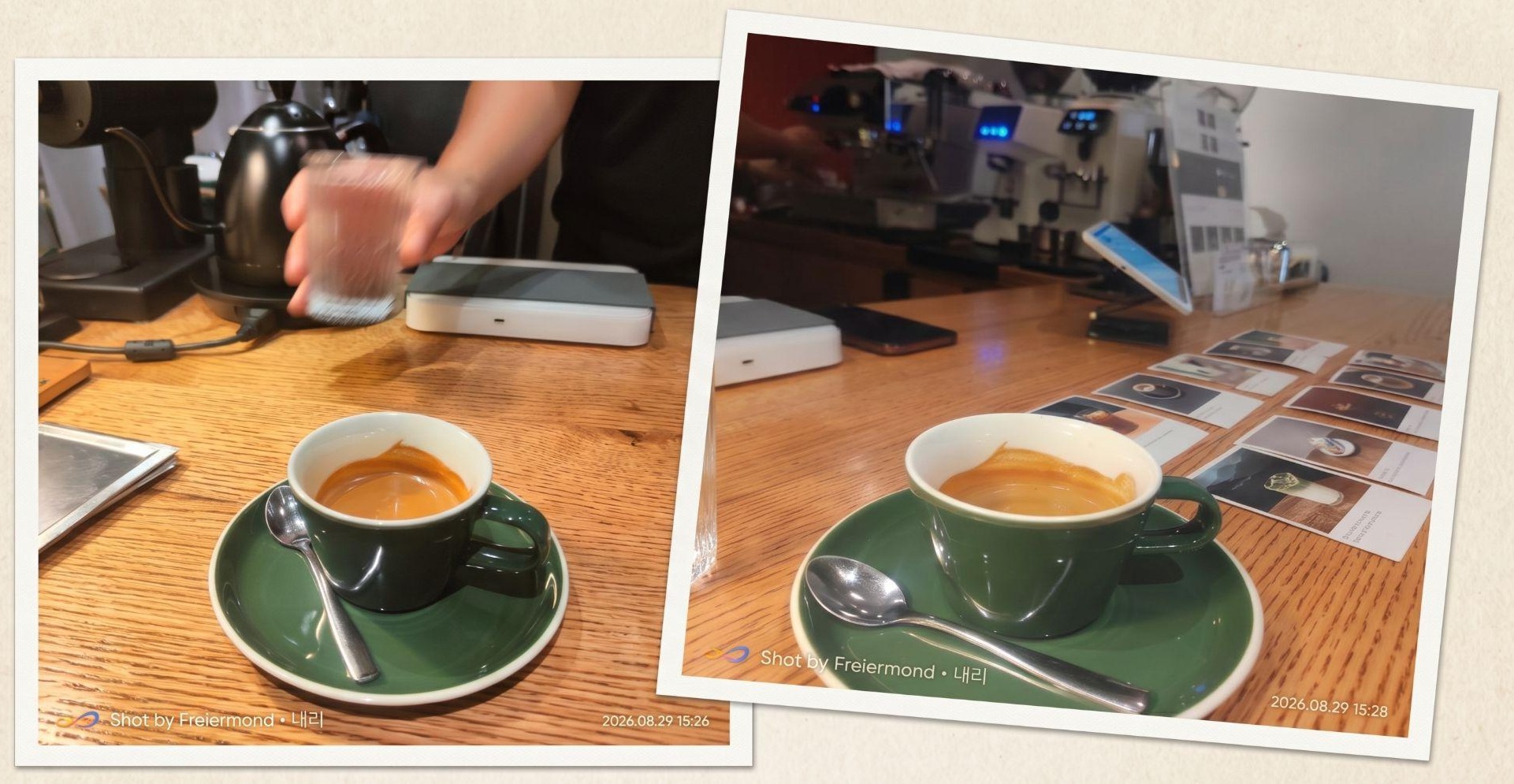
Delicious espresso prepared by Thắng
Final Thoughts
Male or female travelers, we have differences, but we do have a lot in common, especially when it comes to safety. I felt safe while walking on the streets of Hanoi—I was able to take pictures of my surroundings without being afraid of someone stealing my phone, and I didn’t experience any harassment. But I always avoid putting myself in a complicated situation, like accepting invitations to unknown and remote places from somebody I just met. I think this is some kind of built-in safety radar that we need to build not only when traveling, but throughout our whole lives.
If we feel free to walk without worries, is great to just get lost watching how the locals live their day-by-day lives, how they sell food from their bicycles, how they spend an evening just chatting while they drink a beer or coffee in one of those little stalls next to the street, how they walk so normally next to the traffic because the motorcycles are parked on the sidewalk, how the little kids go to school, how they pack four onto a single motorcycle, and how they transport stacks of merchandise without losing their balance.
It is scenes like those that make me treasure those differences that make a place unique: food representing tradition cooked using ingredients available in the region, locals going about their daily routines right alongside us (not pushed out to the fringes by inflated rents), and streets that look authentic rather than Instagram spots. This was only my second time visiting Vietnam. I can’t say for sure how much gentrification impacts Hanoi as a whole, but from my point of view, only the most touristy spots seemed affected, much like in any major city. I remember walking through narrow alleys near my apartment, I saw many Vietnamese flags strung wall-to-wall overhead and wondered if it was staged for tourists, but when I asked both guys if this was something planned to be an attraction for tourists, they said it had been like that for as long as they could remember. Ultimately, between Nam and Thắng’s perspectives and my own time wandering these streets, I found Hanoi to have a well-defined personality that I can't compare to anything else.
This is why Hanoi is a lovely city where I recommend staying for more than just a few days. There is so much history and so many places to explore. The culture is so rich that there is a surprise waiting around every corner, like when I saw a woman burning money as I walked by on my way back to my apartment —but don’t be scared, she wasn’t burning real money, she was just burning fake money as part of a local tradition. But this is material for another blog post.
Traveler Tips:
- If you are a vegetarian like me, you will never struggle to find places to eat, Hanoi is full of wonderfully budget-friendly vegetarian spots. So I didn’t have to miss out on trying typical dishes like Phở or bánh mì. If you search in Google Maps the Vietnamese term for vegetarian meal “Ăn chay”, you will find a lot more options than searching the term in english.
- Avoid visiting during August, if you aren’t tolerant of hot and humid weather (like me!). I had some issues while walking on the streets for a long time, even at night. It was the first time my hands swelled up, and I even felt a bit dizzy.
- Credit cards are not accepted everywhere. The preferred way to pay is by cash or QR code. In general the commission to withdraw cash is a bit expensive (even with Revolut), so I downloaded Moreta Pay to use the QR code function. Then I just transferred dollars to this app and I was able to use the QR code everywhere. It has a small commission but is almost nothing compared to the ATM commission.
- If we run into someone who starts harassing us, it is better to ignore them instead of starting a fight, it doesn't matter if you are alone or in a group. This is a tip in general for all countries, although in Vietnam I never felt any kind of harassment, it is better to keep it in mind.
Enjoy your trip to Vietnam!