
Gentrification & solo female travelers: how do locals in Hanoi, Vietnam feel about tourism?
NomadHer blogger Hada Balbina Garcia Canale interviews local baristas in Hanoi about gentrification and what they think of solo female travelers in their city.
NomadHer is happy to share a new series featuring NomadHers and their own travel stories through personal blog posts. All posts have been edited for grammar and clarity while making sure to retain the true voices and stories of our writers. We’d like to extend a special thank you to all of our writers and to our community!
Can a place that once overwhelmed you become one of your favorite places? Five years ago, Saigon’s endless sea of motorbikes made me question if I’d ever feel comfortable in Vietnam. Would I be able to enjoy my coffee, that delicious Vietnamese coffee I had heard so much about? Well, let’s sit in a café to write about my journey and give Vietnam a second chance.
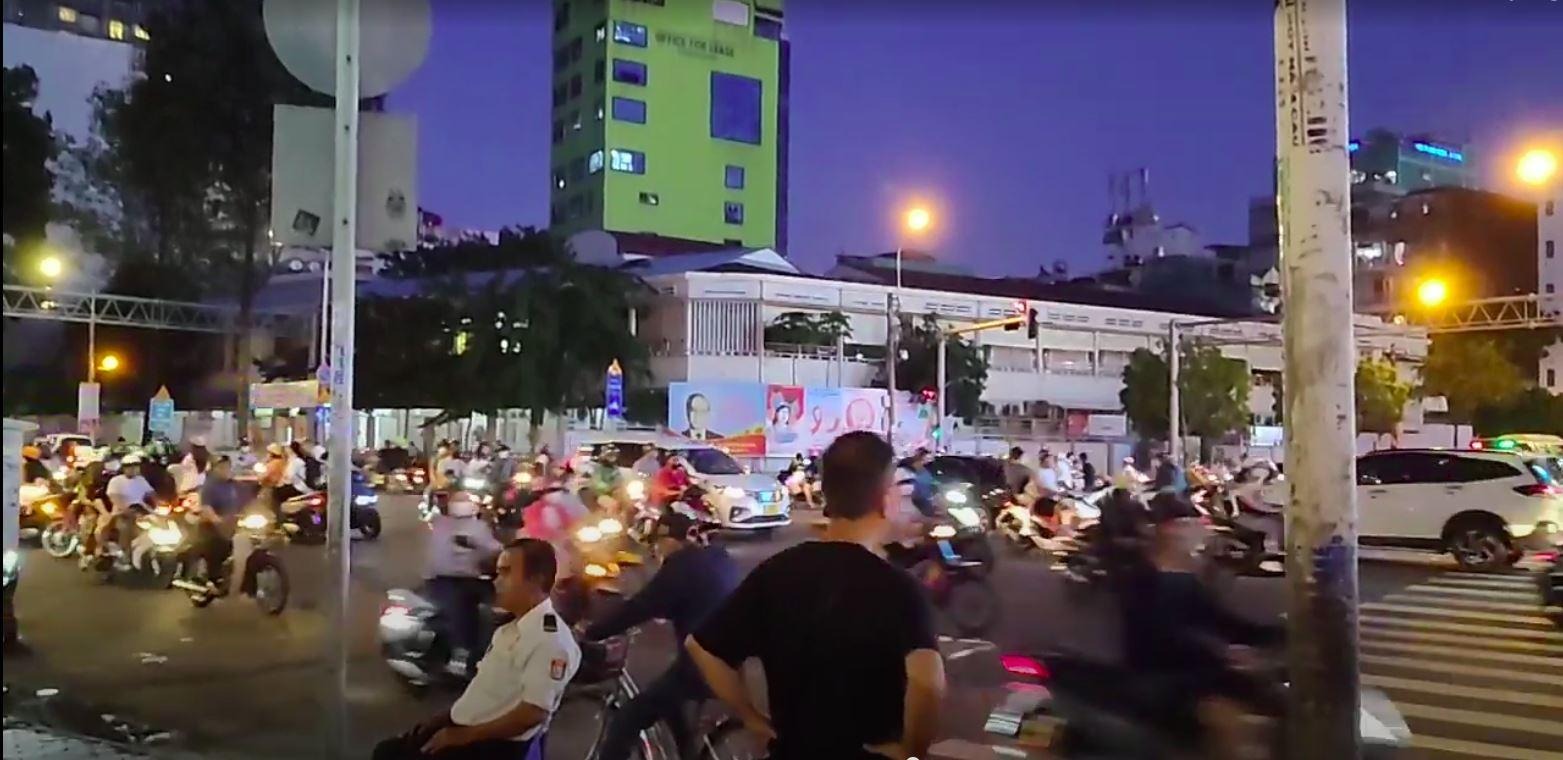
The streets of Vietnam are full of motorcycles.
After saying goodbye to my new friends in Siem Reap, Cambodia, I embarked on what would be the next chapter in my book: Hanoi. As soon as I arrived at the airport, I had a feeling this time would be different. On the plane, I sat next to a friendly Spanish couple. We shared a few short conversations, and I felt they were very nice people. After getting off the plane, they invited me to ride with them to the city because they had booked a private taxi. Normally, I always look for public transportation or shuttle buses because it’s fun and cheaper, but it was already late at night and, honestly, I wanted to keep chatting with them. Not being sure where their hotel was, I changed my plan and hopped in with them. Lucky for me, their hotel was just two blocks away from mine. What are the chances!
Things were looking pretty good, my new temporary home was an apartment located very close to the Temple of Literature, right next to a charming temple with vibrant red-and-white accents, complete with a private balcony where I could enjoy an orchestra of traffic and people living their day-to-day lives. I discovered a week after I arrived, a new café opened on the first floor of the building. I couldn’t ask for more.
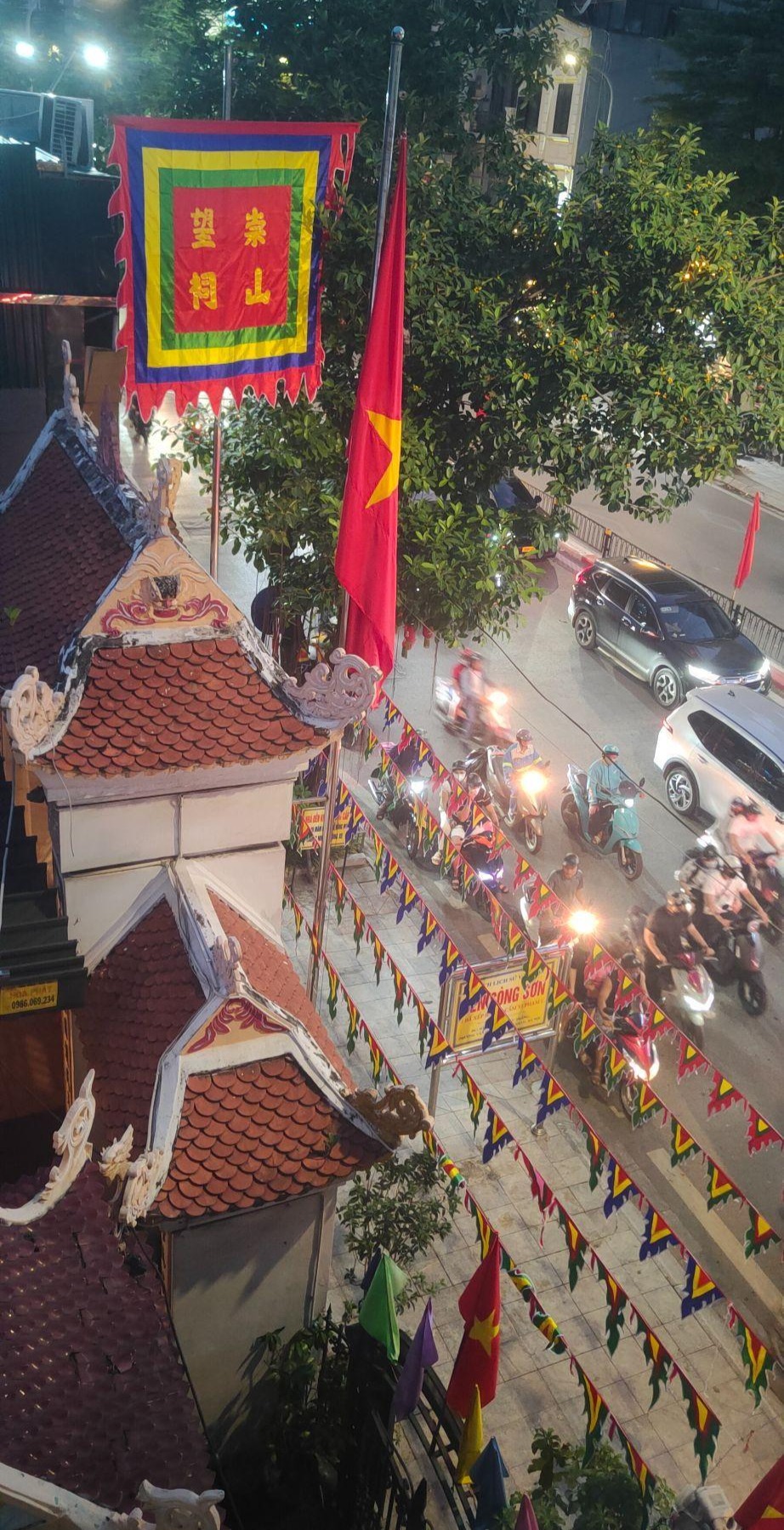
View from my window outside the street.
I would recommend this area because it’s well connected to the main attractions in Hanoi, like the Ho Chi Minh Mausoleum. Although, being such a central area, it is also quite chaotic. As soon as I stepped outside my apartment, I remembered how stressed I used to get with all those motorcycles. I felt very unsafe just trying to cross the street since it was my first time surrounded by so many of them, but it did not feel as stressful as before.
So, I started my journey to find a good place to have a delicious egg coffee, one of the most iconic coffee drinks in Vietnam. Walking those streets, I realized Hanoi has a completely different energy than Ho Chi Minh City—chaotic, yes, but traditional and classic. It’s the kind of vibe where you instantly feel connected because the city matches exactly what you like. In my case, the coffee culture and friendly people. Have you ever felt that way about a city?
In Cambodia, I saw solo travel through the eyes of local women. But here in Hanoi, a new question hit me: How do local men view us? What goes through a barista’s mind when a woman sits alone with her laptop— and do they worry about the women in their lives traveling the world alone? I also wanted to explore another topic not strictly related to women traveling alone, since it affects travelers in general: gentrification. I thought this would be a good opportunity to ask them how travelers impact their local way of life and how we can help avoid creating discomfort.
To find out, I stopped by a few local spots. Everyone was so friendly and open to foreigners, however, the language barrier between us was tough. While translation tools exist, a conversation limited by online translators isn't quite the same, it can feel clunky, making locals feel slightly overwhelmed and less confident in expressing their opinions clearly. Fortunately, that wasn't the case with Nam and Thang. We managed to have wonderful conversations, and they agreed to share their insights about women traveling alone.
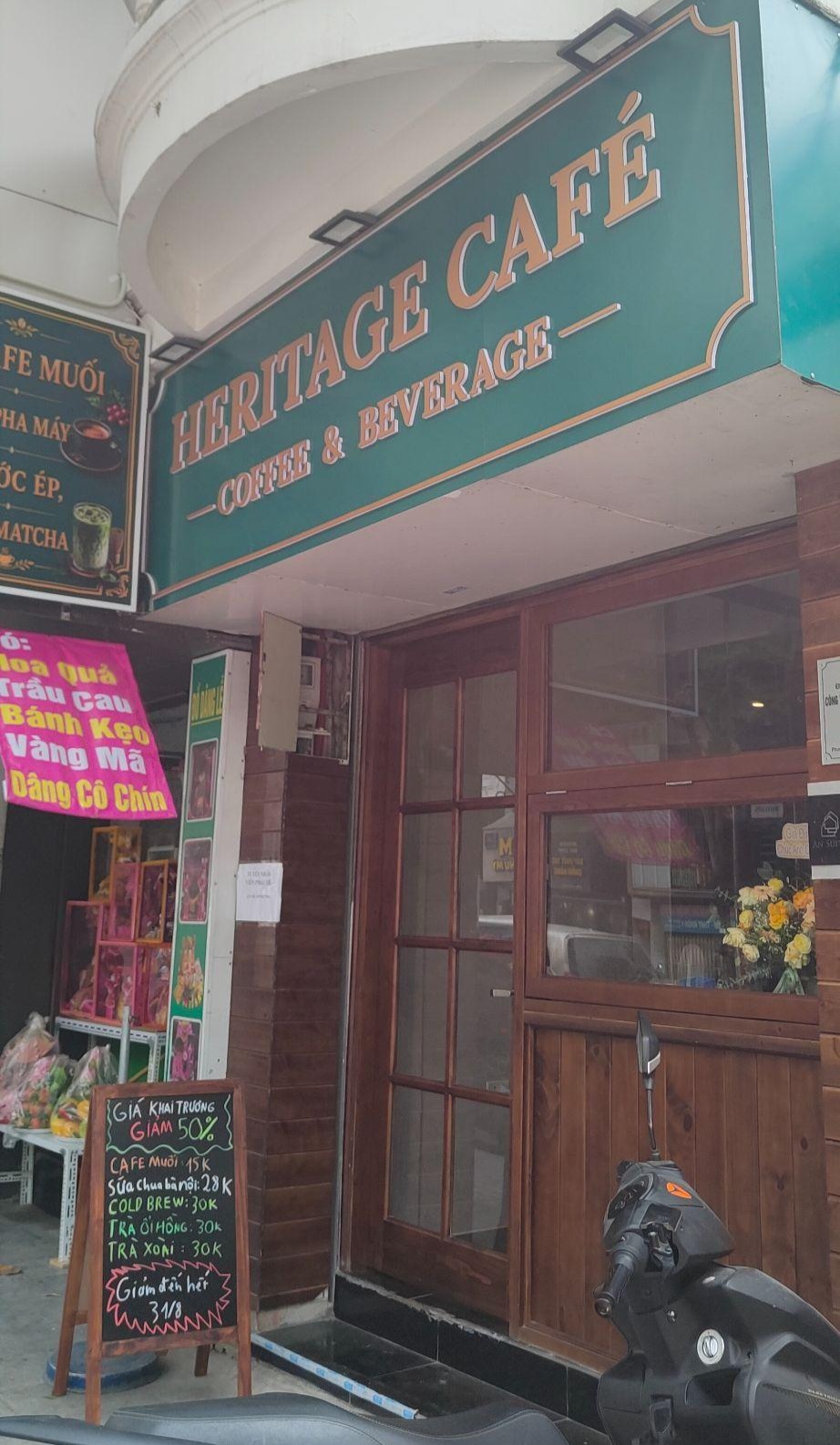
Heritage Café, view from outside.
Nam, Heritage Café
Nam is 27 years old and studied accounting, but from a young age, he felt coffee was his passion. In addition to English, his native languages are Tày and Vietnamese.
To find one of my favorite spots to drink coffee, I didn’t need to go far. I just needed to go downstairs. This was the cafe that opened around the same time I arrived in Hanoi and it was there that I met my new barista friend, Nam.
He is an experienced barista with over 10 years in the craft, and he truly makes one of the best egg coffees I tasted in Hanoi. If you’ve never tried Vietnamese egg coffee before, I know what you’re thinking—egg yolk in coffee?! I’ll admit, it sounds a little strange at first, and you might expect it to taste or smell weird. But trust me, it’s delicious. Nam’s version had a secret twist in the whipped egg yolk that goes on top of that espresso shot, but it's a secret only Nam can reveal. 😛
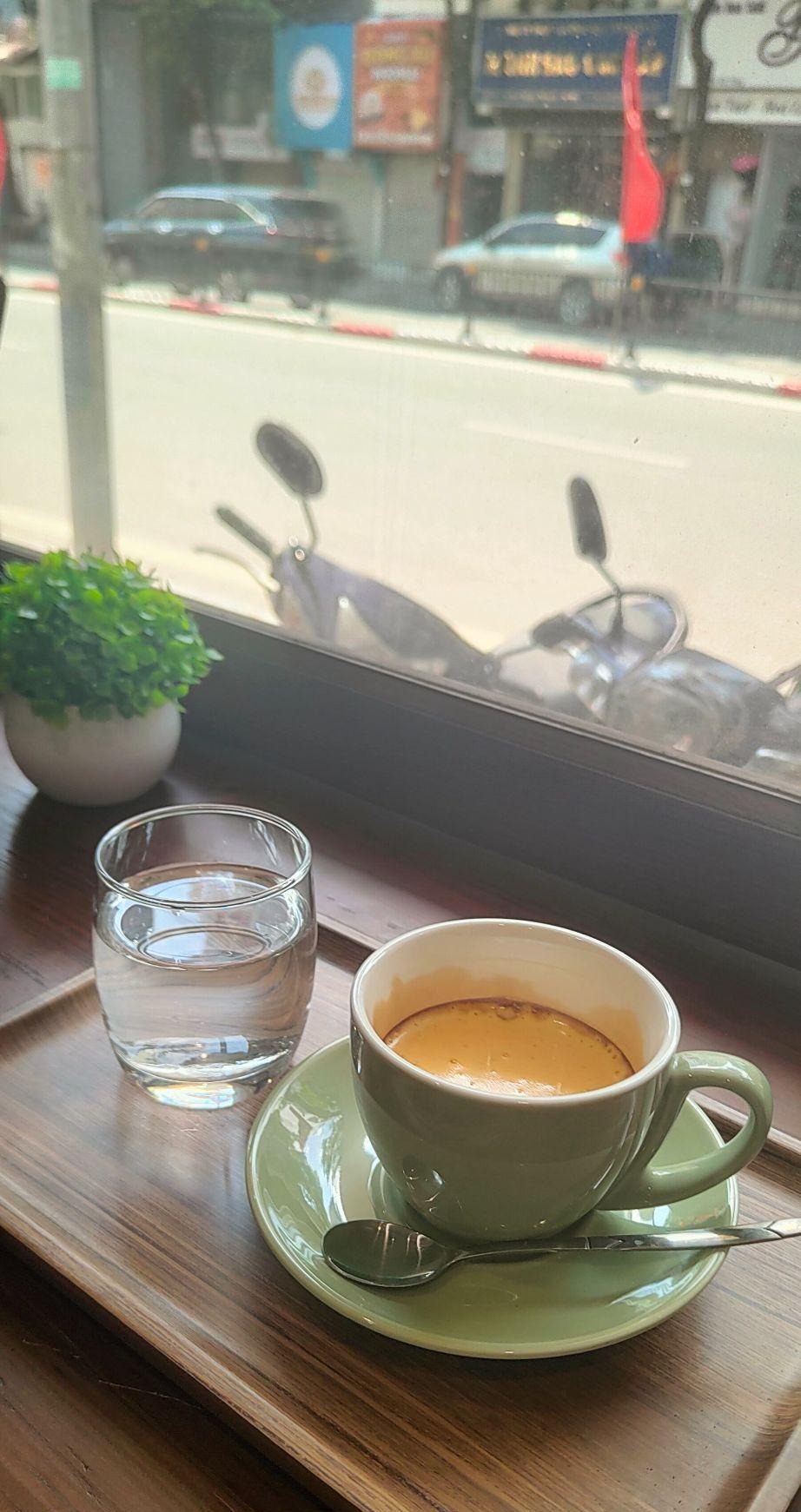
Egg Coffee in Heritage Café, prepared by Nam.
As I was enjoying my egg coffee, our conversation started to flow. He shared his experiences traveling alone. His last solo trip was to Ho Chi Minh City, but he said he prefers traveling with his girlfriend, as he did when they visited Bangkok, Thailand. In my opinion, Bangkok is a very popular destination among Asians as well. I can’t blame them, it’s an exciting place, full of temples and activities.
I love those moments when, as a female traveler, you can sit at a coffee counter and enjoy a genuine chat with a local without feeling uncomfortable. And that’s exactly how I felt with Nam. Hearing him talk about traveling with his girlfriend led me to the question I had been wanting to ask: as a Vietnamese man, how did he view women traveling on their own? So, I asked before my coffee got cold.
His answer was quite simple: women can—and should—do as they please. In his eyes, there are no social or religious limitations holding women back from traveling. If a woman wants to explore the world alone and can afford it, why not? While some people might assume a female traveler is constantly at risk or acting against societal expectations, that wasn't how Nam saw it, nor was it the reality for any of the women close to him.
Curious, I asked more about how he would feel if his girlfriend decided to adventure on a solo journey. He said he would be worried, but not for the reasons I expected. His first thought wasn't that his girlfriend would be harassed or robbed, he was actually concerned she might get lost or get into an accident. This surprised me a bit. In many countries, many of us are constantly on guard—afraid of empty streets, pickpocketing, harassment, or worse. Hearing his primary concerns made me feel a different reality. How many of you feel the same way?
Suddenly, I looked around and thought: I could actually stay here longer than a month. Even late at night, the area felt quite safe—no tense atmosphere or extreme security measures in stores. But whenever I find a place like this, I always consider the other side: Do long-term foreign visitors paying high rates end up displacing locals? While Nam wasn’t very familiar with the concept of gentrification, he caught on right away as our conversation continued.
Nam talked about how in some parts of the city, like in the Old Quarter, it feels a bit more crowded. It wasn’t like that when he first came to Hanoi 10 years ago as a student. He remembers riding his bike around so peacefully, now he feels like those quiet local spots have shrunk and the authentic vibe is fading as big international chains started to pop up. However, Vietnamese food hasn’t really changed its authentic flavors, it has been adapted a bit for the tourist spiciness level — I think this would be somehow true, to me as a Mexican, nothing was spicy at all. One particular example that came to his mind would be bún đậu, a very local dish with rice noodles, fried tofu and vegetables served on a large round bamboo platter lined with banana leaves. Normally it includes a fermented shrimp paste called Mắm Tôm, but this is replaced occasionally with a Vietnamese dipping sauce, because the smell is quite strong if you are not used to it. Although it could also be replaced due to allergies.
Regarding rental prices, as more tourists come to Vietnam, housing demand goes up and pushes prices higher. Tourists might spend 500,000 VND ($19.47 USD) a day, while locals can usually only afford around 100,000 VND ($3.89 USD), though furnished apartments are usually more expensive. A few apartment prices weighed around the average local rents against what I was paying. We both realized that staying long-term doesn't necessarily mean paying exorbitant prices compared to locals, based only on furnished apartments. Of course, this wasn't an exhaustive study by any means—just a quick, casual comparison while I was finishing my coffee.
Ultimately, Nam thinks the rising cost of living creates financial pressure on the downside, but on the bright side, it brings a vibrant energy and lets him experience cultural exchange right here in his own city.
Thắng, Still Colors Café
Thắng is 27 years old, just like Nam. His name means "Victory" in Vietnamese. He works as a barista at Still Colors Café, a small and cozy coffee shop hidden in the streets of the French Quarter. It's the kind of place that invites you inside simply by the delicious aroma of coffee coming out the street.
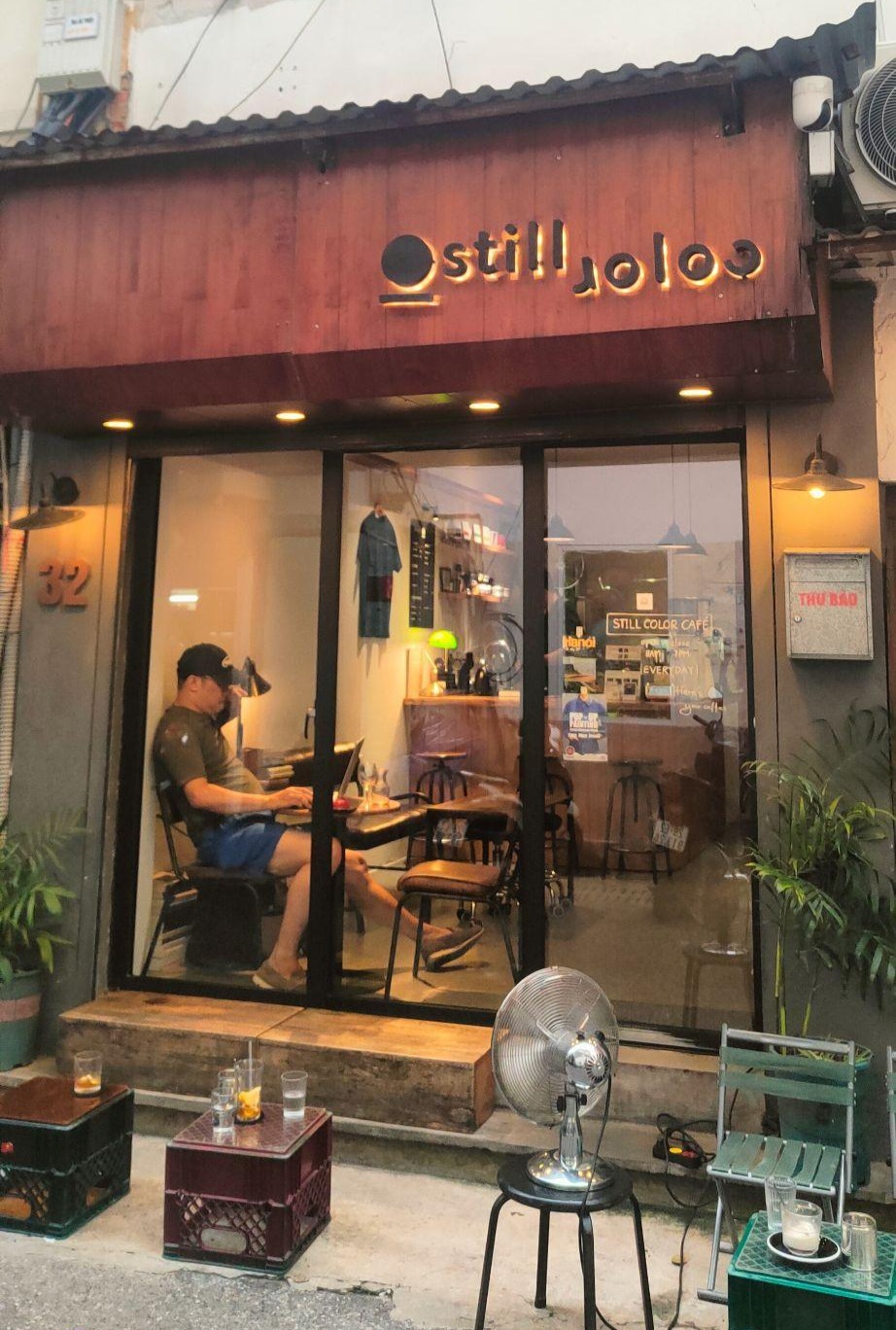
Still Colors Café, view from outside.
I sat very close to the espresso machines, looking for an excuse to start chatting with him. Once the crowd thinned out, he was less busy with clients, so we started having a very nice conversation. When Thắng told me he walked away from engineering to brew coffee after facing severe burnout, I felt that in my soul. As an engineer myself, I couldn't help but wonder—how many of us use travel or a change in our career to heal from that exact pressure?
Now he has 8 years of experience as a barista. I could see how much he enjoys his work as he orchestrated a coffee symphony behind the counter. While we were talking—he stayed busy and never wasted a second—he was preparing a cold brew, so the rich aroma joined our conversation like a third friend.
Between slow sips of coffee, I watched Thắng pour water rhythmically through the coffee grounds for his next cold brew batch, and our conversation started to flow. We brought up solo travel, and he admitted it wasn't really his thing; he prefers building memories to look back on years later with his friends. Exploring alone isn't for everyone, and there is also something very special about sharing adventures with the people you love. That thought brought me back to my main question: how do local men view women exploring the world on their own?
To answer that, Thắng brought up his older sister. He mentioned he would be really worried if she traveled alone and that he would want to stay in constant touch. His concerns would vary depending on the destination, especially if she were traveling abroad, which I find to be a very reasonable reaction. I got the impression he is a very caring younger brother. ♥
The way he cares for his sister reminded me of times I’ve experienced street harassment. The most vivid memory was while visiting La Paz, Bolivia. I met three friendly German girls during a “free walking tour”, and afterwards, we decided to get coffee together. As we walked toward the café, a man who didn't even appear drunk or intoxicated started shouting at one of the girls: “¡Cásate conmigo mamita! ¡Yo te puedo hacer cositas ricas!” (English: "Marry me, sweetie! I can make you feel good!"). It was an extremely uncomfortable moment. We asked him to stop, but he continued shouting..
In these situations it is best to just walk away instead of starting a fight, which I know is quite hard, because those people deserve to be taught how to behave. The problem is we never know how they will react or if they carry something to hurt us with. So I told the German girl to just ignore and continue walking.Has something similar ever happened to you?
Sitting here in Hanoi, that anxiety felt quite distant. Thắng reassured me that Hanoi is quite safe, though he feels differently about Ho Chi Minh City. Interestingly, his perspective is similar to Nam's. It's something worth keeping in mind when planning a trip to Ho Chi Minh City. I'm not saying you shouldn't go, but it's good to consider—for instance, when booking flights, try to avoid arriving late at night. In Hanoi, as in any city, taking basic safety precautions is wise, such as avoiding walking alone late at night unless strictly necessary. But that’s likely something you already practice.
After ordering another coffee, I started looking around this cozy café and couldn't help but ask Thắng about how Hanoi is balancing modern development with its traditional charm. Much like Nam, he wasn't very familiar with the term "gentrification". Once I explained what I meant, he smiled and shrugged—to him, Hanoi hasn't changed that much over the years. However, there is something that could change: in recent years, the government has begun restricting street stalls set up outside local restaurants and coffee shops. He, along with many others, wonders whether this would really improve pedestrian safeness or just substitute tradition with comfort and modernization.
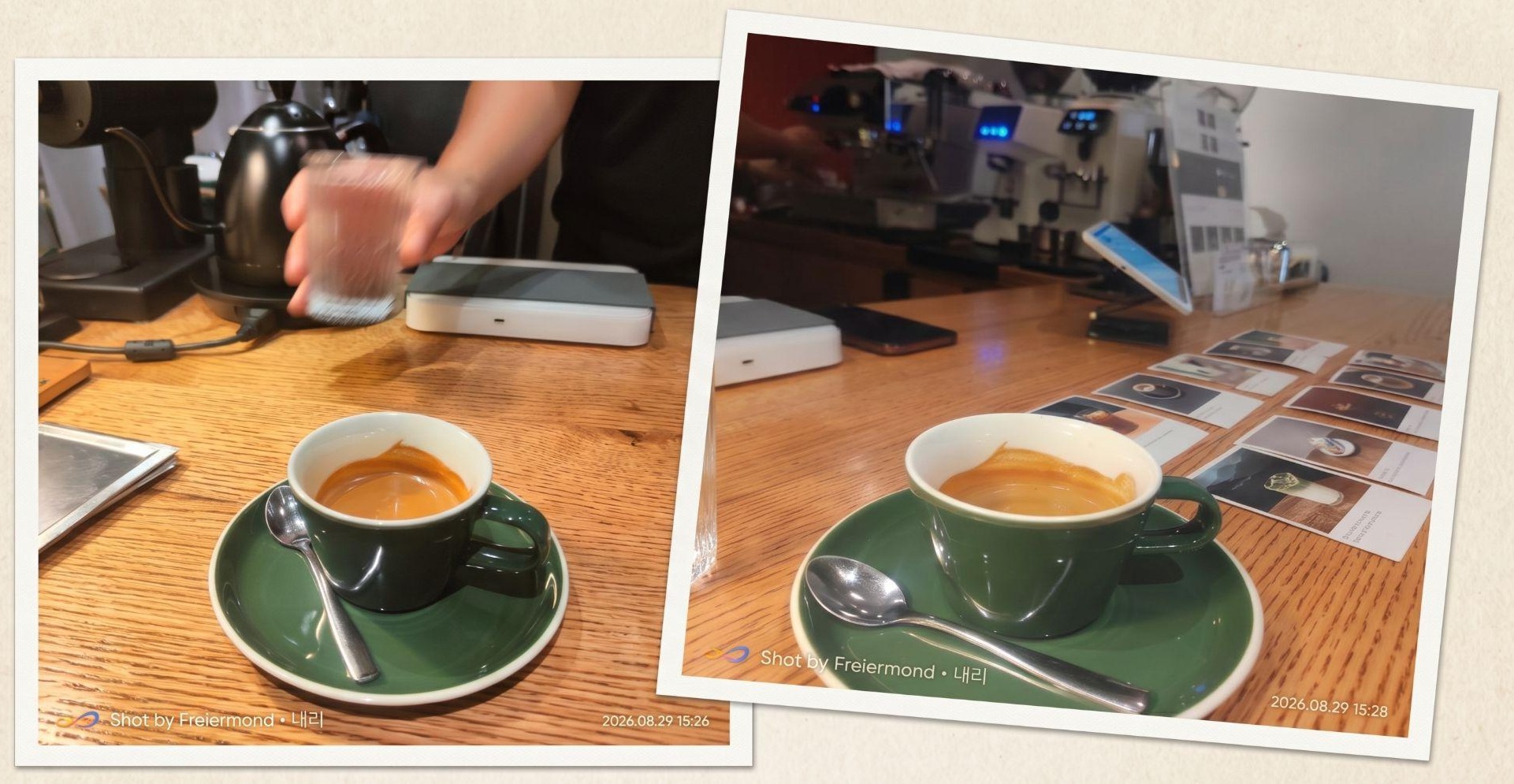
Delicious espresso prepared by Thắng
Final Thoughts
Male or female travelers, we have differences, but we do have a lot in common, especially when it comes to safety. I felt safe while walking on the streets of Hanoi—I was able to take pictures of my surroundings without being afraid of someone stealing my phone, and I didn’t experience any harassment. But I always avoid putting myself in a complicated situation, like accepting invitations to unknown and remote places from somebody I just met. I think this is some kind of built-in safety radar that we need to build not only when traveling, but throughout our whole lives.
If we feel free to walk without worries, is great to just get lost watching how the locals live their day-by-day lives, how they sell food from their bicycles, how they spend an evening just chatting while they drink a beer or coffee in one of those little stalls next to the street, how they walk so normally next to the traffic because the motorcycles are parked on the sidewalk, how the little kids go to school, how they pack four onto a single motorcycle, and how they transport stacks of merchandise without losing their balance.
It is scenes like those that make me treasure those differences that make a place unique: food representing tradition cooked using ingredients available in the region, locals going about their daily routines right alongside us (not pushed out to the fringes by inflated rents), and streets that look authentic rather than Instagram spots. This was only my second time visiting Vietnam. I can’t say for sure how much gentrification impacts Hanoi as a whole, but from my point of view, only the most touristy spots seemed affected, much like in any major city. I remember walking through narrow alleys near my apartment, I saw many Vietnamese flags strung wall-to-wall overhead and wondered if it was staged for tourists, but when I asked both guys if this was something planned to be an attraction for tourists, they said it had been like that for as long as they could remember. Ultimately, between Nam and Thắng’s perspectives and my own time wandering these streets, I found Hanoi to have a well-defined personality that I can't compare to anything else.
This is why Hanoi is a lovely city where I recommend staying for more than just a few days. There is so much history and so many places to explore. The culture is so rich that there is a surprise waiting around every corner, like when I saw a woman burning money as I walked by on my way back to my apartment —but don’t be scared, she wasn’t burning real money, she was just burning fake money as part of a local tradition. But this is material for another blog post.
Traveler Tips:
- If you are a vegetarian like me, you will never struggle to find places to eat, Hanoi is full of wonderfully budget-friendly vegetarian spots. So I didn’t have to miss out on trying typical dishes like Phở or bánh mì. If you search in Google Maps the Vietnamese term for vegetarian meal “Ăn chay”, you will find a lot more options than searching the term in english.
- Avoid visiting during August, if you aren’t tolerant of hot and humid weather (like me!). I had some issues while walking on the streets for a long time, even at night. It was the first time my hands swelled up, and I even felt a bit dizzy.
- Credit cards are not accepted everywhere. The preferred way to pay is by cash or QR code. In general the commission to withdraw cash is a bit expensive (even with Revolut), so I downloaded Moreta Pay to use the QR code function. Then I just transferred dollars to this app and I was able to use the QR code everywhere. It has a small commission but is almost nothing compared to the ATM commission.
- If we run into someone who starts harassing us, it is better to ignore them instead of starting a fight, it doesn't matter if you are alone or in a group. This is a tip in general for all countries, although in Vietnam I never felt any kind of harassment, it is better to keep it in mind.
Enjoy your trip to Vietnam!
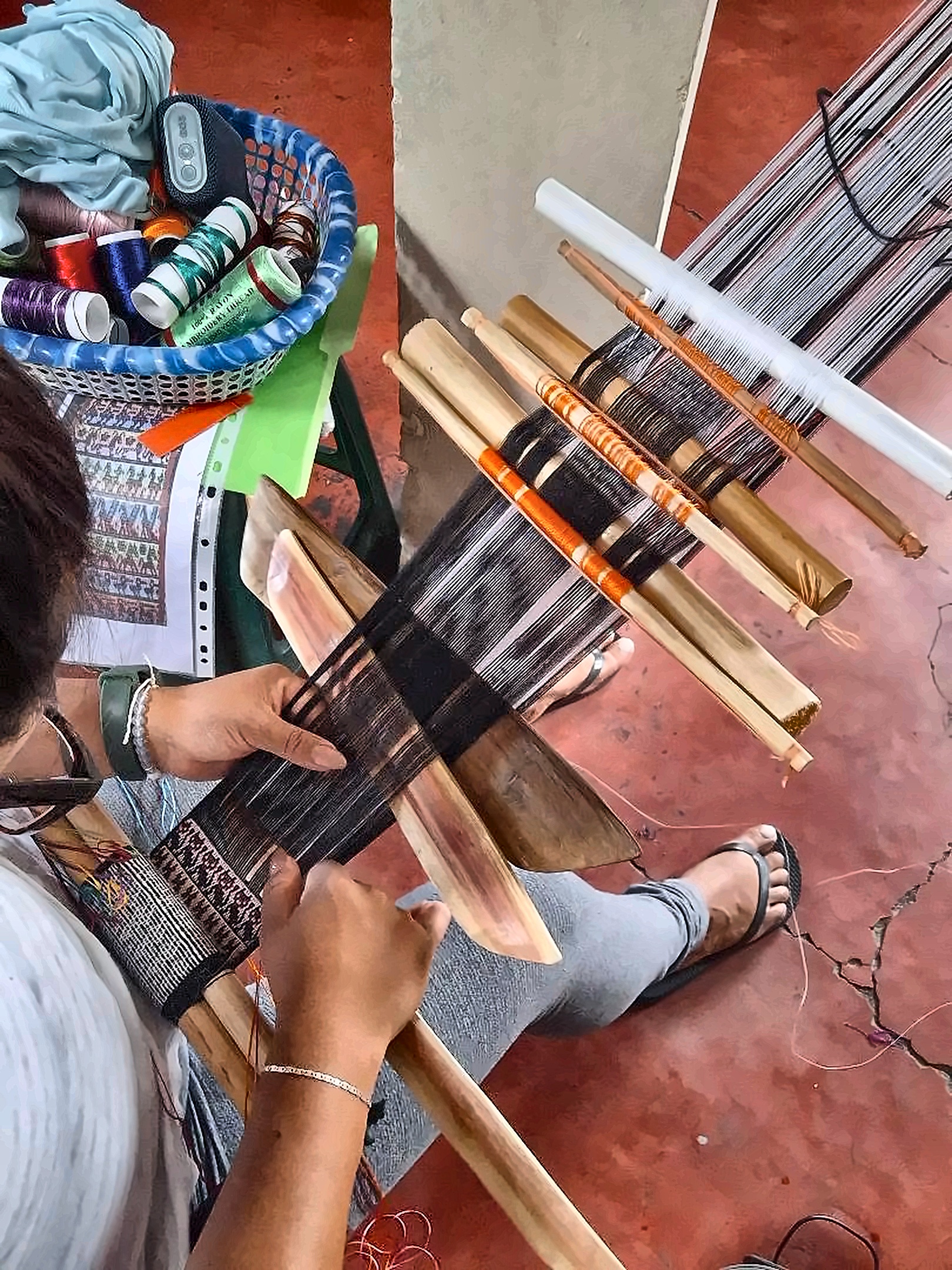
A Thread Between Us: Weaving Traditions in Guatemala
Beyond the picture-perfect views, the communities around the lake offer travelers an opportunity to connect with Guatemala in a much more meaningful way.
NomadHer is happy to share a new series featuring NomadHers and their own travel stories through personal blog posts. All posts have been edited for grammar and clarity while making sure to retain the true voices and stories of our writers. We’d like to extend a special thank you to all of our writers and to our community!
⠀
Surrounded by volcanoes and shimmering blue waters, Lake Atitlán is one of Guatemala's most striking destinations. But beyond the picture-perfect views, the communities around the lake offer travelers an opportunity to connect with Guatemala in a much more meaningful way. Through weaving initiatives, you can learn about the centuries-old traditions behind colorful textiles, practice Spanish with local women, and gain insight into everyday life beyond the tourist trail. Equally as importantly, choosing women-led cooperatives gives your tourism money a chance to support local women, families, and communities directly. Traveling thoughtfully is not only about seeing a new place, but about considering who benefits from our presence there.
⠀
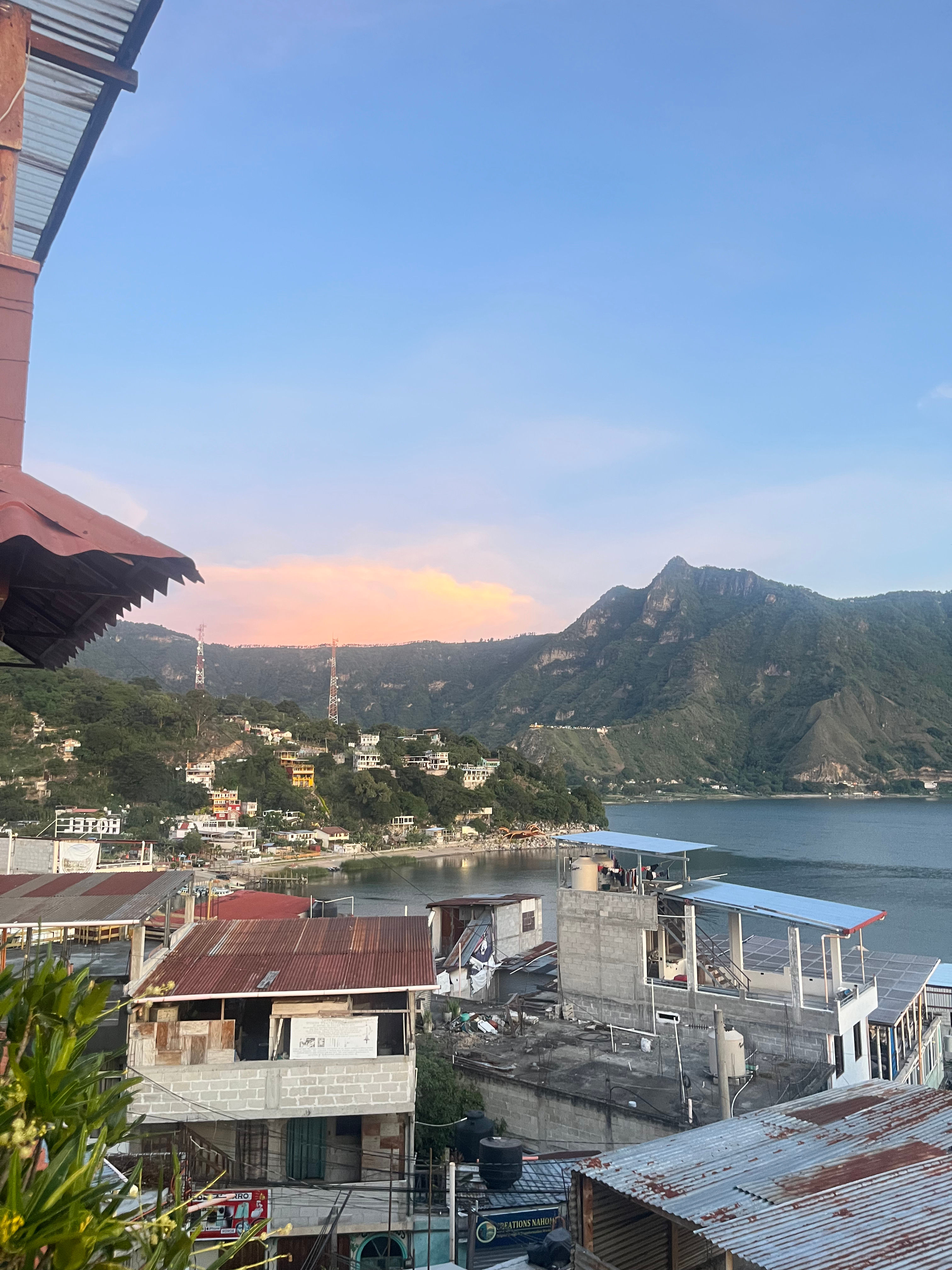
There are roughly 11 villages surrounding Lake Atitlán, each with its own unique history and culture. When I first arrived in San Pedro de La Laguna, I had quite the culture shock. Deciding to check out the local market, I headed up in a tuktuk – a small carriage attached to a bike – to the center of the town where fresh fruits and vegetables were being sold by vendors up and down the street. I chose my food carefully, ensuring there were no spoiled or rotten parts which I had been prone to grabbing in the past.
⠀
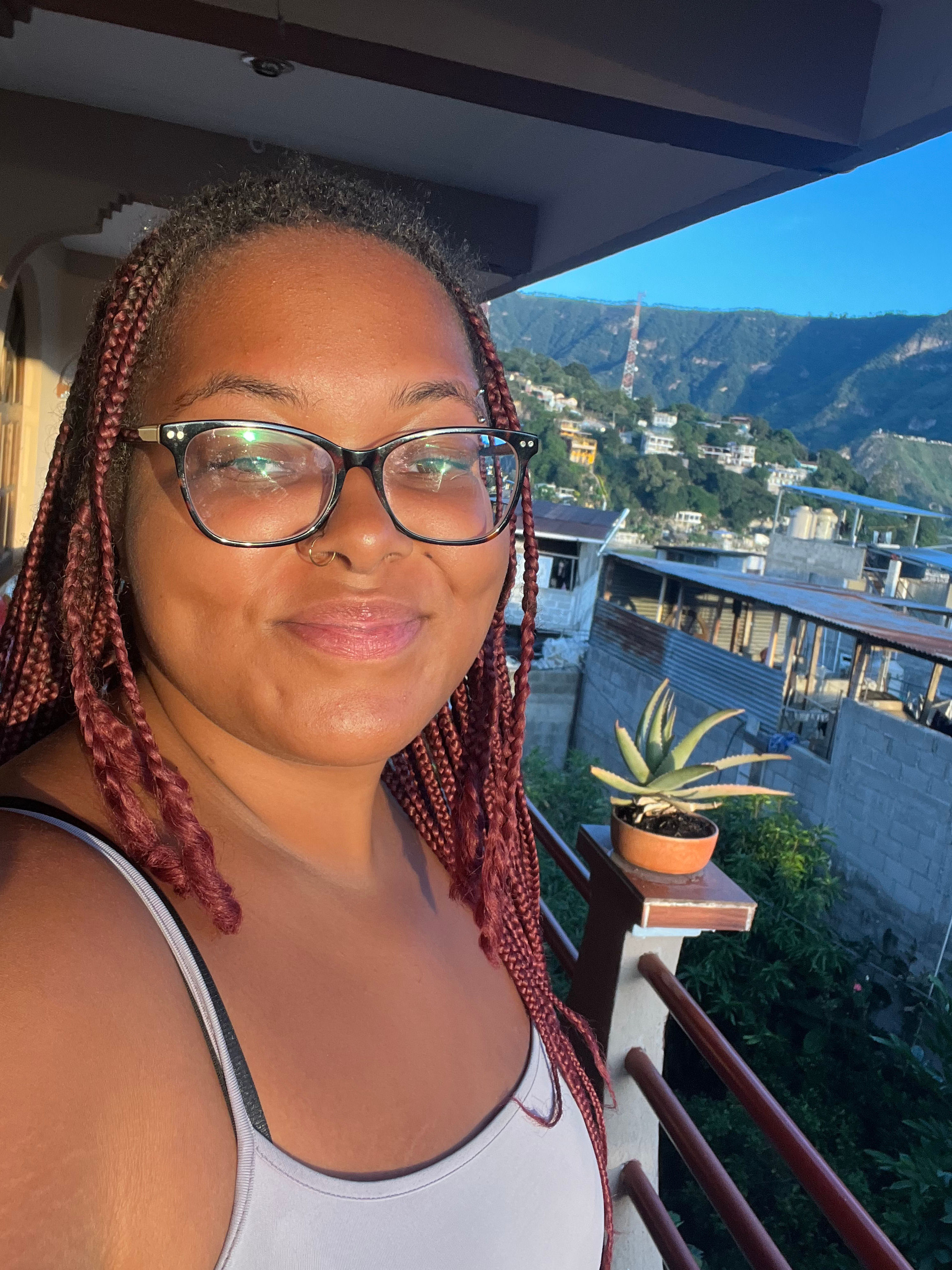
While paying, I overheard another vendor and woman speaking. They were adorned in a traditional outfit I had seen in Antigua, Guatemala, just a few days before, although the patterns were slightly different. One thing to note however, was that they weren't speaking Spanish.
⠀
⠀
Part of me thought maybe it was a dialect – sometimes languages sound different depending on the region – but that was not the case. After sorting through my tomatoes and paying, I walked up to the woman and asked if they were speaking Spanish. They indeed were not. They were actually speaking a language called Tz'utujil pronounced SUE-Too-Heel.
⠀
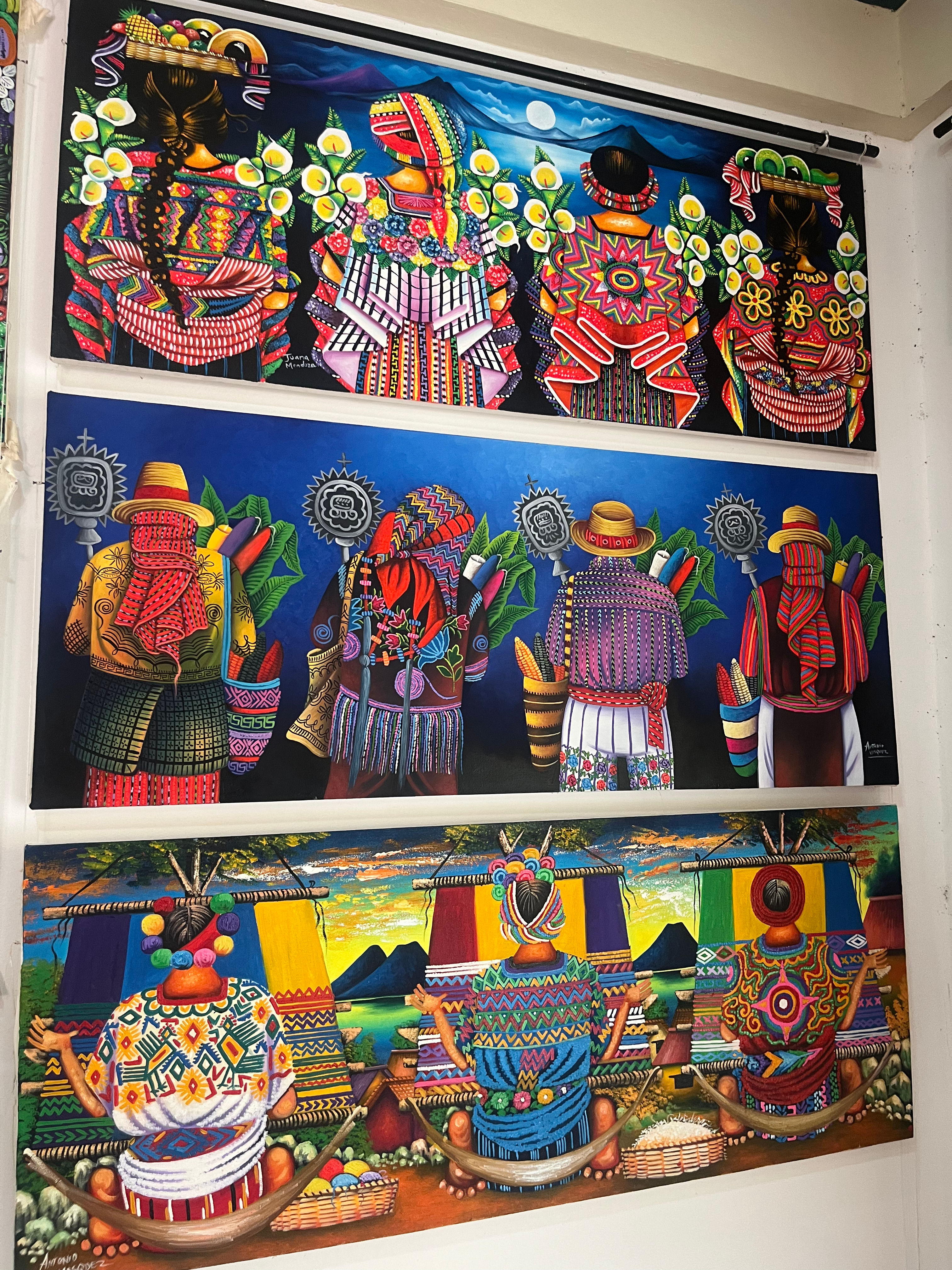
Mayan languages have been spoken for thousands of years and it still exists today. It's easy to walk through San Pedro de La Laguna and see advertisements for Mayan ceremonies, spiritual readings, and buy or learn how to weave traditional clothing.
⠀
My main purpose for going to Lake Atitlan was attending a Spanish language school. My teachers all wore the traditional clothing of San Pedro when working and were completely open to sharing their culture. I was beyond curious to learn about their way of life and the passion they had to continue preserving their culture and heritage.
⠀
⠀
My teacher Lesbia had a huge love for weaving. She would show me the designs she was working on and tell me about how she buys designs from other local tejedoras around the Lake. She would also weave live on TikTok. For her, it's a way to connect with her culture and provide a livelihood for her two daughters. After listening to Lesbia's passion, I decided to take a lancha, or public boat transportation to San Juan de la Laguna. While there are roads where you can use a car to get around the villages, lanchas are far more practical and cost only about $3. In either case, San Juan was another town known for its beautiful postcard-worthy sites. It's also known for having a lot of weaving cooperatives for women.
⠀
⠀
Guatemala remains deeply rooted in traditional gender roles, making economic independence especially meaningful for many women. While some women have access to education and professional opportunities, others face greater barriers. Women-led cooperatives can provide another path toward earning an income, developing a skill, preserving cultural traditions, and supporting their families.
⠀
Walking through San Juan La Laguna, I had the chance to visit one of the local women's weaving cooperatives. Since I was visiting during the height of the low season, there was not a lot of activity happening. However, I was still able to walk through the cooperative and watch a few women at work. Outside, cotton plants flourished alongside many of the natural plants used to create the dyes that bring the textiles to life. The women showed me the looms they worked on and invited me into their small shop, where their handwoven scarves, shirts, and skirts were available to purchase with prices ranging from $50 for simple designs to $150+ for more intricate looms.
⠀

⠀
My language school also organized a weaving demonstration, giving us a closer look at the incredible intricacy and detail that goes into every piece. Watching the process firsthand made me realize how much we sacrifice when we choose fast fashion and quantity over quality. There is something irreplaceable about an object made slowly and carefully by hand, carrying not only the skill of its maker, but the stories of community and sisterhood.
⠀
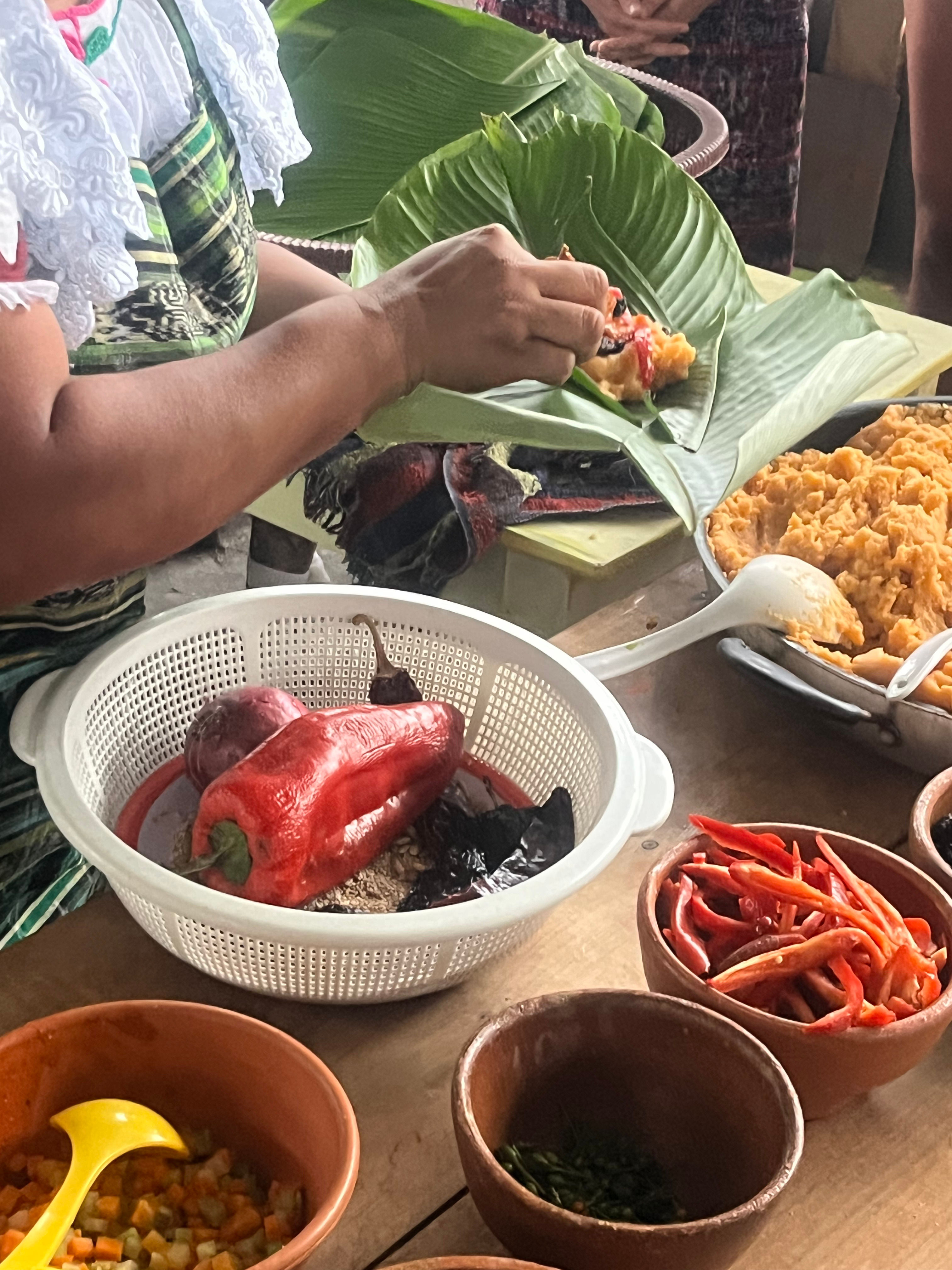
There have been many tourists interested in learning this craft, so much so to the point where there are a variety of workshops and volunteering opportunities. There's a 3-hour workshop to make a small coin pouch whereas others extend past one or more days for larger projects. It's even possible to work with a cooperative for a few weeks if someone is looking to make an even bigger impact. While I didn't make anything myself, I did try dyeing some of the yarn and was so impressed by how vibrant the colors were through natural ingredients. Who knew crushed flowers and fruits could make such a gorgeous pigment!
⠀

⠀
Preserving the culture, uplifting other women, and being able to take a piece of their knowledge back home for you to share is what makes this an unforgettable experience.
⠀
As NomadHers, we often travel with the mindset of connecting with other women and making memories that last a lifetime. Supporting women-led initiatives allows us to be more intentional about where our tourism dollars go, while learning from the women who call Guatemala home. I absolutely loved walking the streets of San Pedro and San Juan de La Laguna and seeing all the colors exploding from the traditional attire. From the language to the music, to my incredible Spanish teacher, to the mesmerizing Mayan traditions that still live on, Guatemala allowed me to dive into its rich history and support the people who preserve it.
## Women's Weaving Cooperatives in San Juan de la Laguna
Here's a list of women's weaving cooperatives based in San Juan de la Laguna, Guatemala to check out if you are interested!
- 🧶 Casa Flor Ixcaco
- 🧶 Lema' Weaving Association (Asociación de Mujeres Lema')
- 🧶 Trama Textiles
⠀
Living Lab - Why Global Nomads? Place, the Partner that Shapes Me
Place, the partner that shapes me
NomadHer is happy to share a new series featuring NomadHers and their own travel stories through personal blog posts. All posts have been edited for grammar and clarity while making sure to retain the true voices and stories of our writers. We’d like to extend a special thank you to all of our writers and to our community!
Hello from Korea!
I’m Sharon Noh. I go by Sharon, my English name. It carries my identity: Rose of Sharon, 무궁화(Mooguen-wha), the national flower of Korea.
For the past thirty years, I’ve lived as a global nomad, moving through more than twenty countries and hundreds of cities and villages.
Why have I chosen this nomadic life?
The answer is simple. Everyone and everything around me is my environment, and among all elements of that environment, I hold Place as sacred.
We Choose Places. Places Choose Us.
Wherever I go, a place is never just a temporary space I pass through. It becomes the living ecosystem that shapes my life. I choose a place with deep intention for the life I want to create, and then I immerse myself completely into it.
For me, Place is far more than physical geography. It is where I meet people I would never have encountered otherwise. It is where I experiment with different ways of living, learning what becomes possible when I step outside my familiar boundaries. It is where I discover a new version of myself that was always waiting to emerge. It is my Living Lab.
This leads into usually the next question people have: Why a global nomad?
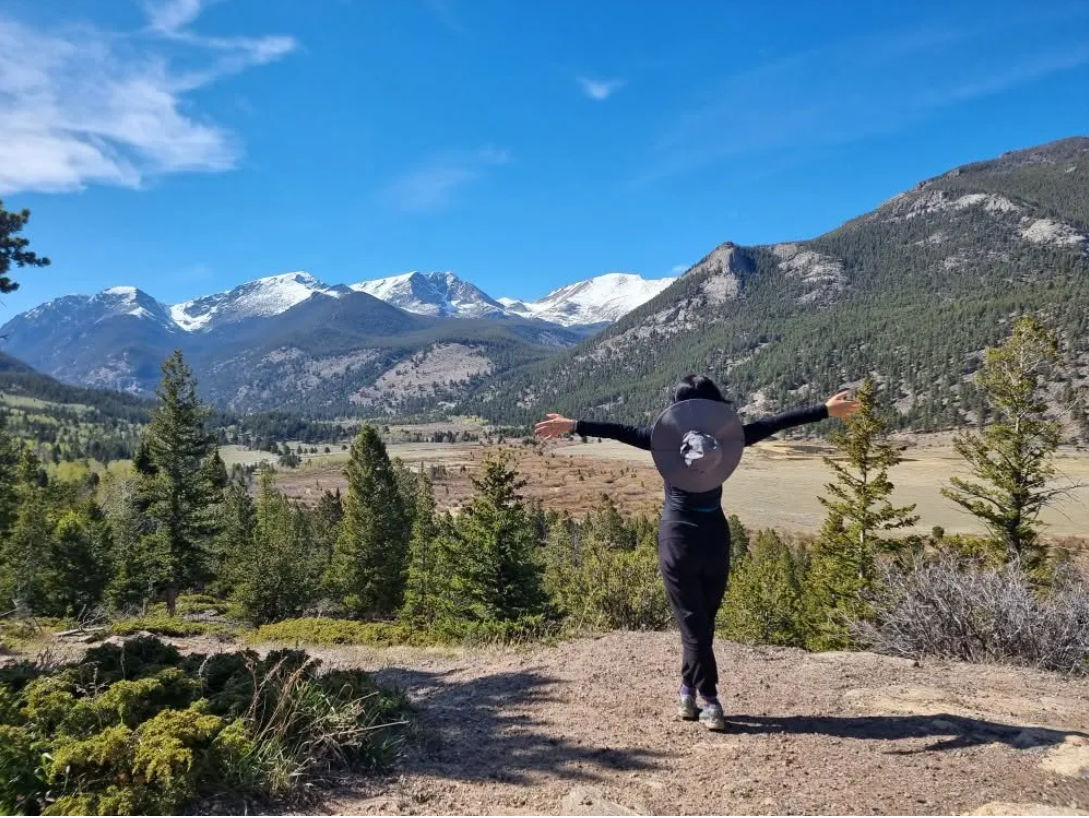
To me, life is a living lab and as a global nomad, I get exposed to new people and new environments. I run experiments that reveal who I am and what the world is. When I arrive somewhere new, those experiments shift into full gear expanded possibilities. It took me years to realize that places are one of the most powerful forces shaping who I become.
Recently, I spent one morning reflecting on the first half of 2026. Looking back, the most significant theme of these months boils down to one word: place.
Roots: Seoul
To leave, you need a place to return to, an anchor. Mine is Seoul. It is where I was born, where I spent the most time, and the nest where my mother lives.
At the same time, Seoul is my operational base for contribution. From here, I ground myself by training professional coaches, guiding CEOs, and mentoring startup leaders navigating transformation.
Seoul gives me roots. And these roots allow me to reach out through different branches, so that I can eventually bear flowers, fruits, and seeds.
Every time I return to Seoul, I don’t feel that my journey has ended. I feel that another chapter is just beginning.
How I Move Through the World
People often ask how I travel. My answer is surprisingly simple. It’s what I believe lies at the heart of meaningful travel writing.
First, I connect.
I slow down long enough to let the place welcome me. I return to the same local café until they know my name. I ask questions, and I listen more than I speak. This isn’t tourism. It’s building a friendship with a place.
Then, I explore.
Not only the streets and landscapes, but also the woman I become while living there. Every woman who travels solo discovers something about herself she didn’t know existed. That is a story worth telling.
Finally, I live.
I shop at local markets. I build small daily routines. I show up as myself, not as a visitor passing through. Only then does a destination stop feeling like somewhere I visit. It becomes somewhere I belong.
When I return to Seoul, something invisible has shifted. I am not just someone who traveled. I am a woman who chose her own life, lived it fully and returned more fully herself than when she left.
This is what every nomad understands in her bones: A place doesn’t change you simply because you visit it. A place transforms you because you decide to be changed.
That decision to choose places intentionally, to immerse completely, to let yourself be shaped, is the most sovereign act a woman can make. And every time I return, I carry the proof of that sovereignty with me.
Proof that I didn’t just travel.
Proof that I became.
This is the space I am opening here.
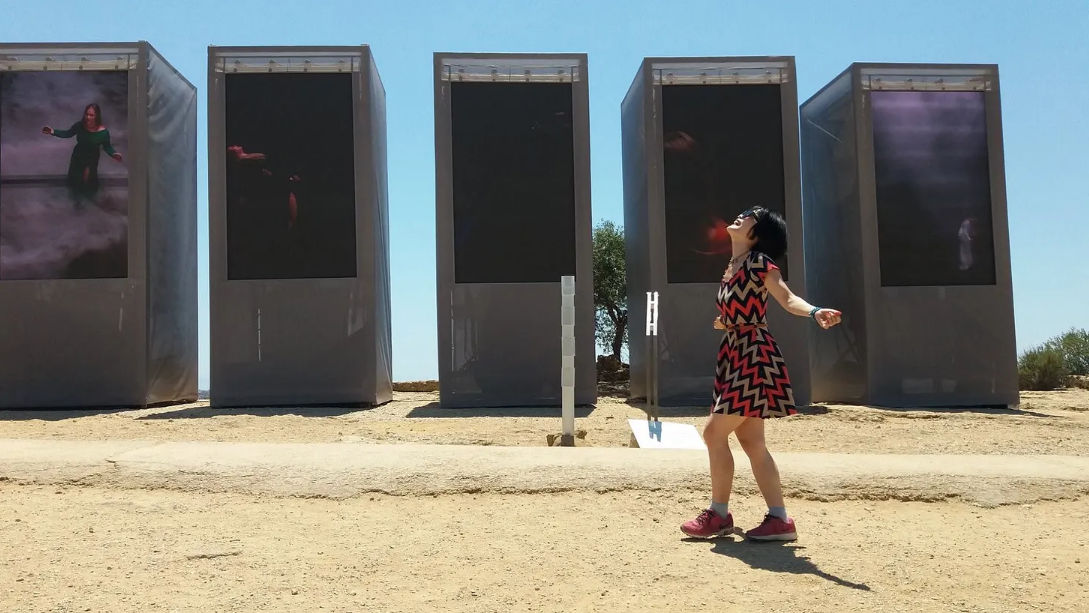
Most months, I’ll write from inside a place I’m living in. I share the ordinary texture of staying somewhere. Some months, I’ll bring you into conversations with other women nomads I meet along the way, exploring their own versions of this journey. Different voices, one common thread: what a place does to a person who allows themselves to be changed.
What is the place that is currently shaping you?
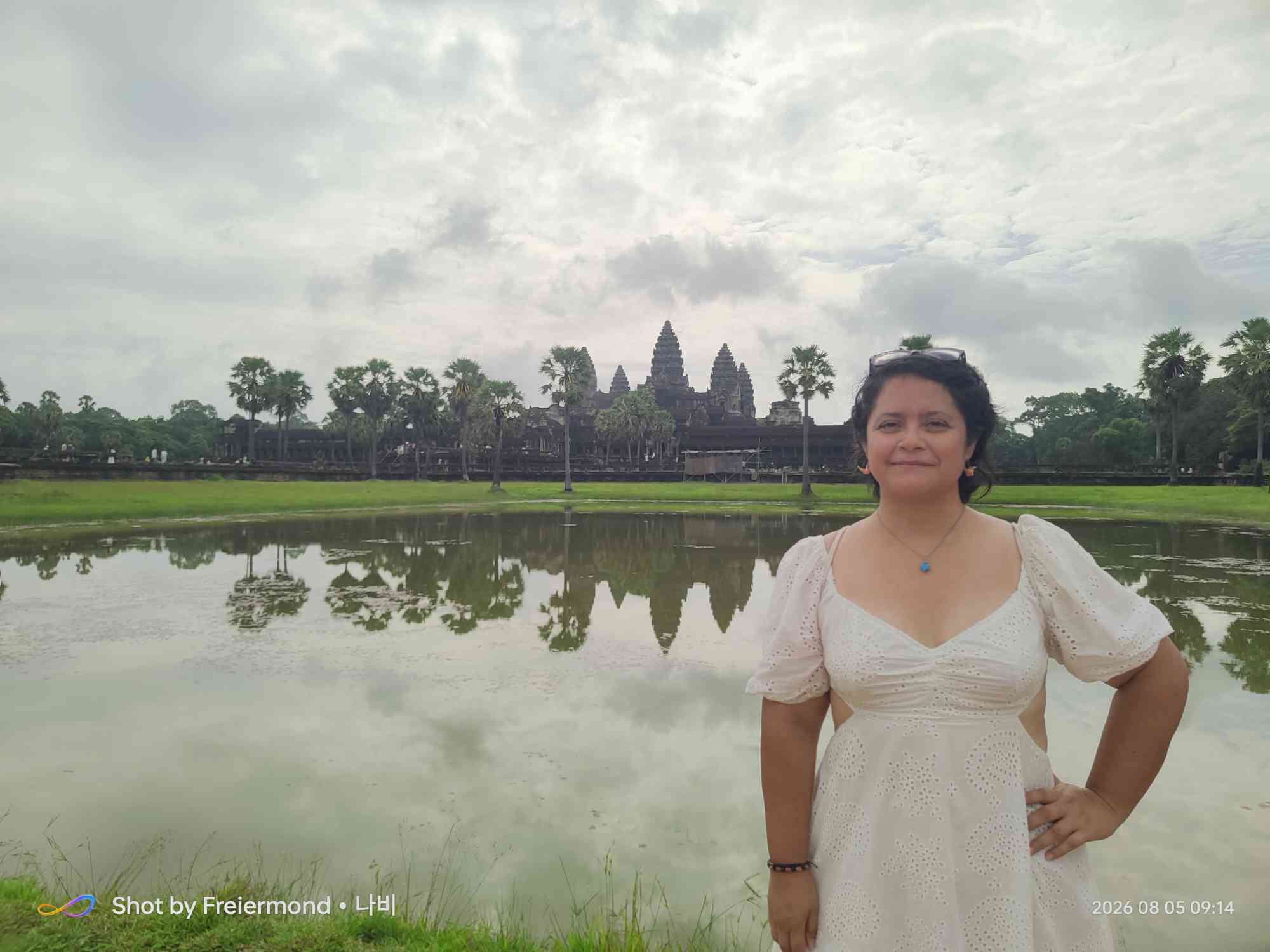
Solo female travelers through the eyes of locals: Siem Reap, Cambodia
What do local women in Siem Reap, Cambodia think of solo traveling?
NomadHer is happy to share a new series featuring NomadHers and their own travel stories through personal blog posts. All posts have been edited for grammar and clarity while making sure to retain the true voices and stories of our writers. We’d like to extend a special thank you to all of our writers and to our community!
Whenever I travel, I wonder, ‘What do local women think about travelers, especially women traveling alone?’ I want to know if they feel the same desire to explore the world and how possible that dream is for them. Sometimes it is not only about money problems, it could be many reasons, like family, culture, or religion. Everyone has a different life path, some need to stay at home with their family, while others are busy with studies or work. Life is a paint palette of different colors which represent our lives, since everyone is painting their own life story.
To understand those different colors I decided to combine two of my favorite things to do while traveling to Cambodia: talking with locals and drinking good coffee. I wanted to see through the eyes of local women: I wanted to see how local women see us. I love talking to locals to learn more about their own personal views as well as learning their deep knowledge of their city and useful safety tips.
This will be the first of many blogs about women I meet while traveling, starting in Siem Reap, where I talked with two kind women to hear their stories. I began with simple questions like: Have you ever traveled alone to a new city or country? If so, what is one important safety tip you would share? I also wanted to know what they really think about the solo travel trend—how do you feel when you see other women traveling alone, and is that a dream you want to follow too? Additionally, I asked about their daily life: do you usually feel safe and comfortable moving around your own city or country alone? But before sharing their stories, I want to tell you how I met them.
Both cafes I visited have a very bohemian vibe that invites you to sit and relax. So, while I was enjoying my favorite espresso-based coffee, a flat white. I normally like to see how they work. A dance where they move around preparing a cup of coffee, the smell floating in the air. This smell made me curious to find out what grain variety they used and if they roast the grains themselves. So I approached them, and I asked if they could take a moment to chat with me. Despite their nervousness with their English level and my own worries of bothering them, they were so kind that they stopped and talked to me for a few minutes.
Vannsa (វណ្ណសា), Sister Strey Cafe
Vannsa is an 18-year-old who moved from a countryside village to Siem Reap to work in a coffee shop while studying English to become a teacher.
When we talked about traveling alone, she said she hasn’t been to another city or country yet. She is still young so I think the idea of traveling alone makes her a bit nervous, especially when arriving in a new city and finding her way to the hotel at night. Which is a completely normal feeling, we all feel that when we arrive somewhere new. On the other hand, she said she feels completely safe walking the streets of Siem Reap, which actually made me feel more confident during my stay.
Feeling unsure when arriving in a new city is part of the travel process. As a solo female traveler, I can heavily relate to Vannsa’s initial nervousness about navigating an unfamiliar place, especially at night.
It’s happened to me several times that I arrive at night or too early in the morning in a new city. In BoliviaI traveled by bus from Cochabamba to Uyuni and I arrived at about 4 a.m., without a hotel booked. It was the first time I had ever done something like that, but I found out due to exchange rates, it was better to pay with cash rather than card.
After doing some preliminary research, I discovered that it was not very safe to walk alone while it was still dark,so I decided to wait. Luckily for me, there was a tent just outside of the bus station, selling buñuelos and coffee. There were a few locals there, struggling with the cold weather just like me and waiting for the first morning bus. I started talking to them, asking if it was safe for me to walk alone to find a hostel. They were so nice and told me to wait till sunrise, in the meantime, we chatted and had a good time. This time I didn’t take a taxi, because I didn’t even have a hostel. But I followed my instincts, and everything was fine.
Over time, we learn to trust our instincts and develop strategies for choosing safer options. Fear or instinct serves as protection, keeping us alert and helping both newcomers and seasoned travelers to find our way and reach our destinations safely.
When I asked Vannsa where she’d go if she could travel alone, she said 'Switzerland' with the biggest smile. I was honestly surprised! I expected her to pick a neighboring country like Thailand or Vietnam, but she’s thinking big. I can tell just by looking in her eyes —she has a truly brave spirit!
If she ever makes it to Switzerland, I know she’ll be just fine. Even though it’s been about ten years since I visited, I remember it being very safe. The only real downside is how expensive it can be! Plus, if you don't go in the summer, the weather can be a bit surprising—it gets cold and dark early—but I guess that’s just part of the magic of that place.
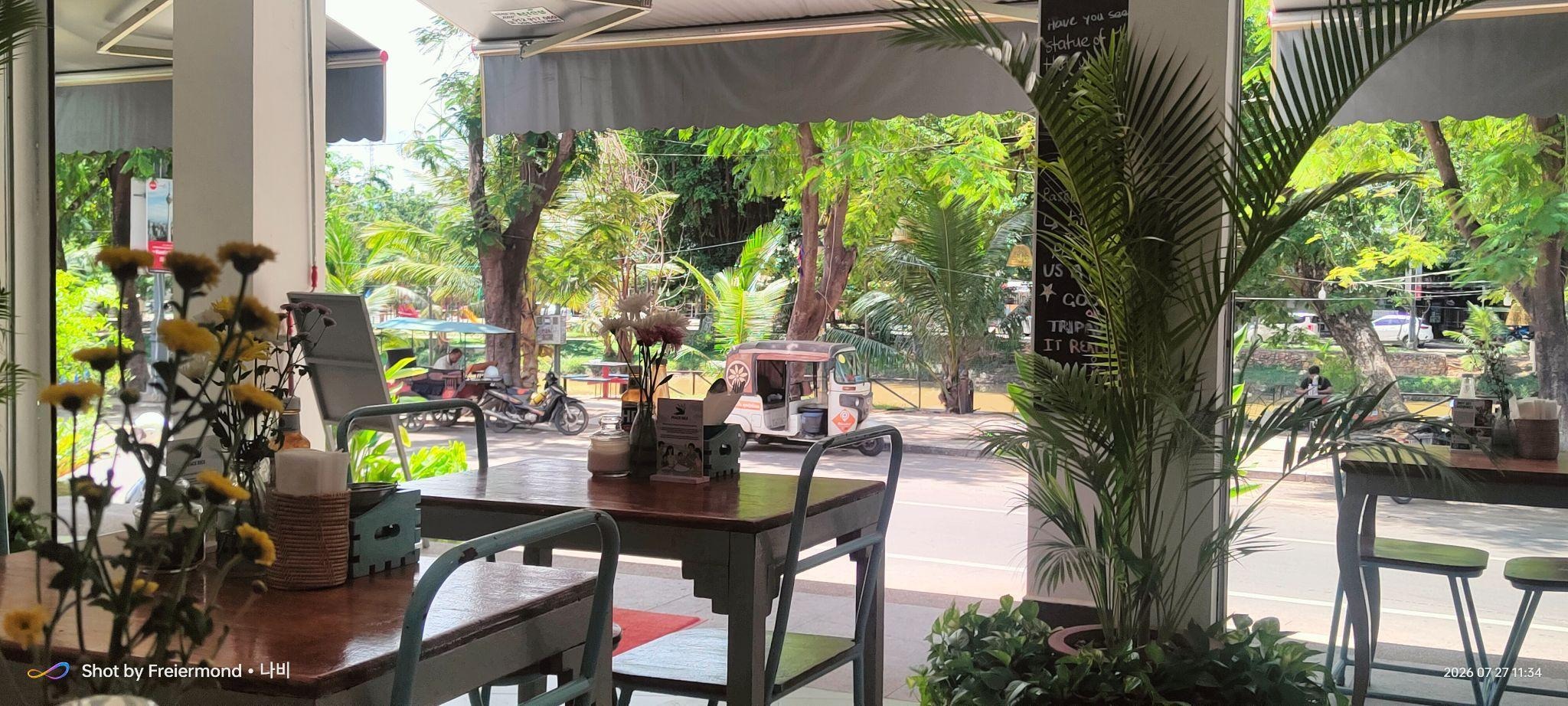
Vannsa was a bit shy, so I took a photo of the peaceful view while drinking my coffee instead.
Nicky (Nich-នីច), Brother Bong Cafe
Like Vannsa, she works in one of my favorite cafes now in Siem Reap. While I was drinking a delicious coffee and enjoying a lemon cake, I looked for my next victim hehe.
Nicky is also a lovely woman who has already lived experience as a solo traveler. She enjoyed the beautiful and chaotic city of Bangkok.
Like many women, she also felt a bit intimidated walking on the streets alone. She felt the staring of men and even from other women. This was something that I probably hadn’t noticed: women staring at me as a foreigner. It has happened to me only in South Korea, because the elders most of the time stare, but not in countries like Thailand. Maybe because of my Latin vibe and golden, dark, and Aztec skin colors, I look a bit more like a local. :P
She also enjoyed traveling with her friends, but she definitely felt like it was a very different experience when she did it alone. She felt a lot more freedom to plan the trip the way she wanted, being independent and finding her way around. Moreover, she also enjoyed listening more deeply to her own thoughts, learning who she is while facing unfamiliar situations in different environments. After that, she mentioned she wants to do it again and again. Alone or with friends, they are just different kinds of trips; both ways are so much fun.
Facing new challenges releases so much adrenaline that it makes you want more and more. Am I crazy to think that way, or do you also feel it?
Once we started talking about safety, I asked her if she could give me any tips to move around this country or any other country that she has learned. One of those tips was when you're arriving at an unknown destination, or it is too late at night, and you need to book a taxi. It is always better to book a taxi using an app.
Grab, for example, offers great safety features. Once when I booked transportation with this app to go to the airport, the driver took a different route than planned. The app immediately sent me a pop-up with 2 buttons, “I am ok” and “Call the police”. I waited a couple of minutes and asked the driver why he took another route. It was a bit stressful, since I think the driver didn’t speak any English, so we used messages through the app, even though we were in the same car. He said he wanted to take a different route because of heavy traffic, so a few minutes later he went back to the planned route, and I clicked the “I am ok” button and nothing happened. This kind of feeling of being protected is what Nicky was talking about. I think this was a great tip!
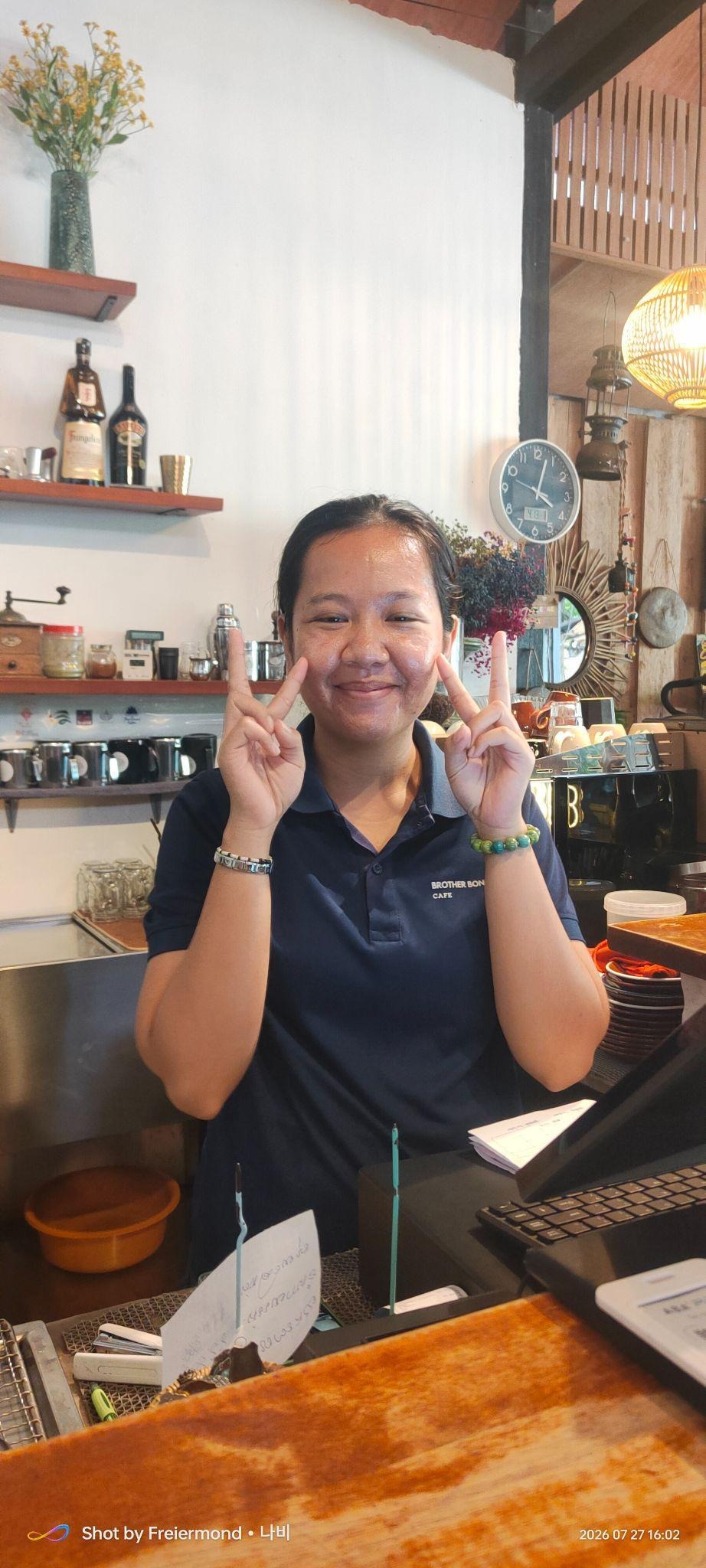
Nicky’s beautiful smile
Final thoughts
Sometimes, the biggest challenge we must overcome before traveling is our own fear. However, after doing some research about Siem Reap and Cambodia in general, I realized there are still bigger barriers than financial situations. Social and cultural barriers —such as family expectations and traditional gender roles—can also significantly limit women's opportunities for independent travel. I am glad these obstacles did not directly affect the two women I interviewed.
Whatever our circumstances, we should cherish the freedom we have to travel and keep inspiring other women to chase their own adventures. There’s so much we can learn from one another. In the end, what connects us is far greater than what divides us.
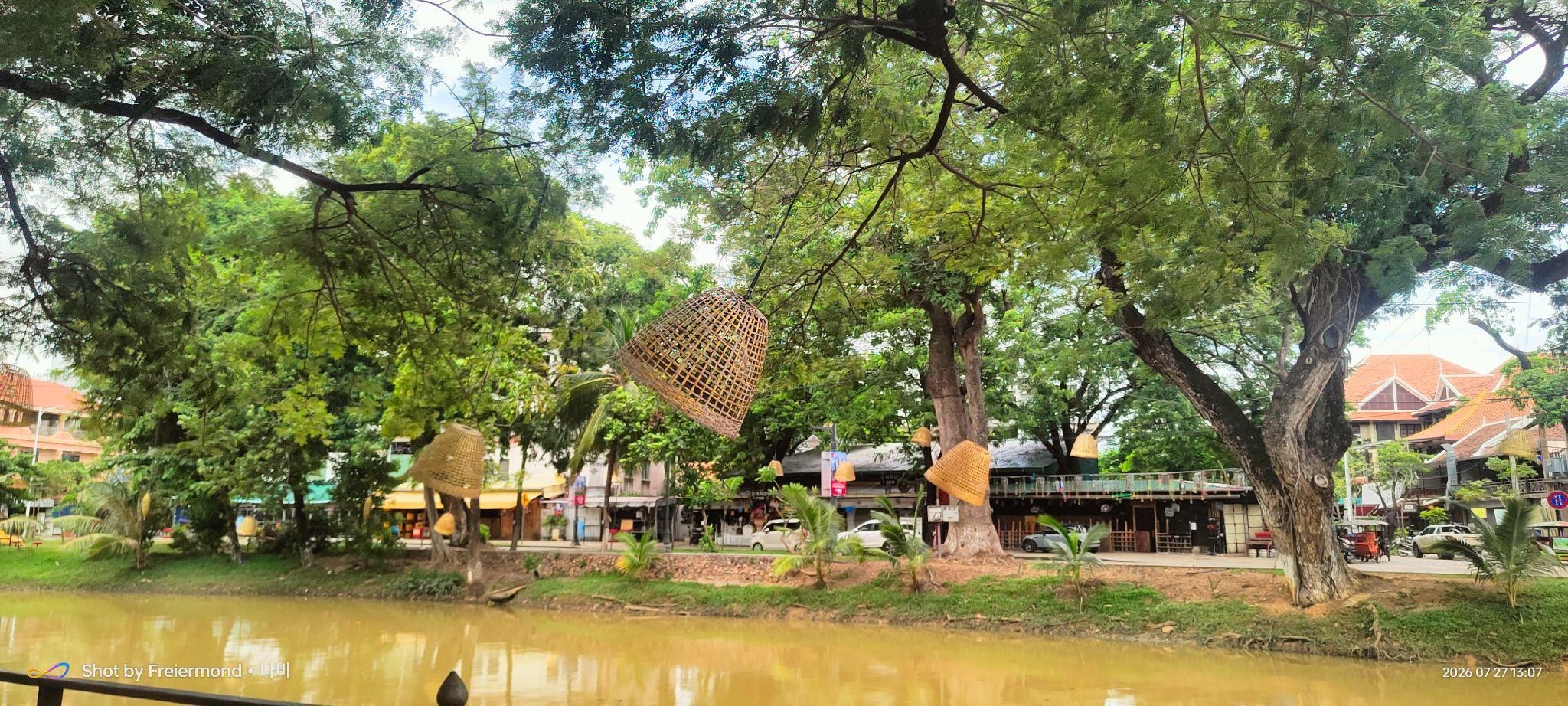
Wicker lamps dancing in the wind above the Siem Reap river.
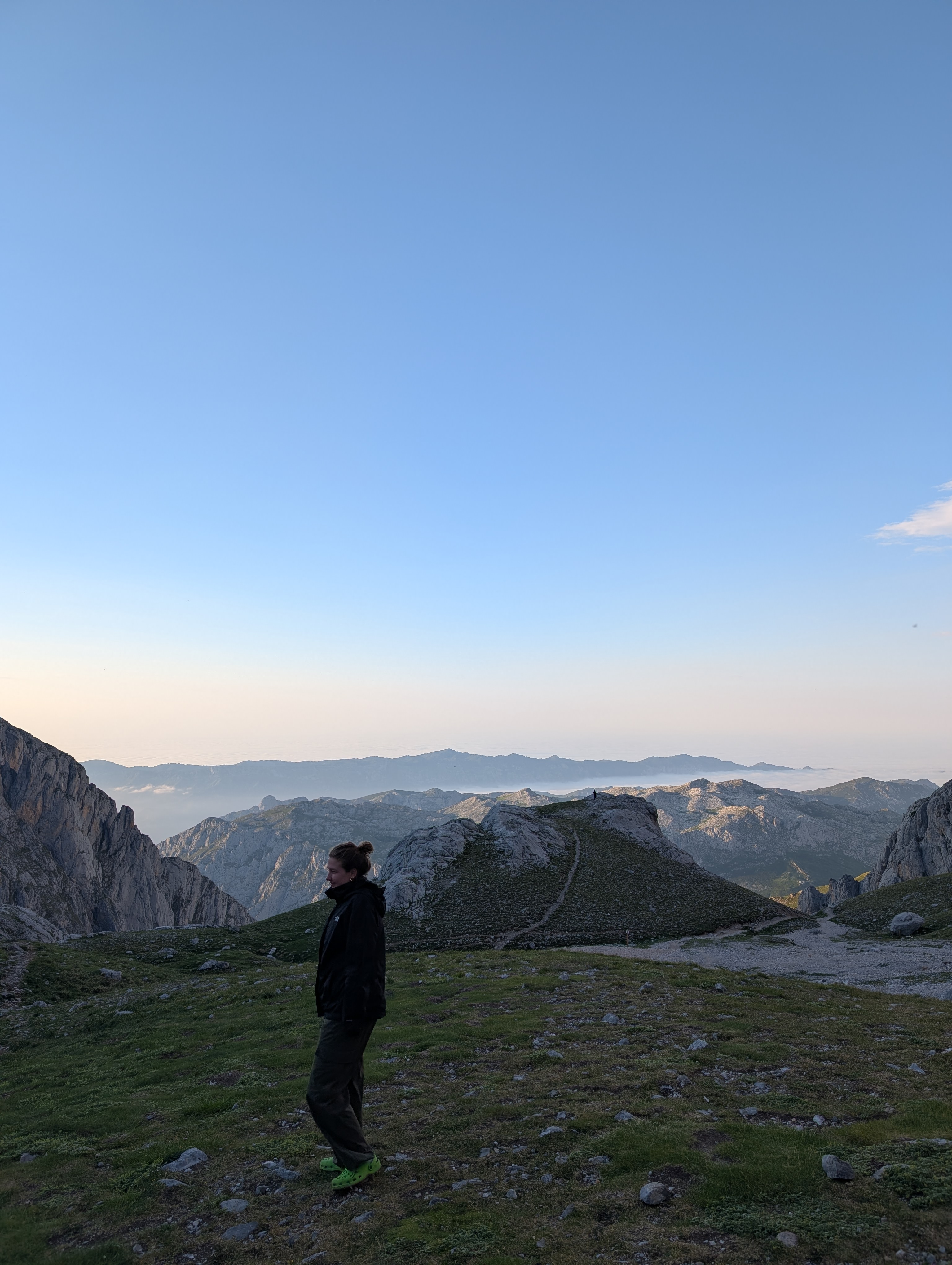
Solo hiking as a woman: lessons from the queen of the Japanese Alps
Anne Beckers hiked Mount Tsubakuro alone at dawn and shares what the Japanese Alps taught her about solo hiking as a woman.
NomadHer is happy to share a new series featuring NomadHers and their own travel stories through personal blog posts. All posts have been edited for grammar and clarity while making sure to retain the true voices and stories of our writers. We'd like to extend a special thank you to all of our writers and to our community!
by Anne Beckers
At 5 a.m., the wind on Mount Tsubakuro was strong enough to make standing still uncomfortable. It was around freezing, everyone outside the mountain hut was wrapped in layers and somewhere in the distance, just visible above the horizon, was Mount Fuji.
The sky had turned almost lava red. I had climbed roughly 1,300 metres the previous day to get here, carrying everything I needed on my back. I still had another 200 metres to go before reaching the actual summit, at 2,763 metres.
And I had done it alone.

Choosing a mountain you can comfortably hike alone
I had hiked long distances before, but usually with others. Earlier in my Japan trip, I had joined travellers from my hostel to climb Mount Nantai. Managing that challenging hike made me realise I could probably take on a similar one alone, as long as I chose the route carefully and prepared properly.
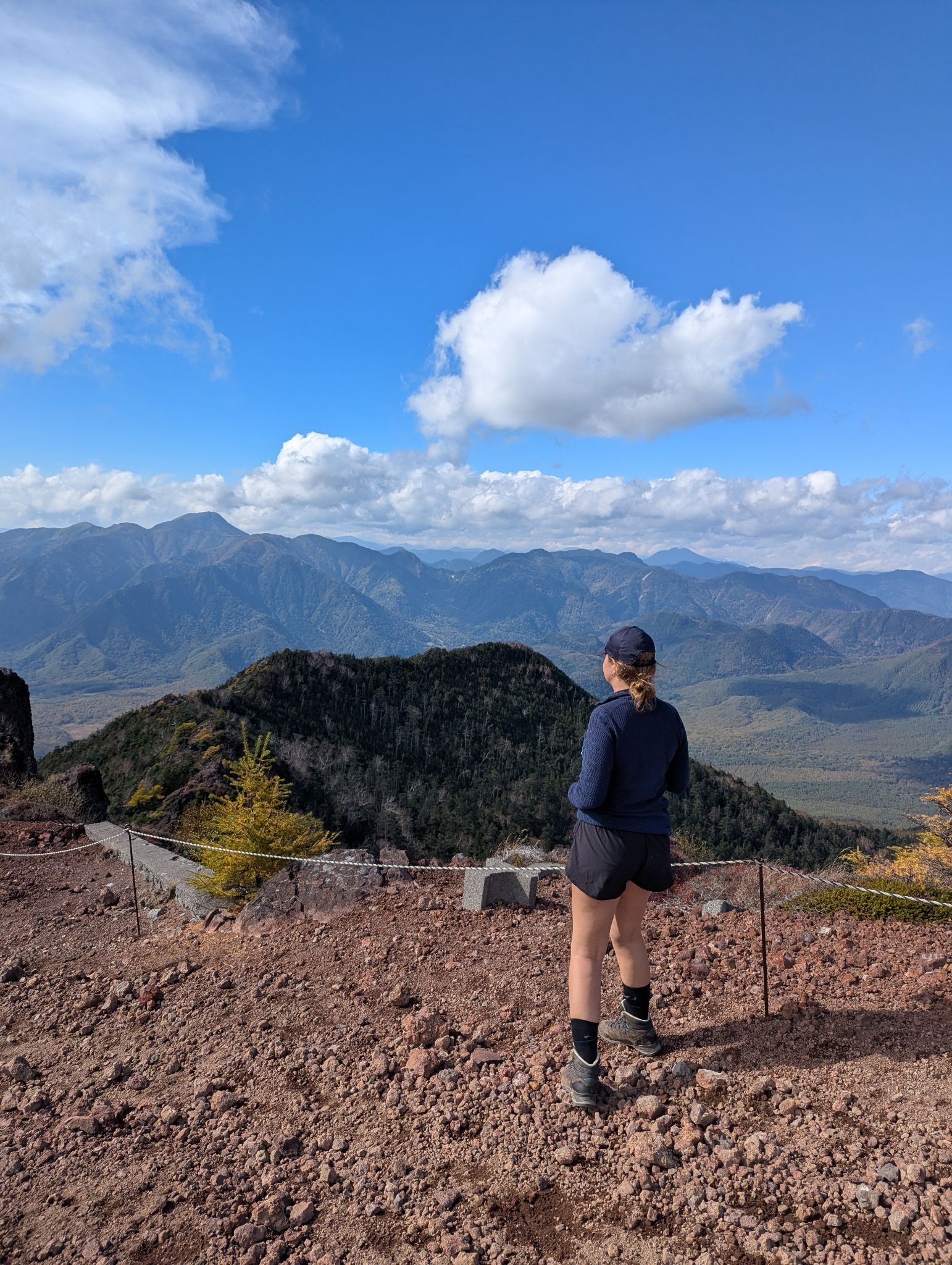
Solo hiking isn't simply regular hiking minus another person. If you're the only one making decisions, you need to know what you're getting yourself into.
Mount Tsubakuro, often called the Queen of the Japanese Alps, seemed like a good place to start. The route from Nakabusa Onsen is popular and well established, and there is a mountain hut near the summit where hikers can spend the night and get dinner and breakfast.
Before leaving, I checked the mountain forecast, researched the route and made sure I had the right clothing and equipment. I knew the elevation gain would be around 1,300 metres to the hut, but I also knew from previous hikes that this was within my ability.
It wasn't about convincing myself that nothing could happen. Mountains are unpredictable, however prepared you are. It was about reducing the risks I could control and knowing I could change my plans if necessary. If the weather turned, I could turn around. If something didn't feel right, reaching the summit wasn't more important than listening to that feeling.
That, to me, is an important distinction when talking about hiking alone. Telling someone to "just be brave" isn't particularly useful. Knowing your own limits, preparing properly and trusting yourself to make decisions is.
Luckily, on the morning I left, the conditions could hardly have been better.
1,300 metres up through the forest
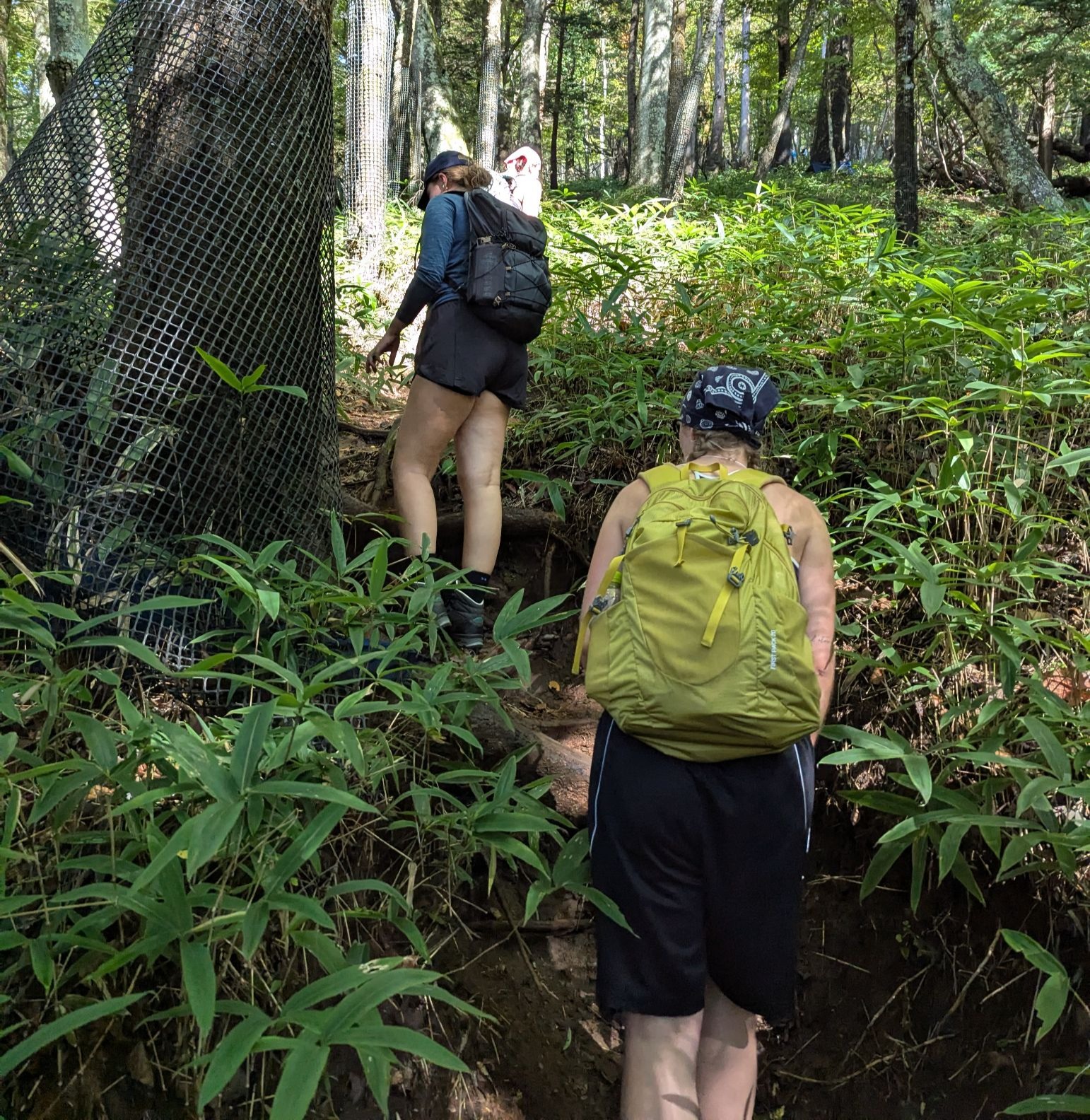
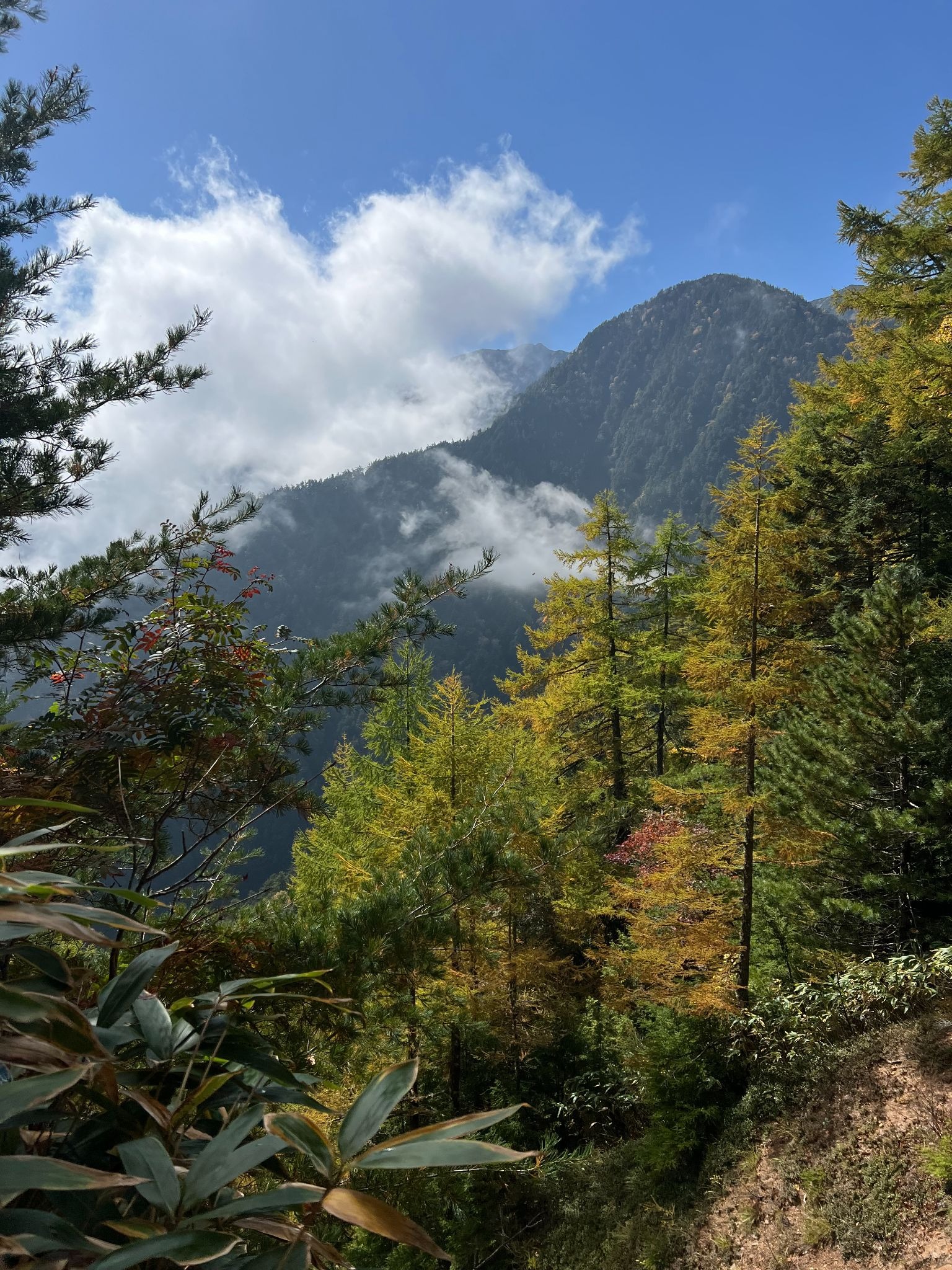
The first three-quarters of the route climbed steadily through forest. The autumn colours had already arrived, and every now and then the trees opened enough to reveal the surrounding peaks.
Despite the sunshine, the canopy kept most of the trail shaded. The temperature was almost perfect for walking. I quickly fell into a rhythm. The climb was hard, but manageable. I took short breaks, ate something, drank water and continued.
I also started recognising people. A group would overtake me while I stopped. Twenty minutes later, I would find them resting and pass them again. Eventually, the repeated encounters started earning little smiles and nods.
It was one of the first things I noticed about hiking alone: I could determine my own pace completely.
When you're hiking with someone, even a very good hiking partner, there is always a small amount of negotiation. Are we stopping? Are you tired? Am I walking too slowly? Do you want to keep going?
Alone, none of those questions existed. I stopped when I wanted to stop and kept walking when I felt good. If I wanted to stare through a gap in the trees for five minutes, nobody was waiting.
After several hours, the forest suddenly ended. In front of me were layers of mountains covered in orange and brown, interrupted by Mount Tsubakuro's distinctive white granite. The change was so abrupt that it felt as though I had walked into an entirely different landscape.
This was the moment I had come for.
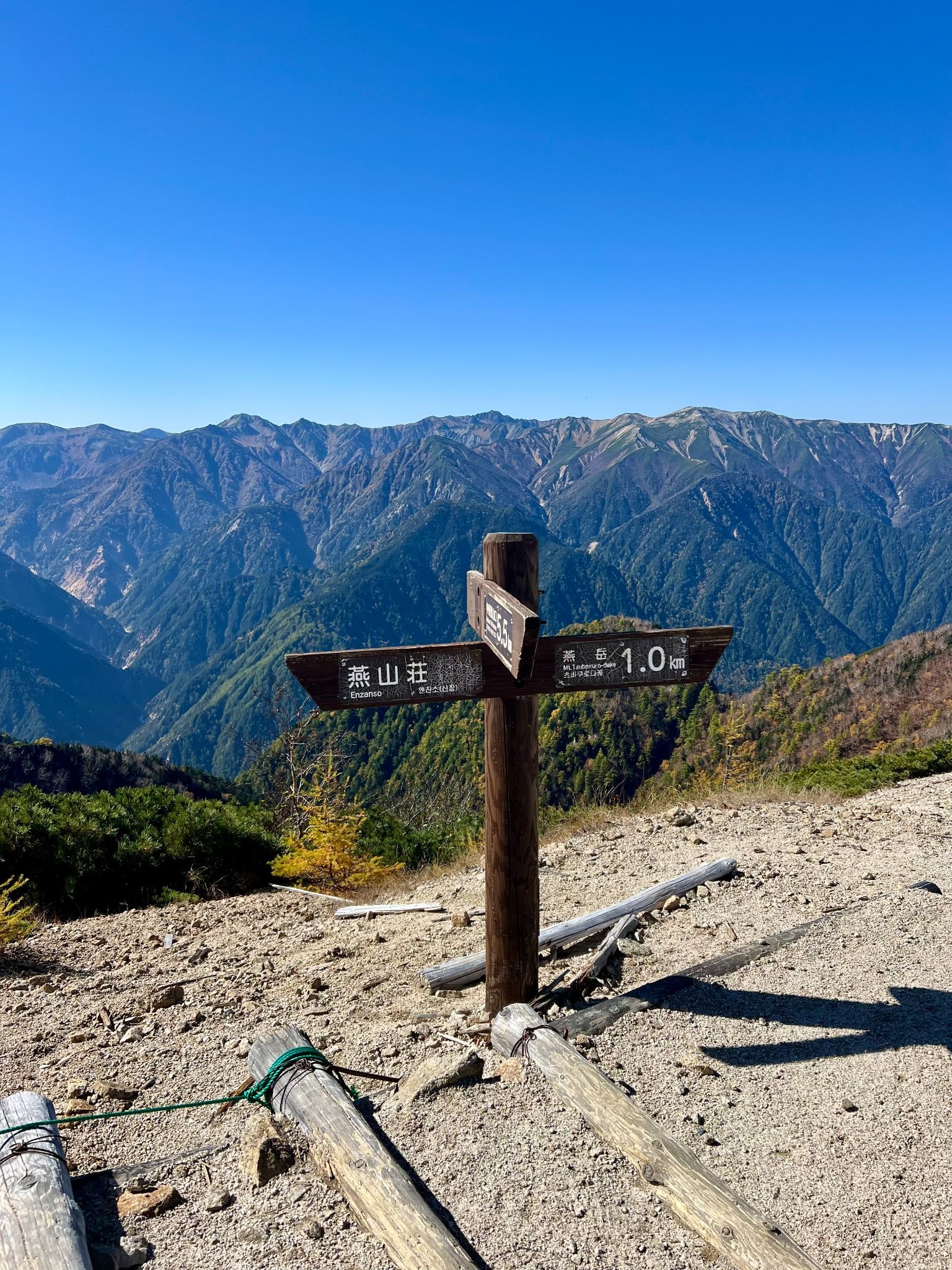
Alone doesn't mean isolated
What surprised me most about the hike wasn't the solitude, but how social it became.
In Japanese cities, most of my interactions with locals had been brief and functional: ordering food, buying a train ticket, checking into accommodation. On the mountain, the dynamic was different.
The same hikers kept appearing along the route. Even without sharing a language, there was an easy recognition between us. We were all tired, all climbing the same steep trail and all stopping to admire the same views.
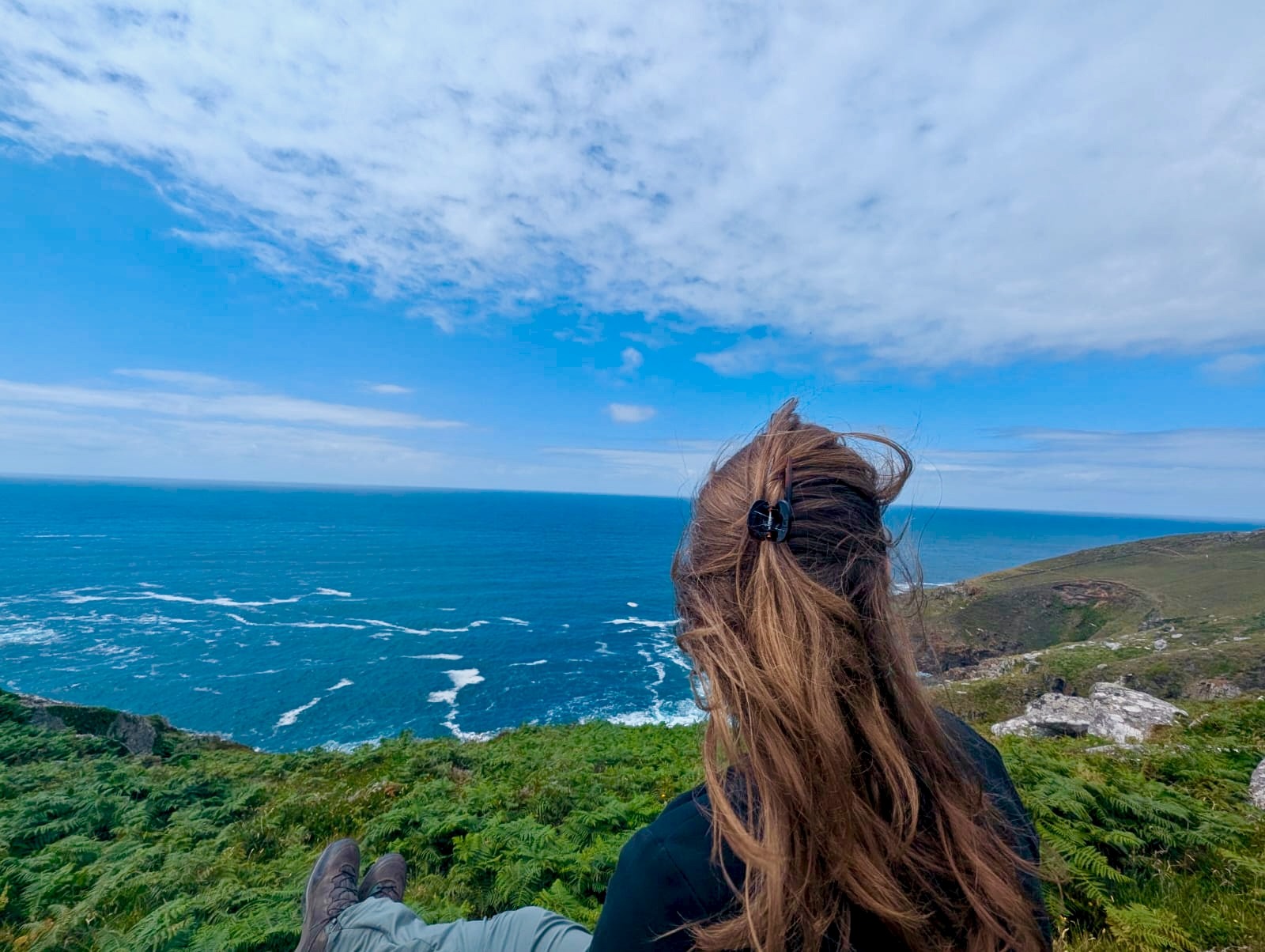
When I finally arrived near the top, a group of Japanese women quickly offered to take a photo of me. It felt almost like a quiet acknowledgement: We see you came here alone. Let us help you remember it.
Later, while I was sitting and looking across the mountains, a Japanese guy around my age came to sit beside me. He wanted to practise his English, so we started talking.
They were small interactions, but they showed me another side of travelling alone. When you're with someone, you're often naturally turned towards each other. When you're alone, you're turned towards the world. And the world often responds.
A night in the Japanese Alps
Once I reached the hut, unpacking wasn't particularly high on my list of priorities. The weather was still completely clear and the view stretched across the Japanese Alps, so I dropped my things and went back outside.
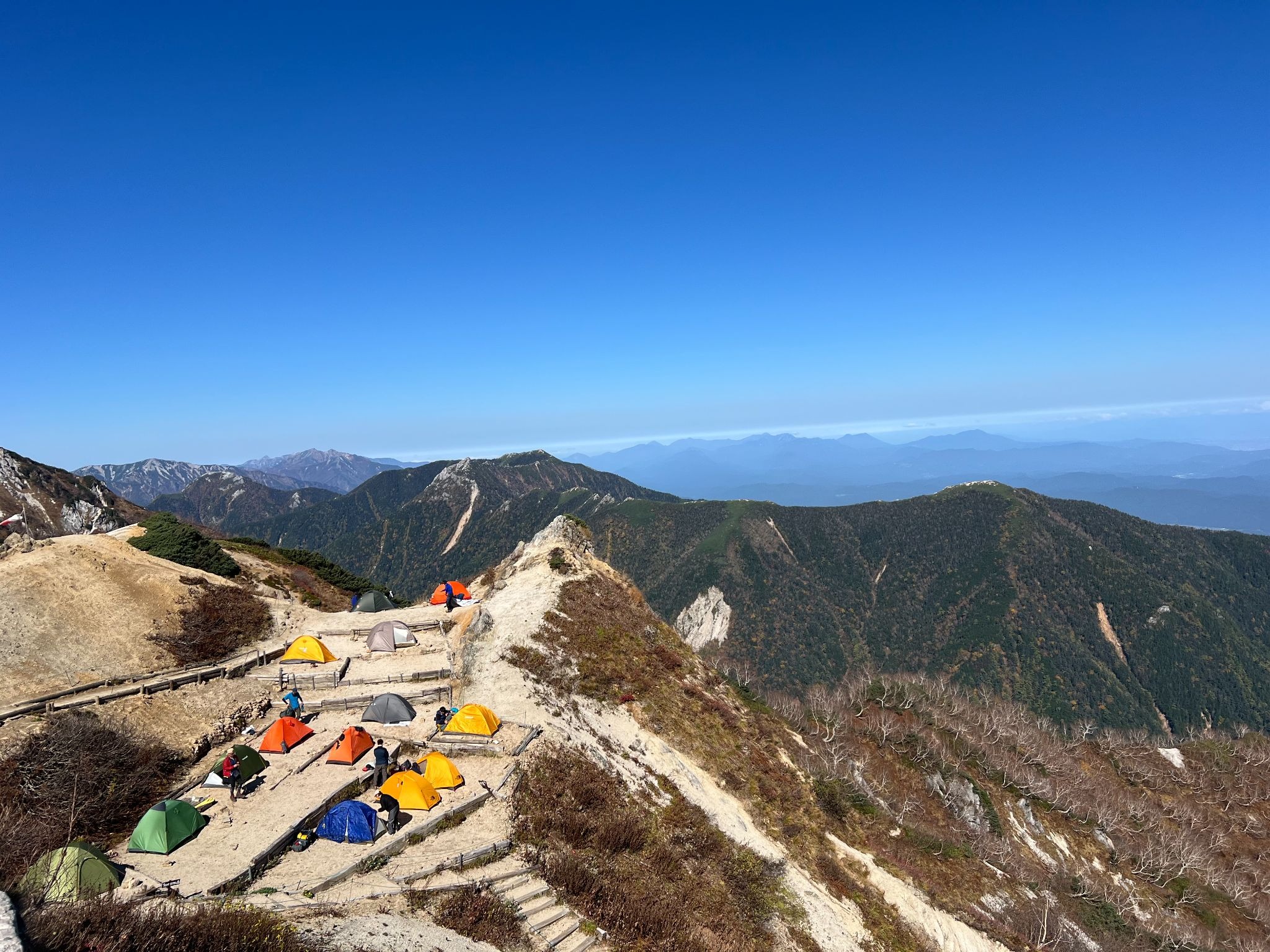
That evening we watched the sun disappear behind the mountains before the temperature dropped to around 5°C and pushed everyone indoors for dinner.
Sleeping at the hut was very organized but not very luxurious. There were no showers. My bed felt more like a plank, and the pillow seemed to be filled with rice. With everyone sleeping in rows, the whole place had something of a Japanese boarding-school atmosphere.
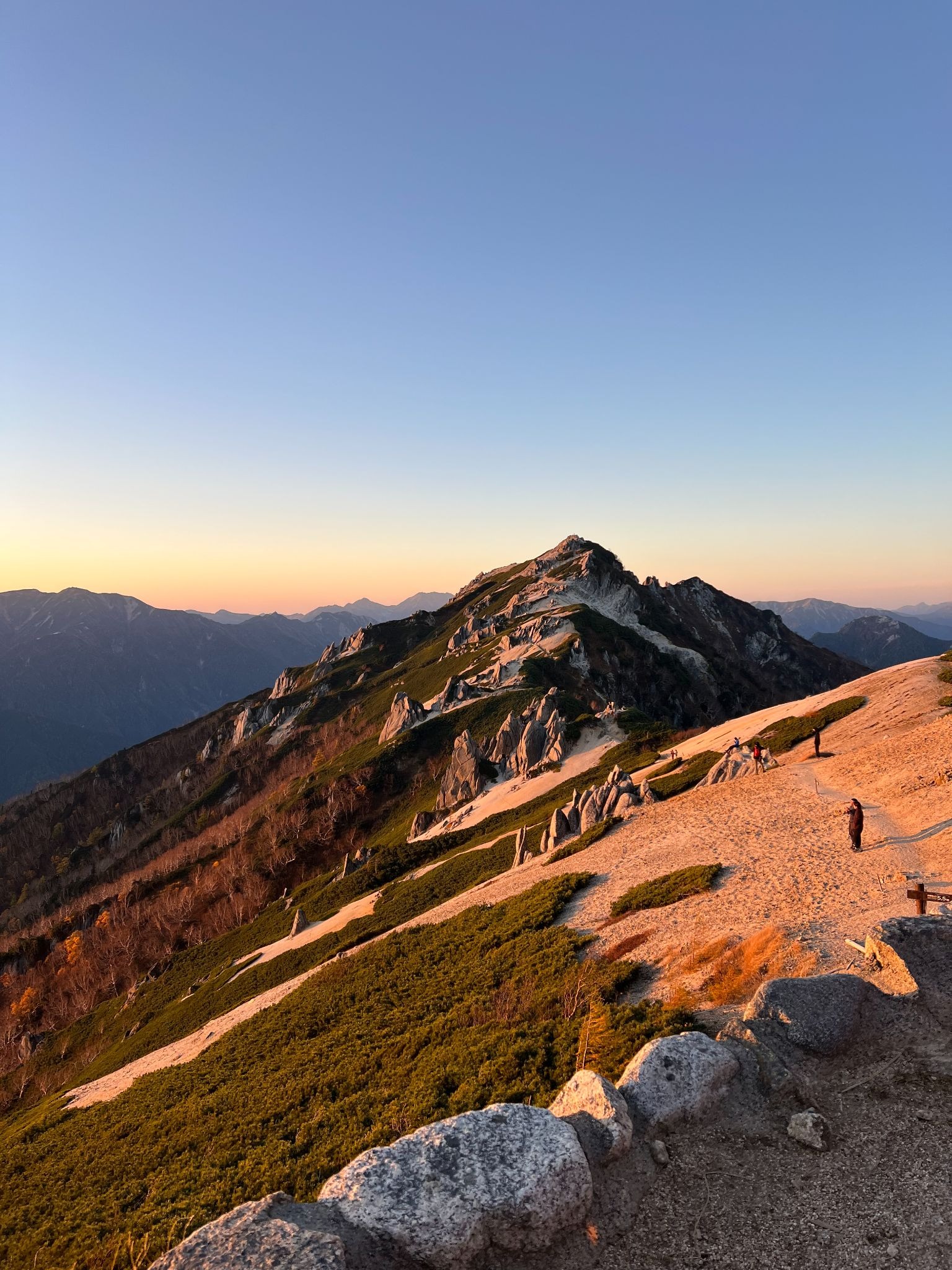
Then my alarm went off at 5 a.m. Outside, the sky was beginning to turn red. The wind was howling across the ridge and it was bitterly cold, but the mountains were completely visible. In the distance was the unmistakable outline of Mount Fuji.
For me, that sunrise was worth the entire climb.
What I took back down with me
I don't think everyone needs to climb a mountain alone. There are routes I wouldn't attempt solo, conditions in which I would turn around and plenty of hikes that are simply more fun with someone else.
But Mount Tsubakuro changed the way I thought about travelling alone.
We often postpone things because nobody is available to come with us. A destination stays on the list until a friend's schedule aligns with ours. A hike becomes something we'll do "one day". Sometimes there are good reasons for that. But sometimes we're simply used to thinking that certain experiences require company.
That morning, standing at 2,763 metres, I knew I had got myself there. I had researched the route, checked the conditions, climbed 1,300 metres, spent the night in the mountains and reached the summit the following morning. And far from feeling lonely, I had met more local people along the way than I had during many days in the city.
That is perhaps what I would tell any other woman considering her first solo hike:
- Don't choose a mountain because you feel you have something to prove.
- Choose one that matches your experience.
- Prepare properly.
- Give yourself permission to turn back if you need to.
Eventually, you’ll stand at a peak you weren't sure you could reach. You’ll look back down at the trail below and realize that just a day ago, you were standing at the bottom, wondering if you could do this alone.
Now, you know.
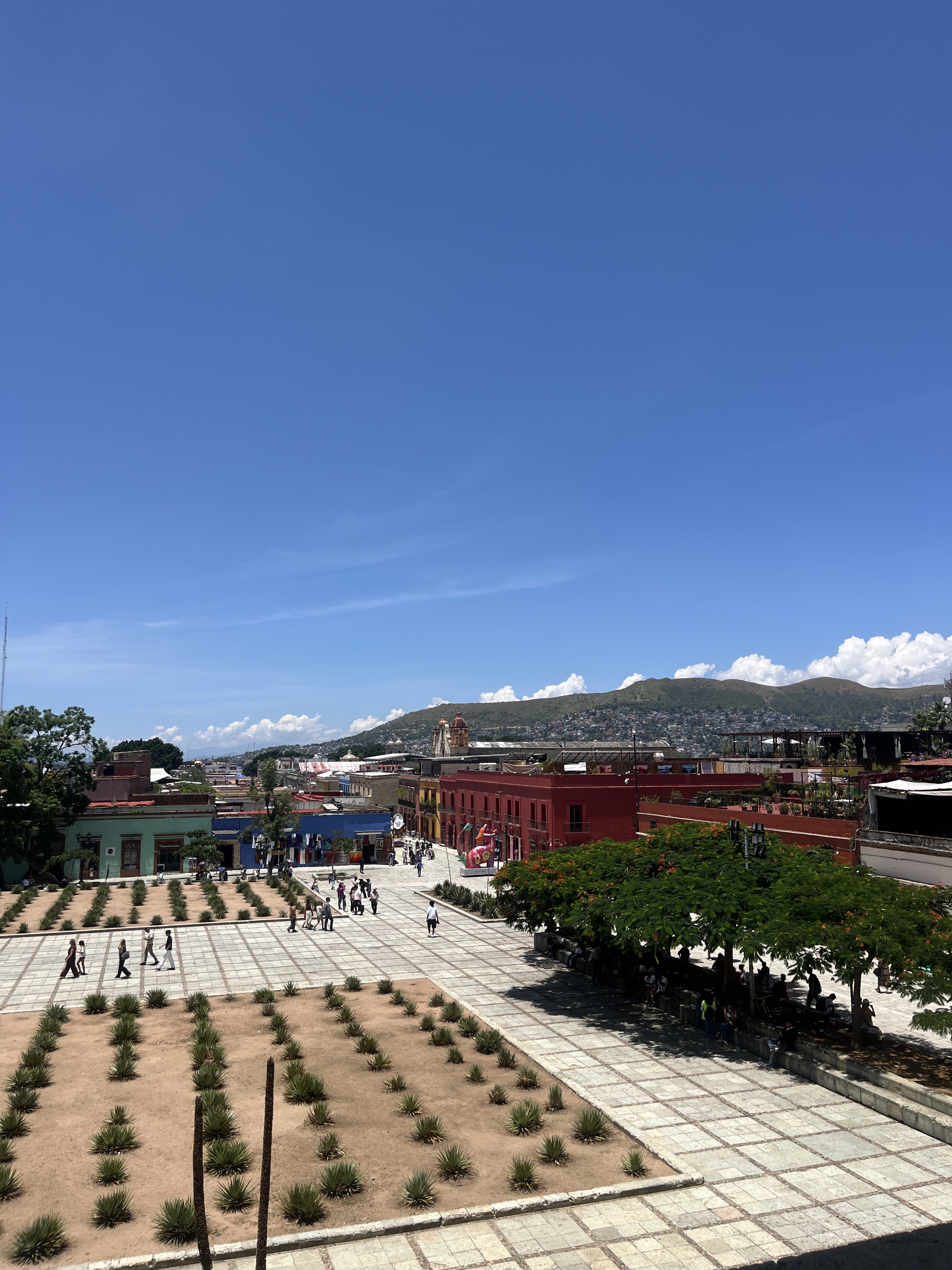
Going Solo in Oaxaca: Food, Culture & Women-Led Travel
A slow week of markets and mezcal, ending with a women-led Zapotec tour during Guelaguetza.
NomadHer is happy to share a new series featuring NomadHers and their own travel stories through personal blog posts. All posts have been edited for grammar and clarity while making sure to retain the true voices and stories of our writers. We'd like to extend a special thank you to all of our writers and to our community!
by Marteena Mendelssohn
Getting to Oaxaca
I was already in Cancun before heading to Oaxaca. I explored the magnificent ruins of Chichén Itzá, and stayed at the gorgeous Nomads Hostel and Rooftop Pool in the downtown area. It was beautiful, but HOT, and I was looking for some mountain relief. From downtown Cancun, I took the ADO bus to the airport which cost me about $150 pesos (compared to the 450-500 peso Uber ride). The flight from Cancun to Oaxaca was about $162 USD with Volaris, but I did purchase my ticket about two weeks before I left which could have made a slight difference in pricing. I then took the shuttle service from the airport to the city. The Oaxacan airport is relatively small, and there were two taxi stands that had colectivos, or shared shuttles. The driver took me about two blocks away from my hostel, which was called “Ginger Banana.” This ride cost another $150 pesos.
Eating my way in
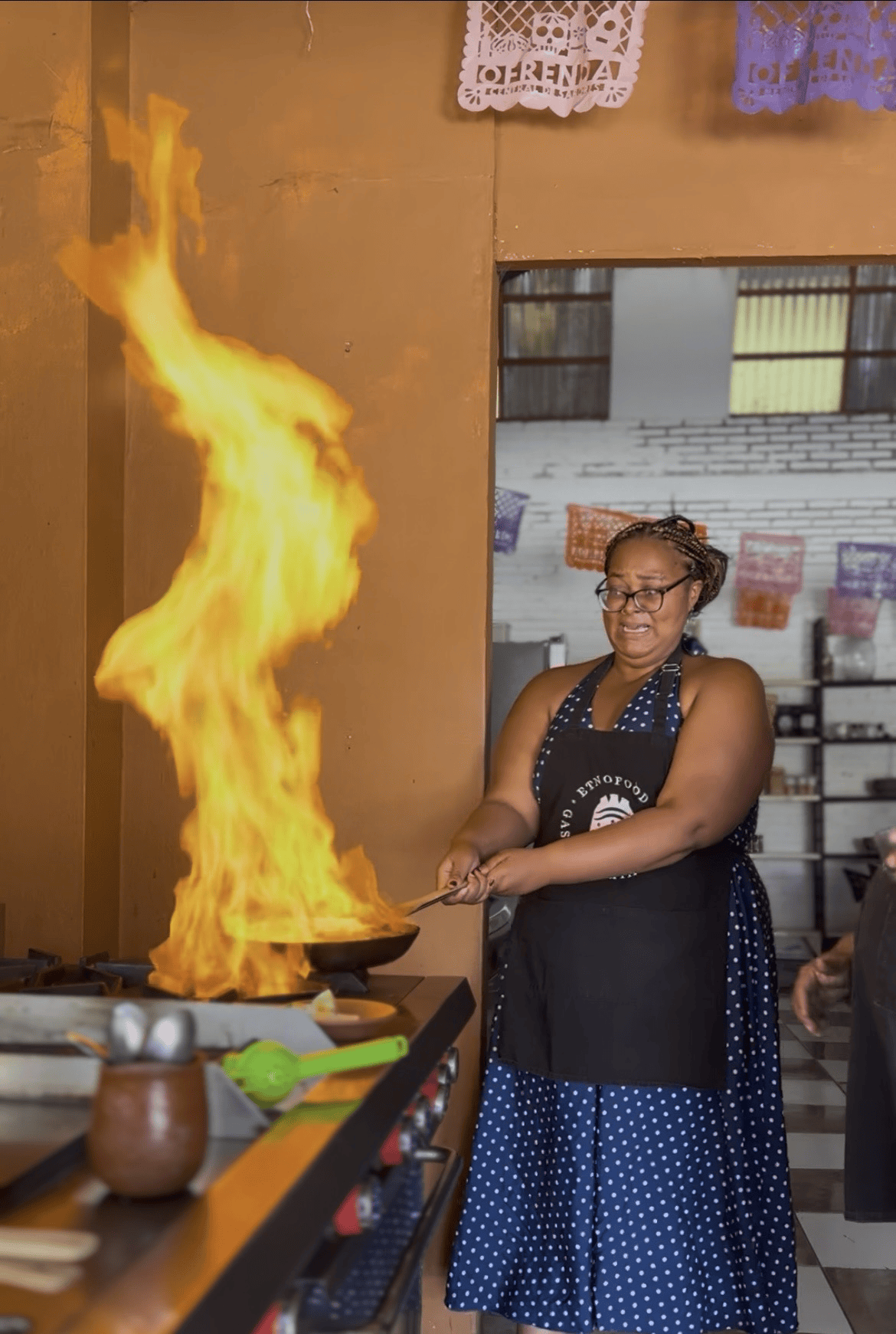
The first thing I did after my flight was grab a Tlayuda, or as some like to call it, a Mexican pizza, at Casa Taviche. Essentially, it’s a large tortilla with pork lard (asiento), beans, meat, and quesillo. To make it vegetarian friendly, just ask for no asiento! Speaking of eating sin carne, the next day I took a vegetarian cooking class with Ethnofood. Funnily enough, I was the only person who signed up for the class, but honestly, I had a great time! We made Memelitas, which is a traditional Oaxacan food typically made for breakfast or lunch. Making tortillas by hand and salsas in a molcajete, it made me realize just how much work goes into my favorite cuisine – and just how fun it can be making it!
The women I met along the way
After heading back to my hostel, I was able to meet a group of women who just finished up an artist residency and were now spending their last days exploring the city. There’s something both inspiring and exciting about seeing other women traveling on their own, doing things they love. I spoke with a woman from Chicago who worked in ceramics, and although we both spoke English, we chose to speak Spanish with one another. There was a French girl who drew sketches who I gossiped with about our love lives, and then Jen, an Australian woman who spent the past 25 years dedicating her life to teaching water sports and has now decided to turn art into her full-time career. While I didn’t meet any NomadHers on this trip, I was able to see just how far women can go – no matter where they come from.
Finding Zapotec Travel
I spent more than a few evenings scrolling through Instagram, searching for the best things to do in the city. Eventually, a woman named Lily appeared on my feed through Zapotec Travel. It’s an agency that centers their tours around indigenous women and designs their itinerary to support local communities while also experiencing the Zapotec culture. Before coming to Central America, I didn’t think there were a large native community left, but I was very wrong. In Oaxaca alone, there are many different communities:
- Mixtec
- Mazatec
- Chinantec
- Mixe
- Chatino
- Triqui
- Huave
- Zapotec
- Zoque
Each with its own distinct culture and language, ready to be discovered.
Guelaguetza: the tour
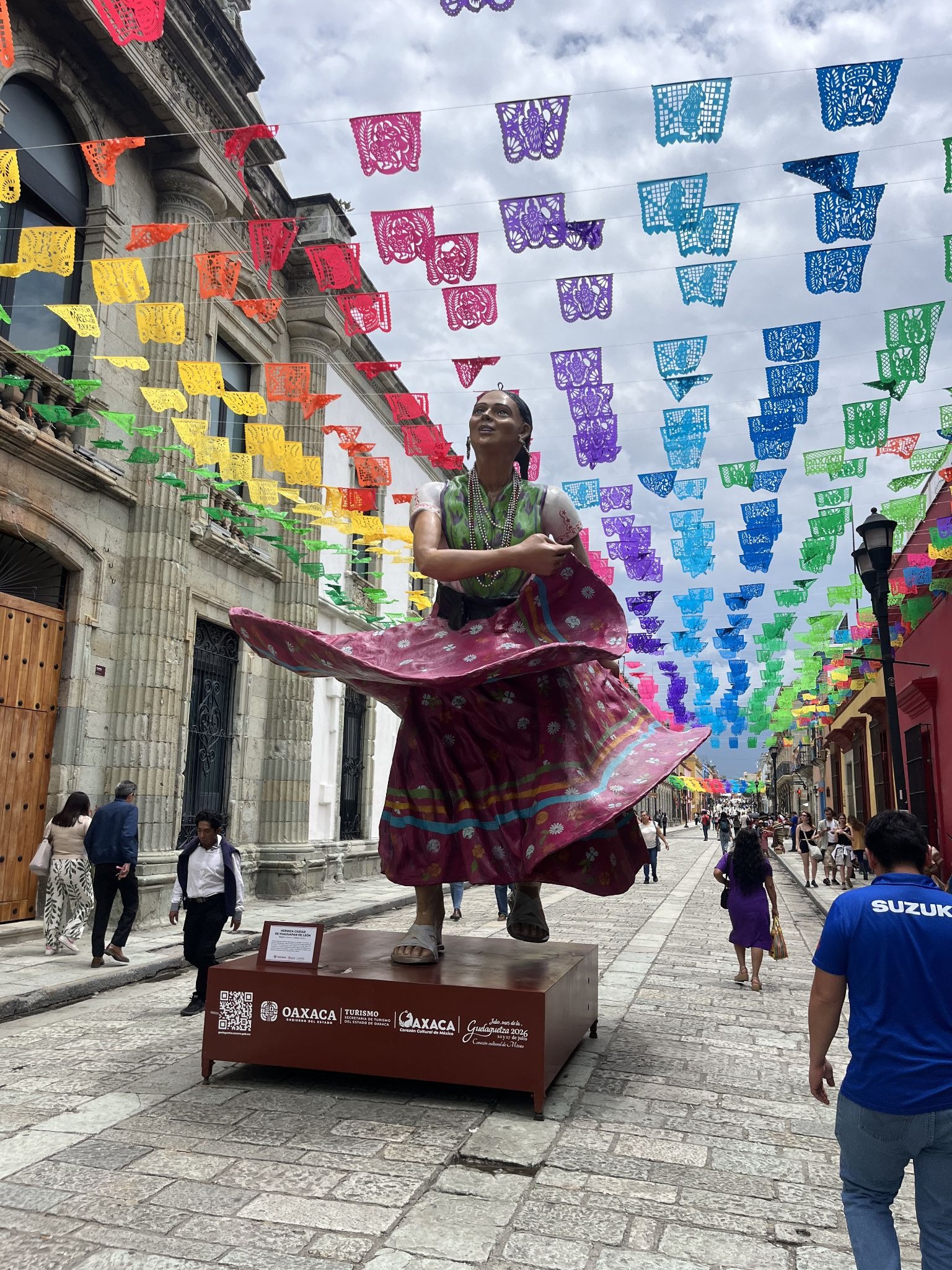
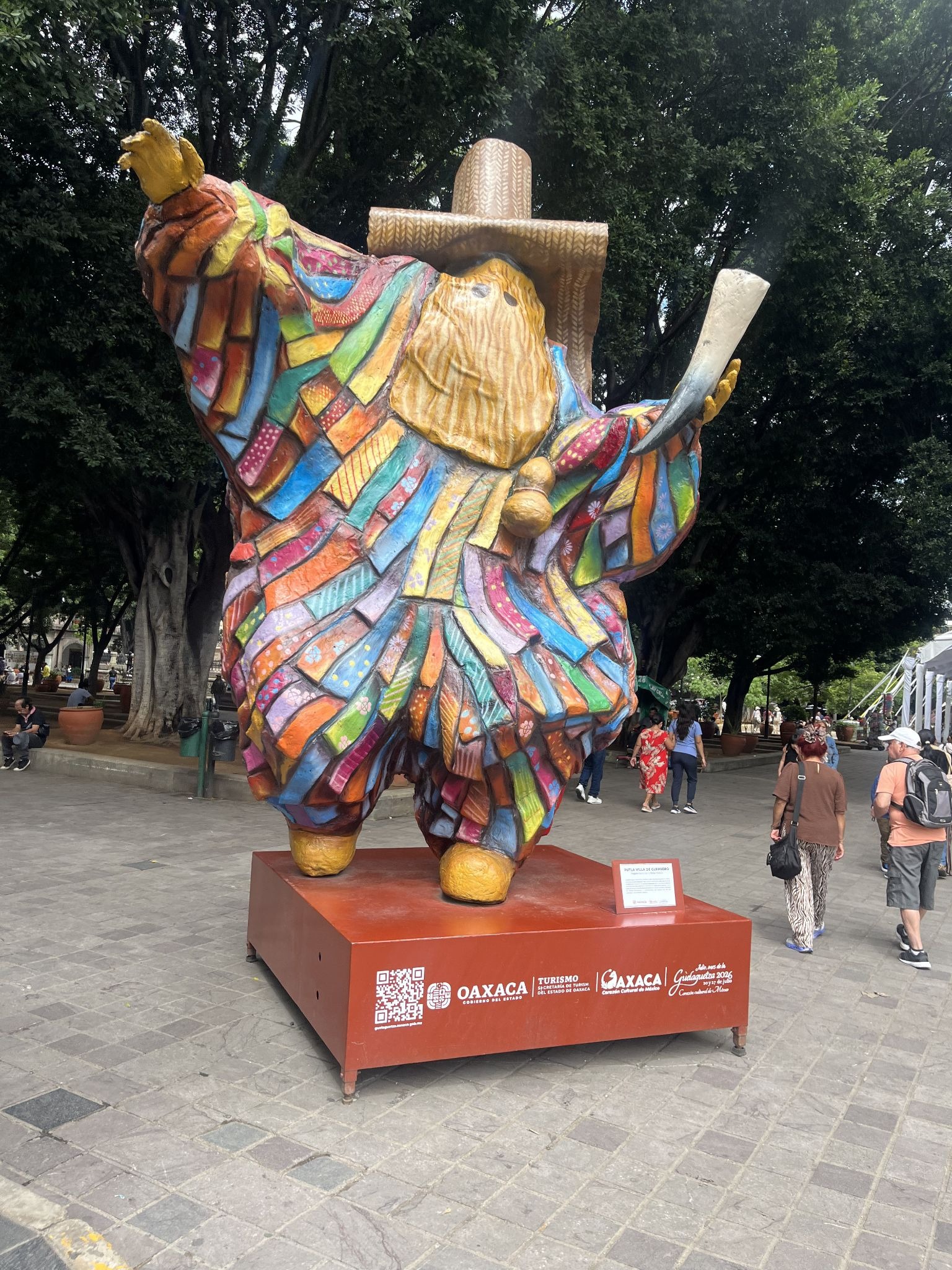
I came to Oaxaca during the Guelaguetza festival season. Translated from Zapotec, Guelaguetza means reciprocity. The festival is about community and sharing dances, food, handicrafts, and culture.
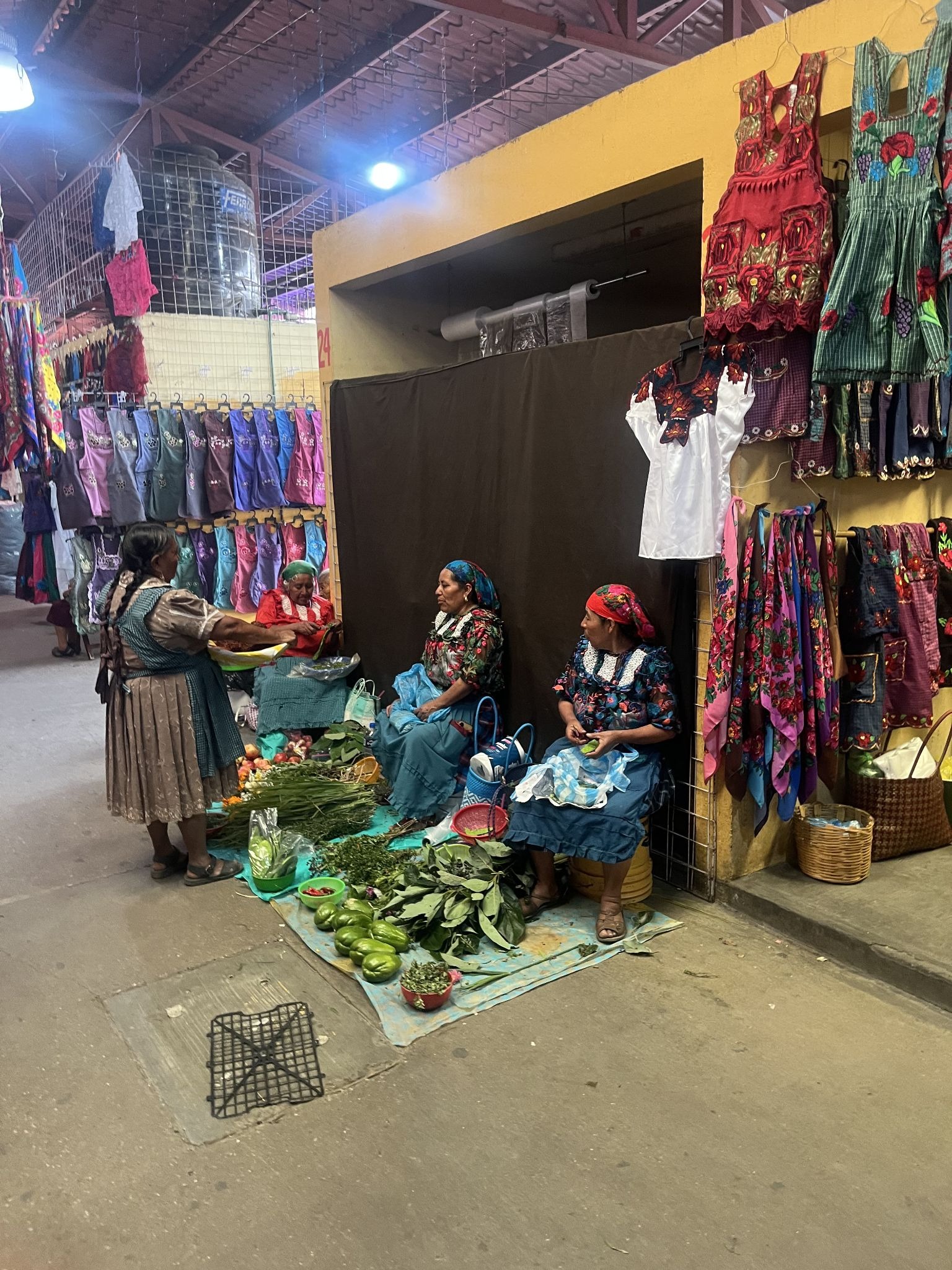
Our Guelaguetza tour started at the Tlacolula market, about 45 minutes from Oaxaca city. Festive colors spilled all across the tent covered vendors, from woven textiles and embroidered clothing to piles of bright red chilies, fresh fruit, and handcrafted goods, while gold earrings caught the sunlight as vendors moved through the crowd. The smoky aroma of meat sizzling over open grills mingled with the earthy scent of warm tortillas, creating a scene that was truly a feast for the senses. During the tour, we sat and ate traditional food inside the market. Some people tried sheep and goat while I indulged in a squash flower empanada. After eating, we had some free time to roam the market where I purchased a couple bags of ripe fruit and bought a cup of sweet mamey and coconut ice cream.
Mitla and the dances
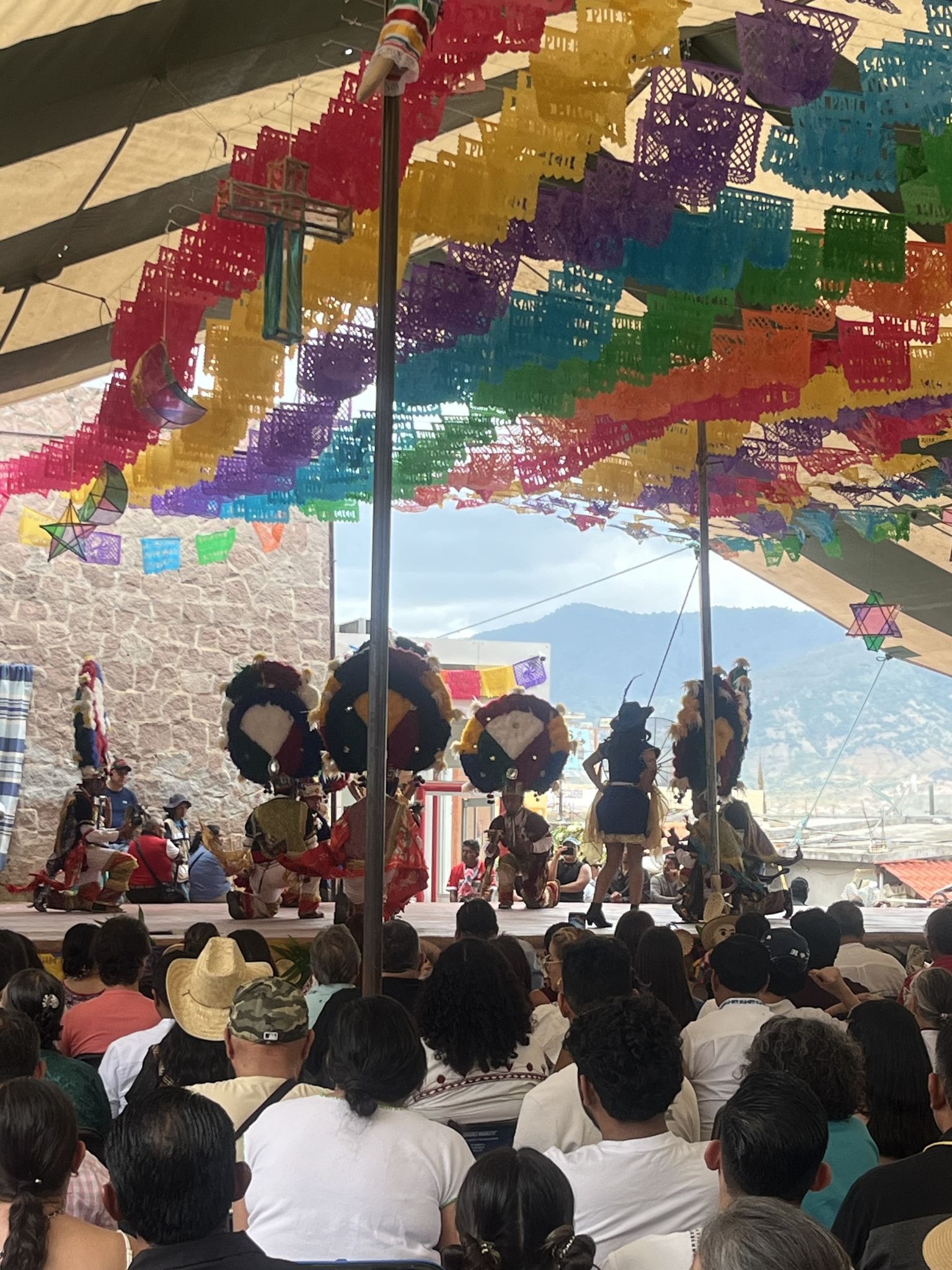
Once we hopped back on the bus, we drove about 20 minutes to a town called Mitla, where a stage was erected and nine different communities were able to demonstrate their traditional dances. Some felt like a ballet, with docile and graceful movements, while others were fast, containing props and flashy skirts. I loved seeing the differences of each dance and their costumes as it really showed just how unique each community really was.
The women-owned mezcal distillery
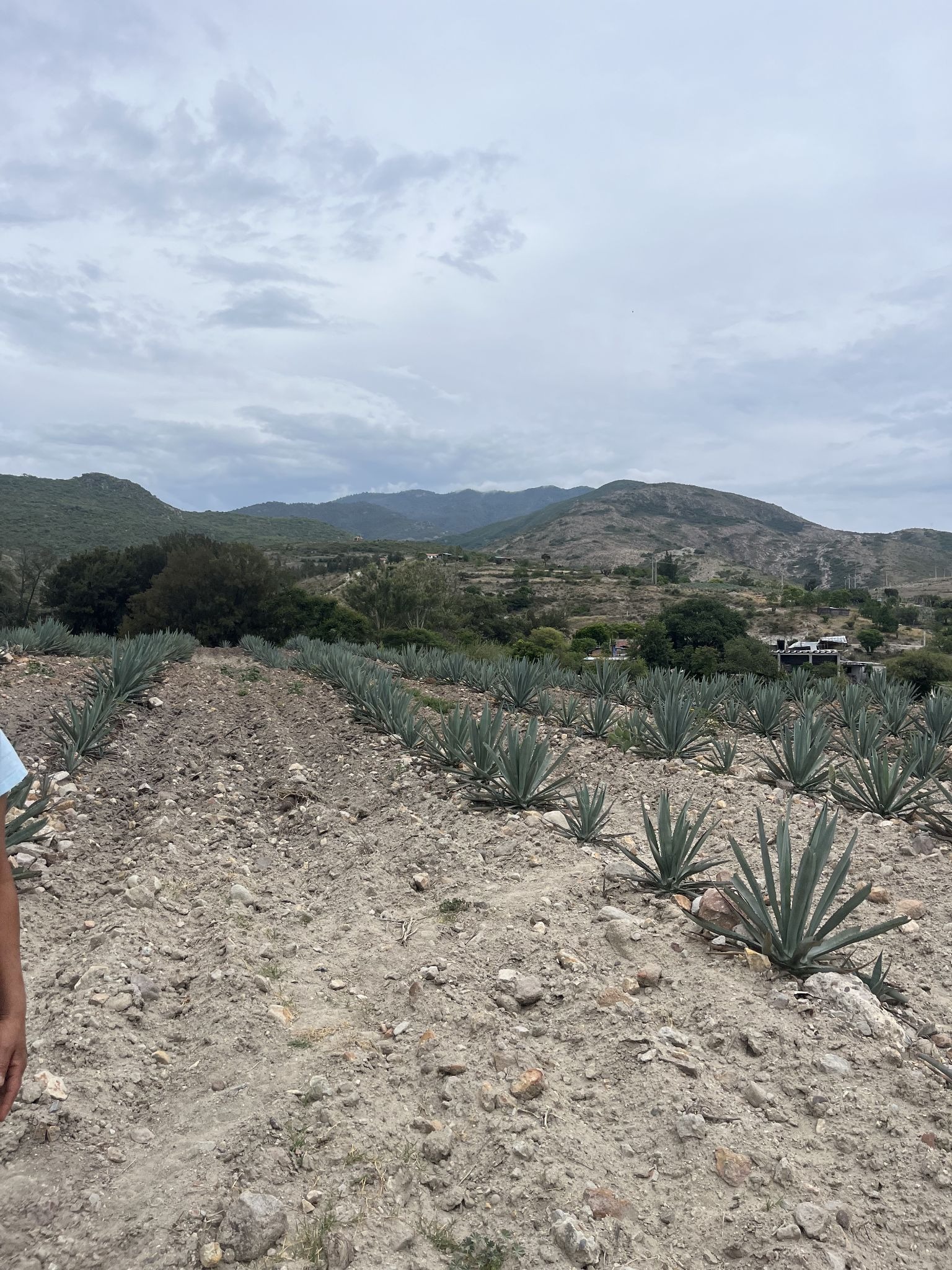
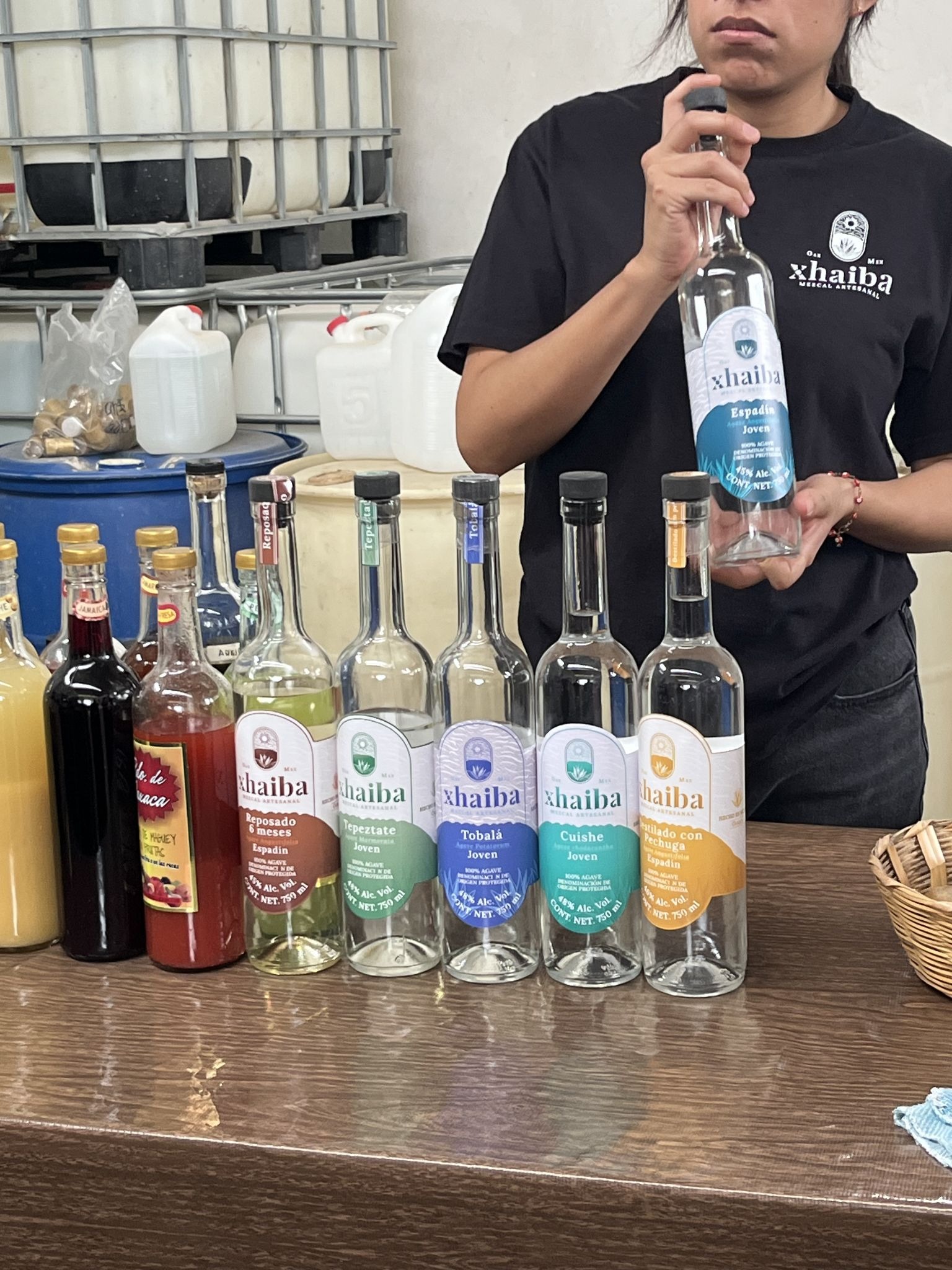
After Mitla, we drove just a few minutes to a women-owned mezcal distillery. Margarita Hernandez had grown up on the mezcal farm. She and her daughter, Fatima, guided us around the farm, explaining the subtle differences between each agave plant, learning about the distilling process, and trying out their seven mezcals from their brand “Xhaiba,” meaning sky.
I had tried Mezcal before, and personally, it is just too strong for my taste. Out of the seven, I really enjoyed the “Tobalá”. For me, it was amazing to see a woman at the forefront of a mezcal brand. It was clear Margarita and Fatima took pride in their work and I was happy to celebrate the passion they’ve poured into building it.
The drive back
The day ended watching the valley pass from the window of the bus, with the rolling hills and small villages stretching across the landscape in the fading afternoon light. The other participants of the tour and I chatted about what else we would do in Mexico. Some, like me, were headed back to the city, while others were planning trips to the beach or to the other side of the coast. As we drove through the valley, I looked forward to the days ahead, knowing there was still so much more to see.
All in all, my time in Oaxaca taught me that some of the most rewarding parts of travel come from the women you meet along the way. For any woman who feels a little nervous about traveling through the Americas alone, I could not recommend a better place to begin than the beautiful city of Oaxaca.
Oaxaca Must-Dos
⭐️ Mercado 20 de Noviembre
⭐️ Mercado de La Merced
⭐️ A cooking class!
⭐️ Hierve el Agua waterfalls
⭐️ The Museum of Cultures
⭐️ Jardín Etnobiológico de Oaxaca (The Ethnobiological Garden)
⭐️ Libreria Grañen- Porrua - Cute postcards
⭐️ La Cosecha - Food court and live music
⭐️Häxan Gothic Bar - Horror movie nights and alternative music
Oaxaca Must-Eats
🍽️ Tlayudas
🍽️ Tejate - sweet drink made of cacao
🍽️ Tamales (my favorite!!!)
🍽️ Memelas
🍽️ Mole (there are seven different kinds)
🍽️ Chapulines - roasted grasshoppers
🍽️ Quesillo
🍽️ Sal de Gusano - Earthworm salt for your mezcal
🍽️ Huitlacoche tacos or corn fungus (I promise it’s delicious)

Why Mahe from France Keeps Joining NomadHer Traveler Camps
Mahe, from France, joined almost every NomadHer camp during her year in Korea. She explains why she kept coming back.
During her one-year stay in Korea, Mahe joined almost every single NomadHer camp. Originally from France, she had always enjoyed traveling solo.
She came to Korea on a working holiday visa and lived here for about a year, before recently returning home as her visa expired.
Mahe first discovered NomadHer through an Instagram ad. She joined the NomadHer app around 2023 and later attended her very first event—the 2024 NomadHer Festival in Seoul.
After that first experience, she was hooked.
She started joining other major events like the Busan Surfing Camp and the Jeju Camp, traveling across Korea to be part of the community.
At first, she came alone, but after meeting people at the camps, she continued to attend events together with friends she met there.
“Listening to people from different countries, with different jobs, education, and backgrounds is so fascinating and inspiring.”
When we asked why she was such an active member of NomadHer, Mahe explained that the variety of people she met was what made the platform so special.
In daily life, most people spend time with others who share similar backgrounds and environments. But at NomadHer, she could hear about completely different ways of thinking, traveling, and living.
This gave her new perspectives and even inspiration for her own life.
She told us that through NomadHer, she almost became “addicted” to discovering new outlooks, lifestyles, and approaches to travel.

It’s even more appealing because I can use it comfortably and safely in everyday life, not just on special occasions.
What makes NomadHer even more special for Mahe is that it’s not only about big events or camps. Even in everyday life, she actively used the app to meet people. For example, on December 31st, she celebrated New Year’s Eve with six or seven NomadHer friends in Seoul—dining together and watching the bell-ringing ceremony at Bosingak.
Because most of the people she met through NomadHer had extensive travel experience, she said the process of sharing stories and exchanging values felt meaningful and safe. To her, NomadHer wasn’t just an event platform, but a trusted community where she could meet great people and share her thoughts freely.
Mahe also shared ideas for how NomadHer could expand into everyday experiences. For example, helping foreigners who are new to Korea join simple daily activities like going to a sauna or visiting a local market—situations that might otherwise feel intimidating or confusing. She believes these small, everyday moments could make NomadHer even more useful!

NomadHer is a very safe and well-organized platform.
Currently, the NomadHer app allows members to find travel buddies, join camps and programs, and, like Mahe, share everyday experiences together.
Whether it’s a simple coffee meetup, a day trip near Seoul, or celebrating special days like Christmas or New Year’s, the app connects women travelers to each other in meaningful ways.

Mahe emphasized how much she valued being able to meet locals as well as other foreigners.
While expats can always hang out among themselves, NomadHer gave her a chance to meet local women and experience authentic culture through those interactions.
“NomadHer is a very safe and well-organized platform for me. Just try it!”
This was Mahe’s message to anyone hesitating to try NomadHer. She encouraged people to simply give it a chance, because without trying, you’ll never know how much value it can bring.
She reassured us that, based on her experience, the app is safe: all the people she met were kind, the events were well-structured, and the opportunities to meet women travelers from around the world were priceless.

In Her Words: Lydia's NomadHer Journey
Lydia Schultz, a Chinese adoptee from Chicago, talks about her travels and what being a NomadHer means to her.
I spoke to Lydia Schultz, a member of the NomadHer community, about her travels, experiences, and the significance of being a NomadHer. She is a Chinese adoptee, who grew up in the suburbs of Chicago, USA. She always had a strong urge to travel from a young age, and an “adventurous spirit and insatiable curiosity about the world”. She never really travelled beyond just a few states within the USA, until she was 19 years old. Once her parents allowed her to finally travel on her own, there was no holding her back, she was off! Now, at just 22 years old, she has travelled to over a dozen countries solo. She feels the most fulfilling part of life is to travel, and recognises her privilege to be able to get out there and experience the world for herself.
“There is nothing else that connects me so profoundly to other humans and their cultures, our beautiful planet Earth, and to myself.”

What does being a “NomadHer” mean to you?
Being part of the platform, which is dedicated to (solo) female travellers, has taught her that solo travel doesn’t have to mean you are completely on your own.
“Making friends with strangers is often one of the benefits of solo travel.”
Having met up with a few women from the NomadHer app, in various destinations, she has experienced what it's like to be a member of our community.
“It’s a truly beautiful community of good-vibrational women with a shared love for travel.”
She thinks NomadHer is a great resource for women who are brave enough to travel alone, despite the stigma associated with doing so.
How was your first time travelling alone?
Her first official solo trip was to Washington D.C. and she chose this destination as it was more “tame” than others - for her parents’ sake. However, her first international solo trip was to Seoul, South Korea. During this trip, she stayed in hostels so that she could befriend other travellers. From this moment she discovered her love for solo travel, and then wanted to do it even more.
What’s one moment from your travels that left a lasting impression?
As an introvert, she often finds herself doing things alone. While she understands that this is important, she also recognises the benefits of going outside her comfort zone. This means talking with strangers and being open to new connections along the way.
“Time and time again, I am reminded that it is the people you meet during your travels that leave the greatest impact upon your memories of a place.”
When reflecting on a trip, it’s the human moments that she remembers the most - whether that’s an impromptu encounter with a local, or a deeper bond with a fellow traveller.

How has travel shaped you as a person, and your individual purpose?
She says that you have to really get out there and discover the world for yourself to understand how travel can change you and your perspectives. It is difficult for her to imagine who she would be without her unique and multifaceted travel experiences.
“Travelling has shown me different ways to live, invited me to tap deeper into my intuition, and taught me to trust life more. More than anything I’ve learnt that the world is more kind and beautiful than what you see on screens.”
What is a destination which you feel the strongest connection to?
“There is nowhere else in the world I have felt more at peace than in Hawaii. The energy one feels on the Hawaiian islands is a kind of magical serenity that I have yet to find elsewhere in the world."
Unfortunately, Hawaii does face challenges with over-tourism. It tries to promote the ‘Pono Pledge’, which was created to encourage responsible tourism to the islands. It makes travellers pledge to be more righteous when visiting - including things like admiring wildlife from afar, and not endangering oneself or others.
Lydia understands that this must be considered, and if she plans to visit Hawaii again, she says she will do so as a worker or volunteer, in order to help contribute to the local economy.
In Hawaii, there are various initiatives where tourists can play a part in protecting and caring for the lands and the people. They are trying to protect Hawaii's natural and cultural capital while enabling a more in-depth form of travel and cultural immersion. Activities can include beach clean-ups, tree-planting, animal care, and more.
What’s your next destination?
Since her move to Madrid in September 2024, she has visited Morocco four times. She will be returning again soon, as it’s one of her favourite countries. Morocco is a country rich in culture and natural beauty, whether you're visiting the Atlas mountains, the Sahara desert, or experiencing the colourful yet chaotic city markets. But, for female travellers, it can often be perceived as a challenging destination.
“Sadly, solo female travellers are discouraged from travelling to Morocco by mainstream media, but I’ve never felt unsafe in any of the several cities I’ve been to. It’s a beautiful country with beautiful people that I would recommend to anyone.”
Like anywhere you go, it is important to navigate a new place with awareness. But, despite any pre-conceptions they may have had, many women, like Lydia, travel to Morocco safely and report very positive experiences.
Learnings from Her Story
Lydia's story teaches us that solo travel doesn't necessarily have to be a lonesome activity, as you end up meeting many people along the way, through spontaneous and unique interactions. NomadHer is a support system for female travellers who carry that same curiosity to see the world, and don't want to let fear or outdated stigmas hold them back.
For her, travel has became an essential part of who she is. It has introduced her to different ways of living, and taught her that the world is more beautiful than what we see online. She is one of many travellers today who are becoming aware, too, of the impact that they have on the places they visit, especially as more destinations struggle with over-tourism, like Hawaii.

Honesty Isn’t Always the Best Policy! Lies We Tell As Solo Female Travellers
The harmless lies solo female travelers tell to feel safer on the road, from the NomadHer team and community.
More and more women are travelling today - did you know that 64% of travellers worldwide are female, while only 36% are male? But not only are they planning more adventures, they're also challenging themselves to do it alone! Solo travel teaches you a lot about the world and yourself, such as how to navigate a new city on your own, or how to communicate in a new language when ordering food. However, 66% of women worry about personal safety when traveling alone, which may prevent them from going on a trip by themselves.
We understand that travelling alone, especially as a woman, can be a daunting experience, and may require a little bit more awareness. If you are interested in taking that step, it's important to consider your safety. One thing women from our community often find themselves doing is lying - not in a negative, or deceitful way, but to protect themselves.
You can even make it into something fun, and come up with your best creative lie, or build a whole new character story to tell on your travels! Sometimes, as a solo female traveller, the truth doesn’t always feel quite…safe, or even needed.
Here are our team’s harmless go-to lies which you can carry around with you wherever you solo venture…
1. “I’m here visiting my friend”
There is a comfort found in saying that you know someone in the place you’re visiting, as it makes it sound like you’re not alone, that you have local knowledge and support. Basically, it means creating an imaginary friend for that particular trip, so you aren't seen as a clueless tourist. People are then aware that you have a friend nearby who will notice if anything happens to you, or who is ready to hypothetically come to your rescue. The illusion of backup is all you need!
Or you can find real backup, by downloading our app and meeting up with other NomadHers! Because no matter what, if you're part of our community, you will always have a friend somewhere!
2. “Me and my BOYFRIEND…”
This is a very common lie to tell. But spoiler alert…he’s not around, and does he even exist? No one needs to know. If you find yourself in a situation where a man is asking you way too many questions - which has happened to me before in a taxi - then this lie can help you out. Now you’re no longer a solo female traveller, but actually waiting on a fictional male character to arrive. You can even go one step further and put a ring on your wedding finger. This lie is especially useful when checking out a new city's nightlife, as going out alone, as a woman, at night, can be risky.
Quick tip: Many hostels organise family dinners, or bar crawls where you can befriend other travellers, so then you don’t have to go out at night on your own.

3. “Oh I’ve been here before”
Even if you have not, and you find yourself completely lost, this lie can make it seem like you know what you are doing. Putting on a confident facade makes people less likely to take advantage of the fact that you’re in unfamiliar territory. No one needs to know it’s your first time.
This can come in handy if someone’s asking a few too many times if they can help you, or guide you somewhere. Become a local - act like you are confident and unbothered - even if you’re internally screaming and hoping Google Maps will guide the way. We’ve all been there.
Quick tip: You can use Google Maps offline - just download the maps of the areas you plan to visit while connected to Wi-Fi. You can then navigate and search for locations without any internet connection, at a later time.
4. “I don’t speak [insert language]”
If you find yourself in a situation where someone is asking you something uncomfortable, or you experience catcalling, then you can use this one. Just pretend that you don’t speak the language. It works like magic in markets too, if you're being hassled a little too much by vendors. Just smile, nod, and keep walking.
"I'm on a group tour"
Even if this isn't the truth, it can be safer for people to think you are not alone, that others will be expecting you. Even if your group tour is in fact just your solo self.
If you find yourself alone in an unknown place, it can be very overwhelming at first, and you may feel unsafe in some situations. Lying is a great way to set boundaries, to protect yourself, and sometimes to just cut off a conversation you don’t want to have.
Safety is something that every woman has to think about when considering solo travel. But the more you travel, the more you will be prepared to tell a few white lies. You will also learn to trust your gut and know the best way to get out of any weird situation which you could be faced with.
Ask these safety self-check questions:
- What is my body telling me - do I have a weird gut feeling about this situation, or person?
- Is this person respecting my boundaries or pushing them?
- What is a way in which I can leave the situation safely if I need to?
- Is there anybody nearby I could turn to if I need help?
- Have I told anyone where I am or who I am with?
- And probably the most important one - if I was watching another woman in the same situation as me right now, what would I want or advise her to do?